USAID. MISSION TO TANZANIA
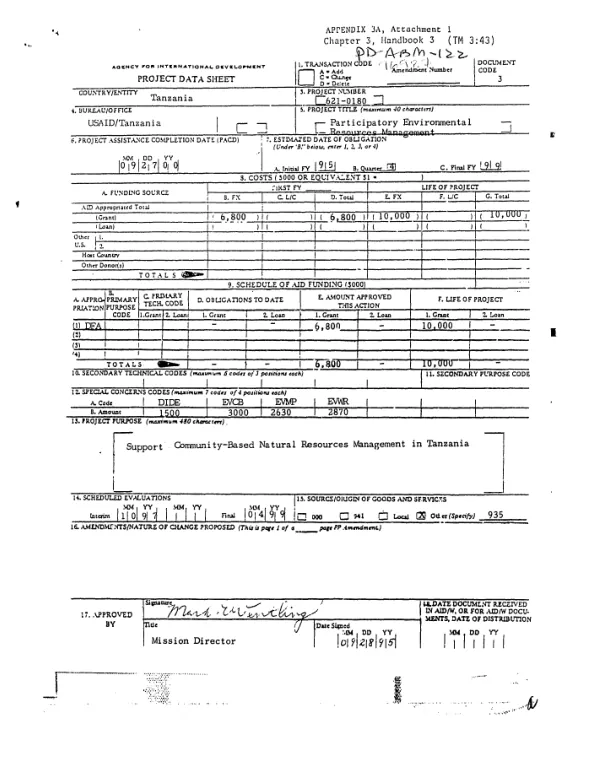
Participatory environmental resources management
Project to support community-based natural resource management (CBNRM) in Tanzania.
1995
Sign in to readA free account is required to download.
Abstract
The project, to be implemented by an institutional contractor under the direction of a multisectoral steering committee, will provide a framework for collaboration among the public and private sectors in identifying and implementing CBNRM programs based on understanding of indigenous knowledge and practice and lessons learned from past programs. The project will support Strategic Objective No. 1: Strengthen Natural Resource Management. General objectives of the project are to: (1) establish an environment conducive to CBNRM by drafting and lobbying coordinated policies and legislation; (2) establish appropriate capacities and participatory mechanisms within institutions for promoting and implementing sustainable CBNRM; (3) develop CBNRM technologies and methods for transferring them to development partners throughout Tanzania; (4) establish inter-organizational mechanisms for coordinating the delivery of integrated, multidisciplinary CBNRM support services to participating groups and individuals; (5) create technical, financial, and administrative standards for CBNRM in Tanzania, as well as mechanisms for CBNRM administration, oversight, monitoring and evaluation; and (6) create mechanisms for promoting CBNRM at all levels and among all segments of Tanzanian society and, where appropriate, internationally. Initial efforts will focus on watershed protection; rehabilitation and sustainable utilization of soils, vegetation, and water; and wildlife conservation and use. A specific activity to be supported is the Peace Corps-proposed CBNRM Project (FYs 1995-2002), in which the Peace Corps will place up to 30 volunteers in up to 6 districts (beginning in Babati, Hanang, and Handeni) to increase the NRM capacity of local government institutions and allow communities and individuals to address land degradation issues. Other proposed activities include: community-based forest management in areas outside national forests; rehabilitation of small-scale irrigation schemes in the uplands; NGO efforts to support newly established water user associations or other community-based organizations; and development of skills in conflict resolution and management. It is likely that in the early years of implementation many activity implementors will be international NGOs. Various forms of training will be provided to participating public and private organizations in such areas as planning and management, technical skills, facilitation, and community outreach. Communities will also receive training. Knowledge-sharing and study tours both locally and regionally, including informal site visits from farmers from different regions of Tanzania, visits to CBNRM activities in eastern or southern Africa, and formal short courses in Tanzania and abroad will be encouraged. Long-term international training is not envisioned, however.
Related documents