INTERNATIONAL SERVICE ASSOCIATION FOR HEALTH, INC.
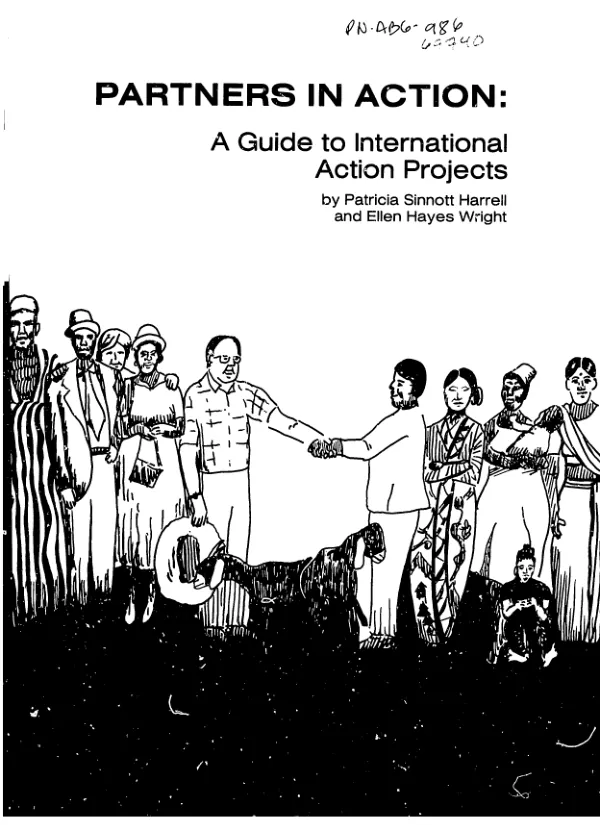
Partners in action : a guide to international action projects
Development education is a dynamic process in which learning about conditions in the developing world motivates one to practical action aimed at alleviating those conditions.
Harrell, Patricia Sinnott; Wright, Ellen Hayes · 1970
Sign in to readA free account is required to download.
Abstract
Such action often takes the form of what is called an international action project -- a partnership between people from First and Third World countries in specific, small-scale development activities. These partnerships can range from making bandages and arm slings for Haitian health workers, to volunteering for a time period to work in Zimbabwe, to establishing a "sister city" relationship between a town in the United States and a developing country. Such grassroots efforts can be the key to successful development, as they are carried out on a person-to-person basis and are less affected by national political changes. This guide, which is intended primarily for leaders of civic, service, church, and other private organizations, details how U.S.-based groups can participate in existing international action projects or establish new ones. Four levels of commitment to international action projects are distinguished: (1) response -- making a thoughtful one-time contribution; (2) education and response -- learning about an organization and the countries in which it works, and then becoming involved in some form taking some form or other; (3) direct personal involvement -- through a workteam experience, personal exchange, an internship program, etc.; and (4) initiating international action projects -- establishing partnerships with people from the developing world. For each of these levels, the guide provides a brief case study, describes the commitment entailed, and details practical lessons and comments pertinent to the case. Includes a list of organizations active in the field of development education field and of available print- and non-print materials.
Related documents