SOCIAL IMPACT, INC.
Performance Evaluation of USAID's Response to Pandemic-Associated Corruption
USAID's Response to Pandemic-Associated Corruption began in 2020 as a result of the COVID-19 pandemic's devastating impact on people, communities, governments, and countries.
2023 · 2 pages
Sign in to readA free account is required to download.
Abstract
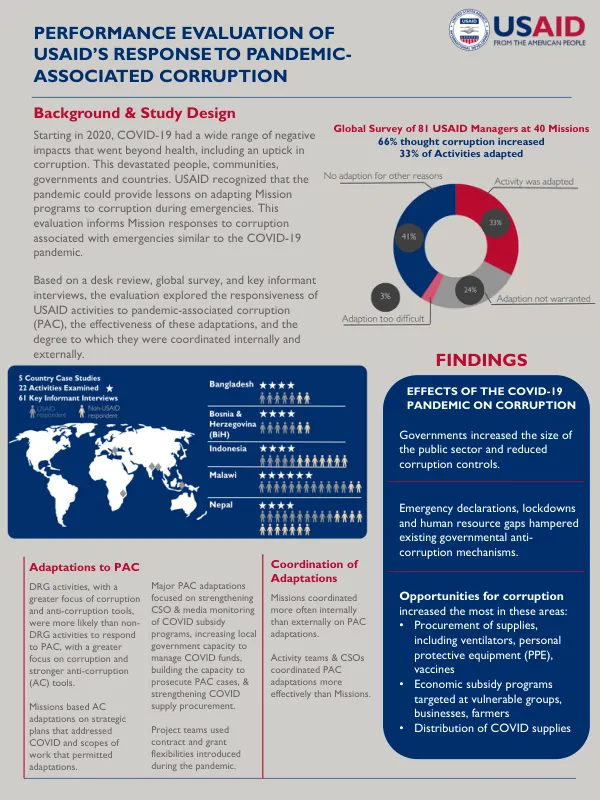
The pandemic led to an uptick in corruption, which USAID recognized as an opportunity to adapt Mission programs to corruption during emergencies. This evaluation informs Mission responses to corruption associated with emergencies similar to the COVID-19 pandemic. A global survey of 81 USAID managers at 40 missions found that 66% believed corruption increased during the pandemic. However, only 33% of activities adapted to address pandemic-associated corruption. The evaluation explored the responsiveness of USAID activities to pandemic-associated corruption, the effectiveness of these adaptations, and the degree to which they were coordinated internally and externally. Governments increased the size of the public sector and reduced corruption controls during the pandemic, creating opportunities for corruption. Emergency declarations, lockdowns, and human resource gaps hampered existing governmental anti-corruption mechanisms. Procurement of supplies, economic subsidy programs, and distribution of COVID supplies were areas where opportunities for corruption increased the most. Adaptations to pandemic-associated corruption focused on strengthening civil society organization and media monitoring of COVID subsidy programs, increasing local government capacity to manage COVID funds, building the capacity to prosecute pandemic-associated corruption cases, and strengthening COVID supply procurement. Missions based anti-corruption adaptations on strategic plans that addressed COVID and scopes of work that permitted adaptations. Major pandemic-associated corruption adaptations focused on strengthening civil society organization and media monitoring of COVID subsidy programs, increasing local government capacity to manage COVID funds, building the capacity to prosecute pandemic-associated corruption cases, and strengthening COVID supply procurement. Project teams used contract and grant flexibilities introduced during the pandemic to adapt to pandemic-associated corruption. Missions coordinated more often internally than externally on pandemic-associated corruption adaptations. Activity teams and civil society organizations coordinated pandemic-associated corruption adaptations more effectively than missions. Examples of effective adaptations to pandemic-associated corruption include building capacity of civil society organizations and journalists to monitor public services and expose corruption, promoting collaboration among civil society organizations, journalists, and the judicial system to document and prosecute pandemic-associated corruption, and addressing public administration gaps of local governments responsible for the management of pandemic-response funds. The evaluation recommends that USAID draft non-Development Response Group scopes that address systemic corruption and facilitate institutions during emergencies to ensure adequate prosecution of corruption cases. It also recommends increasing support for the justice sector, providing non-Development Response Group activities with clear guidance on adapting to increased corruption risks during emergencies, enhancing USAID leadership among government and donors in addressing corruption prior to and during emergencies, strengthening capacity of watchdog civil society organizations and investigative journalists to monitor and advocate against corruption, and improving internal USAID coordination within and across sectors to strengthen anti-corruption efforts during emergencies.