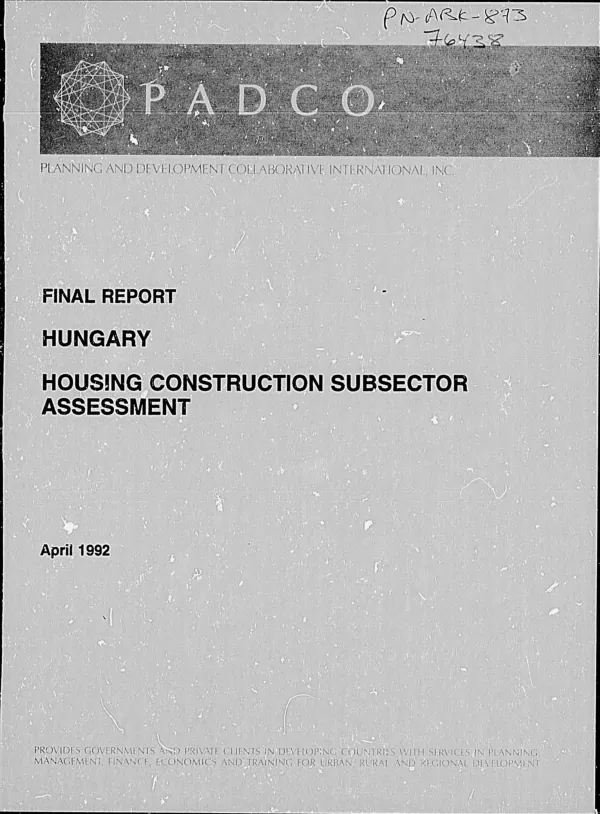
PLANNING AND DEVELOPMENT COLLABORATIVE INTERNATIONAL, INC. (PADCO)
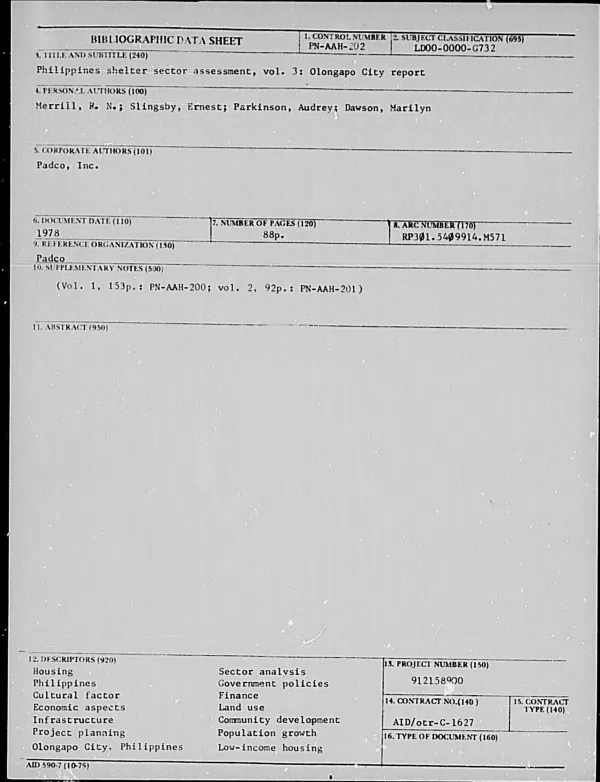
PHILIPPINES SHELTER SECTOR ASSESSMENT, VOL. 1 : COUNTRY REPORT
This is the first of three volumes reporting on a study to develop information and make recommendations relating to the shelter sector (defined broadly as including housing, land, infrastructure, utilities, social services, and unemployment opportunities) in the Philippines.
MERRILL, R. N.; SLINGSBY, ERNEST A. · 1970
Sign in to readA free account is required to download.
Abstract
This volume sets out the dimension of the shelter problem in the country, describes the socioeconomic characteristics of the low-income population, and details the institutions and programs the government has evolved for dealing with shelter problems. Components and constraints in the shelter delivery system and the impact of the national programs on the urban problems in intermediate-sized cities are also described. Two such cities, Angeles and Olongapo, were visited for this purpose (Volumes II and III contain the respective city reports), and analyses of the shelter sector problems and projects in these cities are presented in this volume. The basic criterion on which the study was based was that of financial replicability, which involves the use of low, but adequate project construction standards (and thus low monthly payments) with minimum subsidies in order to allow the replication of low-income housing projects on a program basis. This ensures that total low-income shelter needs can begin to be met. Brief lists of major institutional, financial and physical program/project constraints and advantages precede the summary of recommendations. Recommendations to be implemented on a national level deal primarily with the institutional and financial aspects of broad shelter and environmental programs for provincial cities, while those for Angeles and Olongapa concentrate on the physical and financial components of individual shelter and environmental projects, along with means to improve the delivery of socioeconomic services at the city level. Finally, the report includes 49 tables and figures, three report-related appendices, a list of persons interviewed in Manila, and a 19-item bibliography (1972-1978).