GOVERNMENT OF BANGLADESH
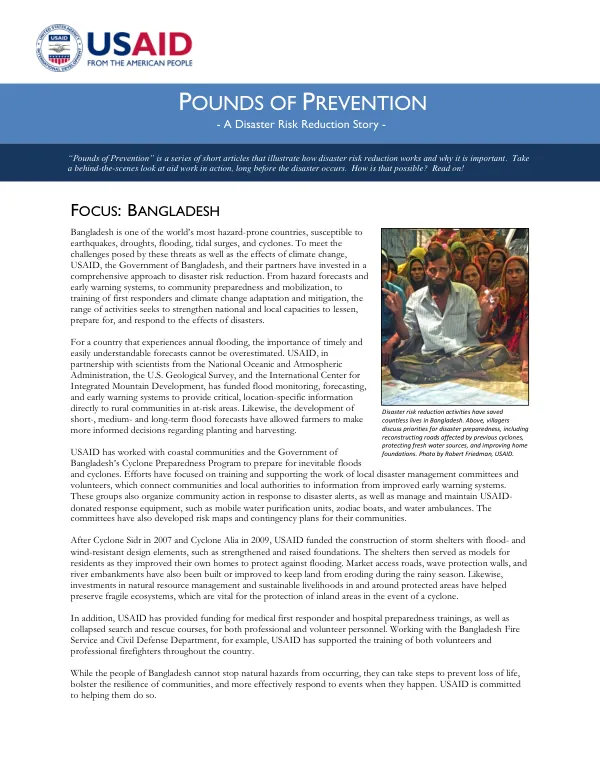
Pounds of Prevention: A Disaster Risk Reduction Story - Bangladesh
Bangladesh has a long history of destructive cyclones, with the 1970 cyclone killing nearly 300,000 people and the Great Cyclone of 1991 claiming 139,000 lives.
1 pages
Sign in to readA free account is required to download.
Abstract
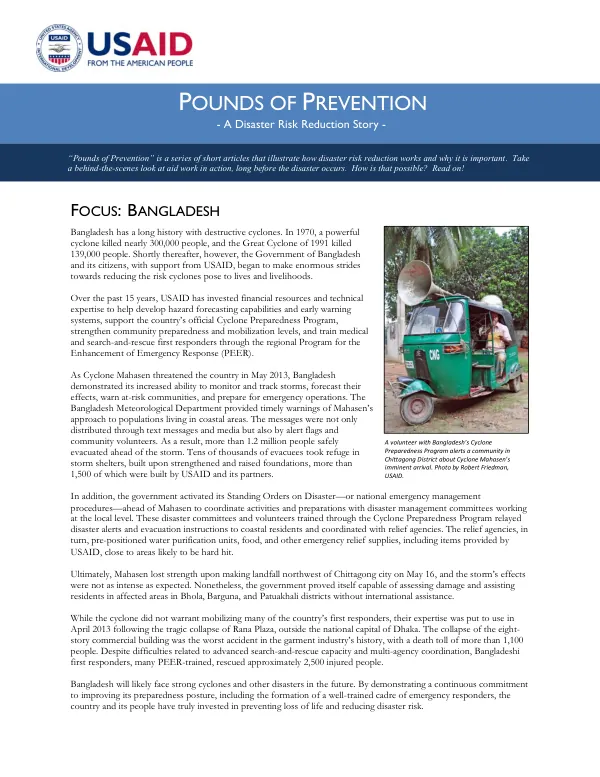
In response, the Government of Bangladesh and its citizens, with support from USAID, have made significant strides in reducing the risk cyclones pose to lives and livelihoods. Over the past 15 years, USAID has invested financial resources and technical expertise to develop hazard forecasting capabilities and early warning systems, support the country's official Cyclone Preparedness Program, strengthen community preparedness and mobilization levels, and train medical and search-and-rescue first responders through the regional Program for the Enhancement of Emergency Response (PEER). These efforts have enabled Bangladesh to improve its ability to monitor and track storms, forecast their effects, warn at-risk communities, and prepare for emergency operations. In May 2013, Cyclone Mahasen threatened the country, and Bangladesh demonstrated its increased ability to respond to the disaster. The Bangladesh Meteorological Department provided timely warnings of Mahasen's approach to populations living in coastal areas, which were distributed through text messages, media, alert flags, and community volunteers. As a result, more than 1.2 million people safely evacuated ahead of the storm, with tens of thousands taking refuge in storm shelters built upon strengthened and raised foundations, many of which were constructed by USAID and its partners. The government activated its Standing Orders on Disaster, a national emergency management procedure, ahead of Mahasen to coordinate activities and preparations with disaster management committees working at the local level. These disaster committees and volunteers trained through the Cyclone Preparedness Program relayed disaster alerts and evacuation instructions to coastal residents and coordinated with relief agencies, which pre-positioned emergency relief supplies, including items provided by USAID, close to areas likely to be hard hit. The country's first responders, many of whom were PEER-trained, played a crucial role in responding to the disaster, despite the fact that the cyclone did not warrant mobilizing many of them. In April 2013, following the tragic collapse of Rana Plaza, outside the national capital of Dhaka, Bangladeshi first responders rescued approximately 2,500 injured people, demonstrating their expertise in search-and-rescue operations. Bangladesh's commitment to improving its preparedness posture, including the formation of a well-trained cadre of emergency responders, has truly invested in preventing loss of life and reducing disaster risk.
Related documents