USAID DEC
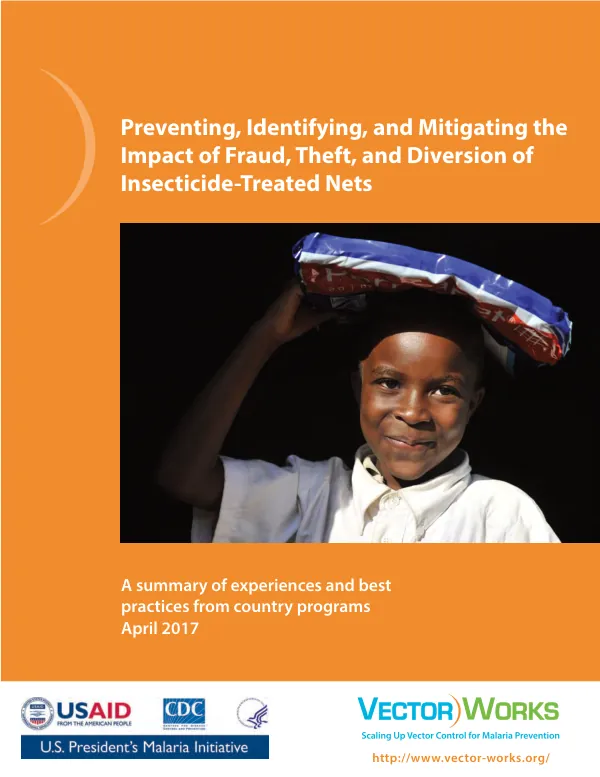
Preventing, Identifying, and Mitigating the Impact of Fraud, Theft, and Diversion of ITNs
Sign inUSAID
Preventing, Identifying, and Mitigating the Impact of Fraud, Theft, and Diversion of ITNs
Insecticide-treated nets (ITNs) have been a crucial component of malaria control programs worldwide, with over one billion distributed in the past 15 years.
2016 · 50 pages
Sign in to readA free account is required to download.
Abstract
The scale of these distributions has led to a growing body of experience in ensuring accountability for ITNs throughout the supply chain. This document summarizes lessons learned from these experiences, highlighting best practices in preventing, identifying, and mitigating potential losses due to fraud, theft, and diversion of ITNs. A risk assessment of the ITN supply chain identified loss events as likely to occur at all levels, with nets most frequently lost during transport and low-level storage. However, the loss of nets at the transport stage has the greatest potential impact. High-impact mitigation strategies include early and detailed planning, establishing robust third-party logistics provider (3PL) transport contracts, and providing sufficient insurance coverage during transport and storage. Current practices in preventing, identifying, and mitigating the impact of fraud, theft, and diversion of ITNs involve standard logistics best practices around storage, transport, and documentation. These practices are built into logistics plans and are seen as a primary way to prevent losses. However, many countries face challenges in ensuring that plans and best practices are followed, even when enhanced monitoring and supervision are in place. Increased political engagement and wider support and understanding of the process from communities appear to help maintain a spotlight on activities, even when formal supervisors are not present. Moves to simplify and align implementation, supervision, documentation, and reporting tasks with existing in-country practices or routine systems have also been found to be helpful in preventing losses and improving identification and mitigation of the impact of such losses. Identifying losses is reported to be difficult, with common tracking mechanisms such as monitoring of documents and spot checks often failing to identify losses until long after the event. These mechanisms may also require large budgets to be useful at-scale and do not necessarily distinguish between mistakes and true instances of fraud or theft. The assessment found that diversion of ITNs is a significant concern, with unauthorized redirection of ITNs from their intended beneficiaries to other groups or unintended geographical locations. Fraud and theft are also major issues, with examples including tampering with container seals, doctoring inventory documents, and deliberately changing the positioning plan. Theft of ITNs for personal monetary gain is also a significant concern. To address these issues, countries undertaking their own risk assessments can use the findings from these assessments to fine-tune logistics plans for ITN distributions. High-impact mitigation strategies include early and detailed planning, establishing robust 3PL transport contracts, and providing sufficient insurance coverage during transport and storage. Simplifying and aligning implementation, supervision, documentation, and reporting tasks with existing in-country practices or routine systems can also help prevent losses and improve identification and mitigation of the impact of such losses. The document concludes by highlighting the need for increased political engagement and wider support and understanding of the process from communities to maintain a spotlight on activities, even when formal supervisors are not present. It also emphasizes the importance of simplifying and aligning implementation, supervision, documentation, and reporting tasks with existing in-country practices or routine systems to prevent losses and improve identification and mitigation of the impact of such losses.
Related documents