USAID. MISSION TO JAMAICA
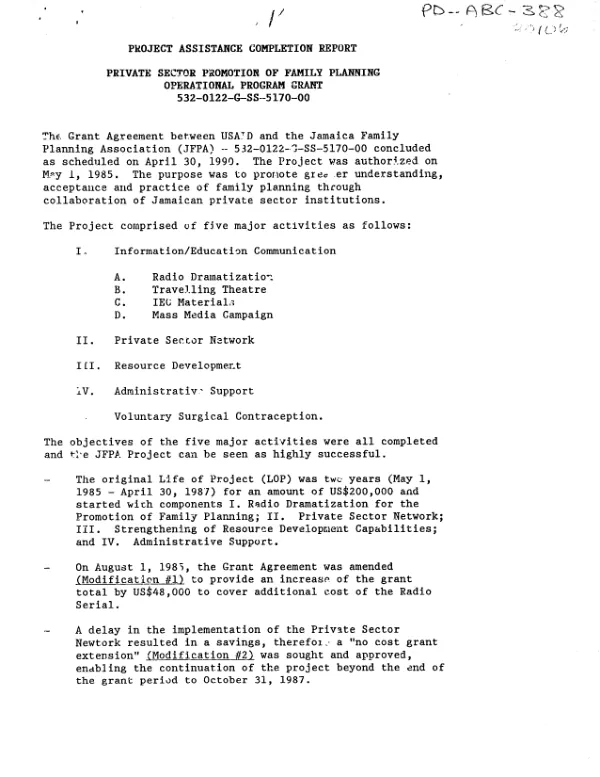
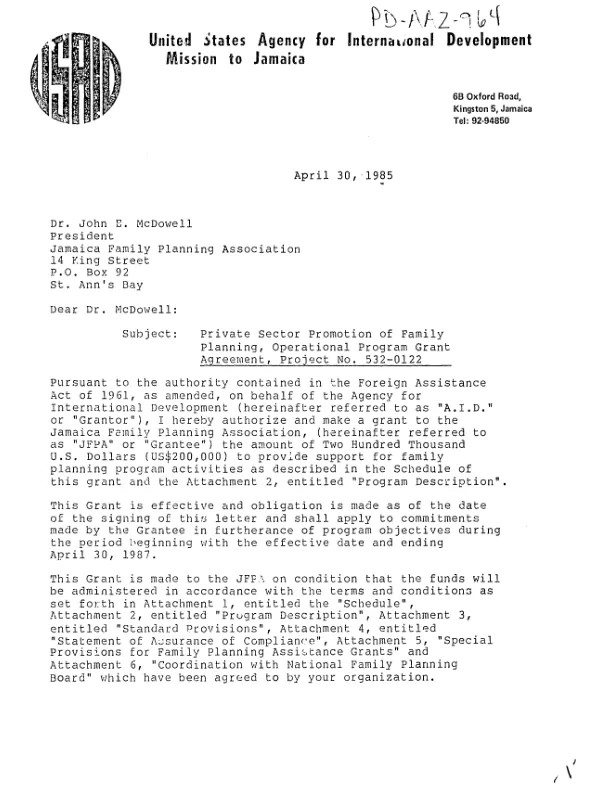
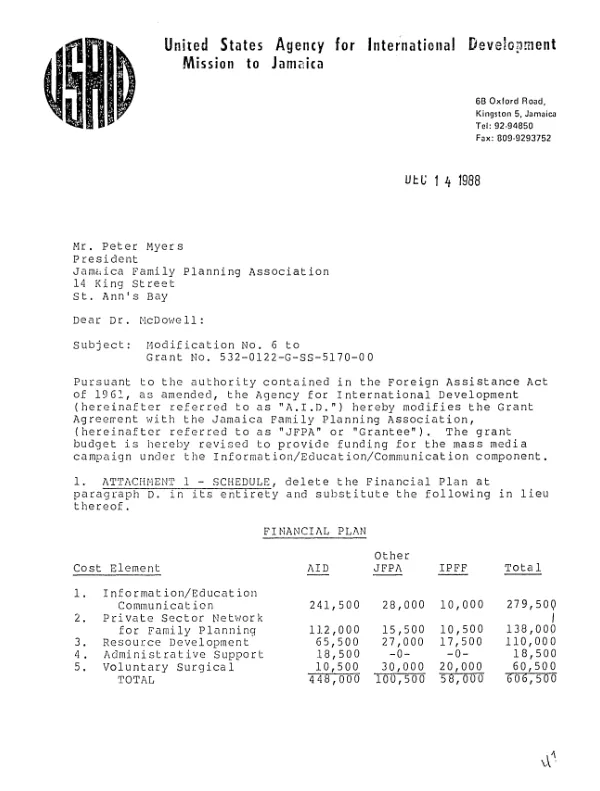
Private sector promotion of family planning
Summarizes attached evaluation (XD-AAX-012-A) of project to strengthen the family planning (FP) education activities of the Jamaica Family Planning Association (JFPA) through a private sector FP education program and a radio serial that delivers FP messages.
1987
Sign in to readA free account is required to download.
Abstract
Mid term evaluation is based on document review and interviews with project, Mission, and JFPA personnel, and covers the period 5/85-4/87. The project is well-conceived and has a strong potential for achieving its goals. The radio dramatization component has successfully developed and broadcast a serial ("Naseberry Street") for 24 months, which has won a large audience estimated at 70% of the females and 42% of the males in the target population. The serial has influenced its audience to think positively about FP by indirectly conveying messages advocating the use of contraceptives, abstinence, and promoting sexual responsibility among males. The component is very efficient (cost per person reached is estimated to be about U.S.$0.15). The second component, to develop a network of private firms willing to allow JFPA to provide FP education programs and contraceptive distribution in the workplace, has met with some success. By 11/86, 3,300 employees of 36 companies had received FP education and more than 700 became acceptors. The program has been able to reach a large number of males, and has been well promoted by participating firms. Per person cost is about U.S.$17. Finally, a resource development component, designed to improve JFPA fundraising, has completed a valuable feasibility study, recruited a coordinator, and prepared and implemented a resource development plan. Project weaknesses have centered around (inter alia) (1) the dramatization component"s inability to reach a large male audience or to influence economically disadvantaged women, and its relative isolation from other JFPA activities; (2) the FP education component"s need to enlist more private companies and to develop educational materials more appropriate to its various audiences; and (3) the resource development component"s delay in beginning actual fundraising activities. Recommendations are to give "Naseberry Street" a wider audience through the distribution of audio tapes and, perhaps, a travelling troupe of actors performing "Naseberry Street" mini-plays, enlist more private firms in the FP education component and develop better materials, and begin JFPA fundraising activities in earnest. The project teaches the value of using an indirect approach to deliver FP messages and the importance of coordination with public FP agencies in order to avoid conflicting messages. It also underlines the problems of fully realizing the planned involvement of volunteers in the project.
Related documents
Documents in this collection
 1986
1986USAID DEC
Review of `private sector promotion of family planning' project, USAID OPG agreement no. 532-0122-G-SS-5170-00, January - February 1987 : executive summary and summary of recommendations
Open record 1970
1970USAID DEC