ASSOCIATION FOR THE DEVELOPMENT OF AFRICAN EDUCATION
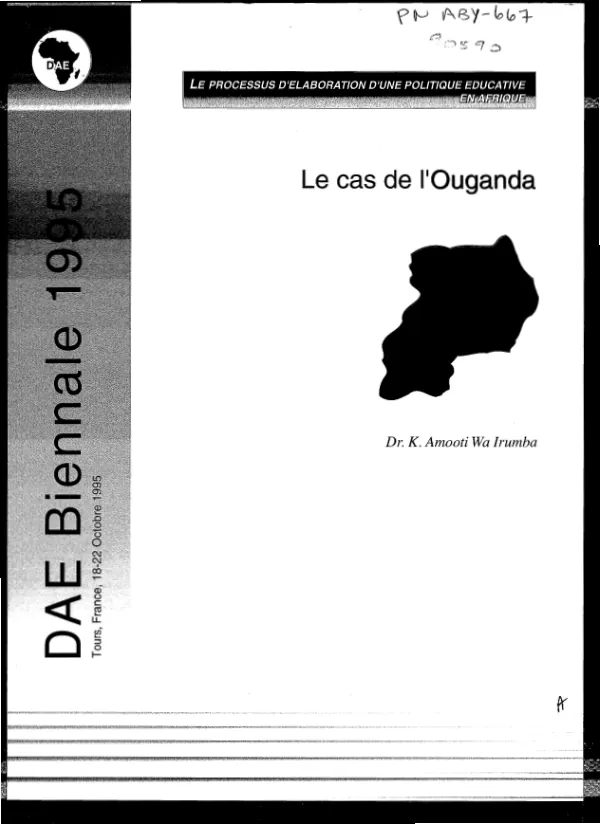
Process of education policy formation in Africa : the case of Uganda
Over the past nine years, Uganda has been simultaneously democratizing its society, instituting economic reforms, and framing a new constitution.
Amooti Wa Irumba, K. · 1970
Sign in to readA free account is required to download.
Abstract
During this period of transition, the government has been reviewing its national education policy alongside similar efforts in other sectors. The procedures used to review education policy, however, have departed significantly from the approaches used for decades. The central purpose of this report is to highlight the innovations and share the lessons learned from Uganda"s experience. The most significant innovation has been extensive consultation, dialogue, and debate among government officials, professional educators, and a wide variety of stakeholders at all levels of civil society. Using various mechanisms to encourage mass participation, the process has generated widespread understanding of the proposed policies and willingness to cooperate in their implementation. It has also helped produce compromises and build consensus around controversial issues in education. One consequence of the protracted process has been the need to move ahead with the implementation of selected policies before completing the process, raising questions of prioritization and issues of power relationships between donors and government. As they formulate their own educational policies, other African countries may find that the lessons learned from this exercise can help them increase effective ownership of both the process and the resulting policies. (Author abstract)
Connected topics