USAID DEC
Programa de Justicia para una Paz Sostenible: Estrategia de MRC
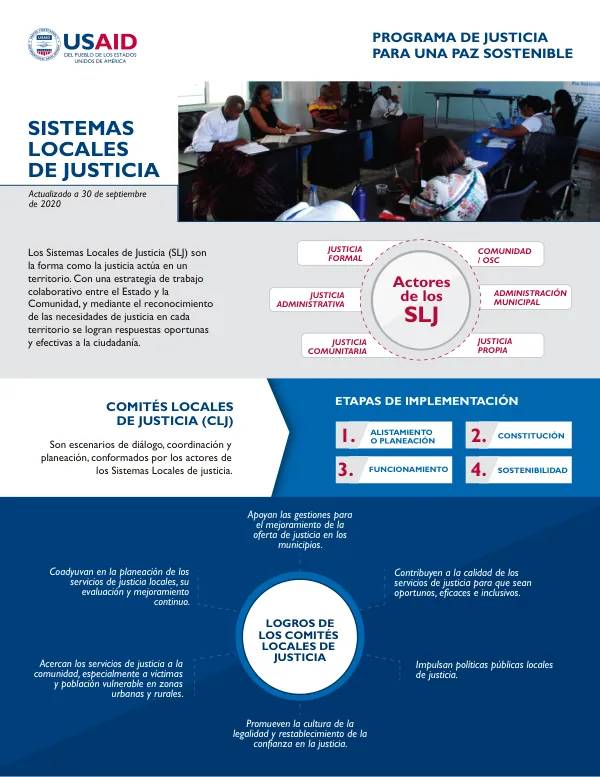
The Programa de Justicia para una Paz Sostenible, also known as the MRC Strategy, aims to strengthen the implementation and use of Conflict Resolution Mechanisms (MRC) in territories, particularly in remote areas.
2020 · 3 pages
Sign in to readA free account is required to download.
Abstract
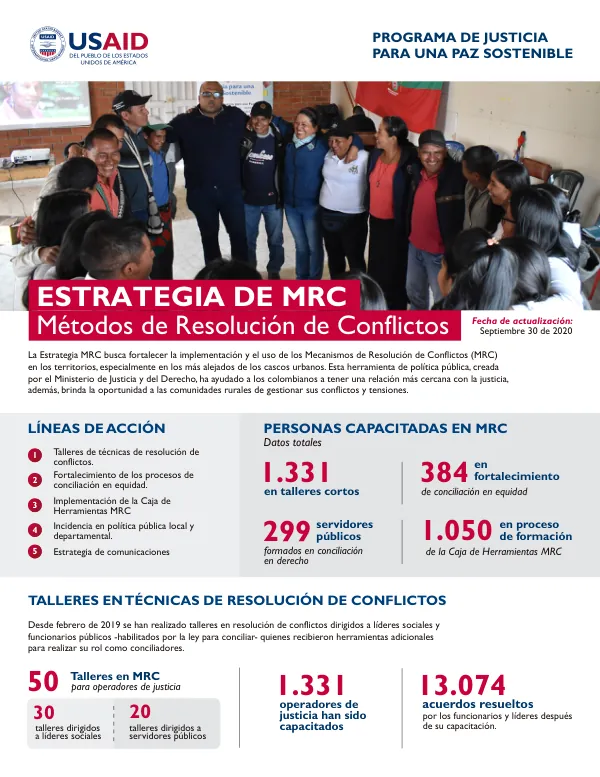
This public policy tool, created by the Ministry of Justice and the Law, has helped Colombians develop a closer relationship with justice and provided rural communities with the opportunity to manage their conflicts and tensions. Since February 2019, workshops on conflict resolution have been conducted for social leaders and public officials, who have received additional tools to perform their role as mediators. These officials have been trained to use the MRC tools, which have been implemented in various regions. The MRC Strategy has focused on several key areas, including the development of conflict resolution techniques, the strengthening of equitable conciliation processes, and the implementation of the MRC Toolbox. The strategy has also emphasized the importance of communication and has implemented a communication strategy that includes radio, television, print media, and social networks. As of September 30, 2020, a total of 1,331 people had been trained in MRC techniques, including 299 public officials and 384 conciliators. The MRC Toolbox has been implemented in 36 municipalities, and 500 agreements have been reached through the use of the toolbox. Additionally, 24 municipal projects have been implemented to strengthen and sustain equitable conciliation, and 15 PACEs (Points of Attention for Equitable Conciliation) have been created or strengthened. The MRC Strategy has also focused on the integration of MRC into departmental and municipal development plans. As of September 30, 2020, 49 municipalities (91%) and 6 departments (100%) had integrated MRC into their development plans. The implementation of the MRC Strategy has been led by the Ministry of Justice and the Law, in collaboration with the Department of National Planning (DNP) and other stakeholders. The strategy has been implemented in various regions, including Antioquia, Chocó, Cauca, Nariño, and Putumayo. The MRC Strategy has been successful in promoting conflict resolution and equitable conciliation in various regions. The strategy has been implemented through a series of workshops, training sessions, and the development of the MRC Toolbox. The strategy has also emphasized the importance of communication and has implemented a communication strategy that includes radio, television, print media, and social networks. The MRC Strategy has been led by various actors, including the Ministry of Justice and the Law, the Department of National Planning (DNP), and other stakeholders. The strategy has been implemented in various regions, including Antioquia, Chocó, Cauca, Nariño, and Putumayo. The implementation of the MRC Strategy has been successful in promoting conflict resolution and equitable conciliation in various regions. The strategy has been implemented through a series of workshops, training sessions, and the development of the MRC Toolbox. The strategy has also emphasized the importance of communication and has
Related documents