URBAN INSTITUTE (UI)
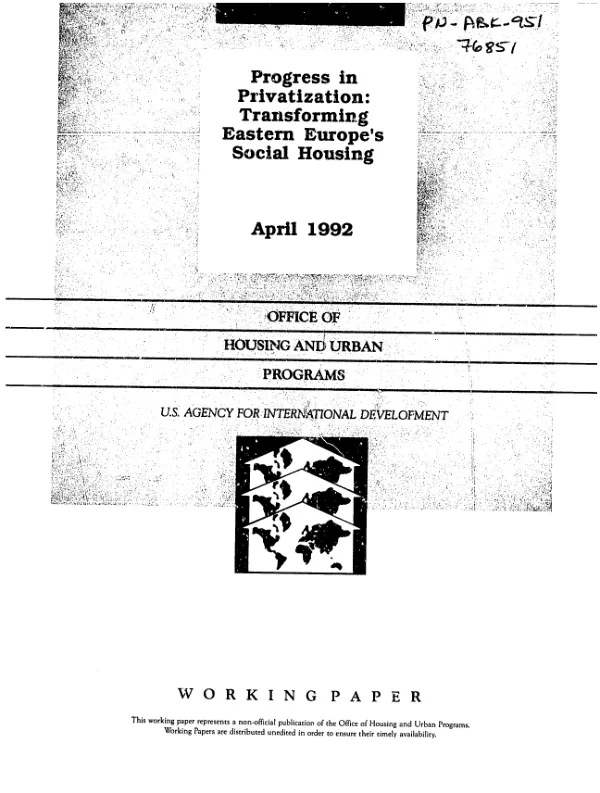
Progress in privatization : transforming Eastern Europe"s social housing
The selling of state-owned housing to private buyers, principally residents but in some cases investors, is the major housing sector reform being considered by the new governments of Eastern Europe.
Kingsley, G. Thomas; Struyk, Raymond J. · 1992
Sign in to readA free account is required to download.
Abstract
This paper examines the policy reforms needed to support privatization in the region, and then describes what four countries -- Poland, Czechoslovakia, Hungary, and Bulgaria -- have done about these reforms, as well as the actual progress they have made in housing privatization. A significant number of social housing units in each of these countries have already been transferred into private hands, but more will need to be sold to reap the full benefits of privatization. Progress toward an efficient housing sector will also depend on several accompanying reforms: rent increases, ultimately leading to the removal of controls; legal revisions permitting landlords to evict tenants if they fail to honor their obligations; housing allowance programs, focusing assistance tightly on the poor; legislation to permit the sale of social housing in a workable form (i.e., with private building control rather than government management); the availability of mortgage financing; capacity to appraise properties and record titles efficiently; and the encouragement of private building management. Finally, housing policy should adopt a strategic, incremental approach, setting prices neither so high that privatization is stopped nor so low that housing stock is in effect given away. (Author abstract, modified)