USAID. BUR. FOR LATIN AMERICA AND THE CARIBBEAN. REGIONAL DEVELOPMENT OFC. CARIBBEAN
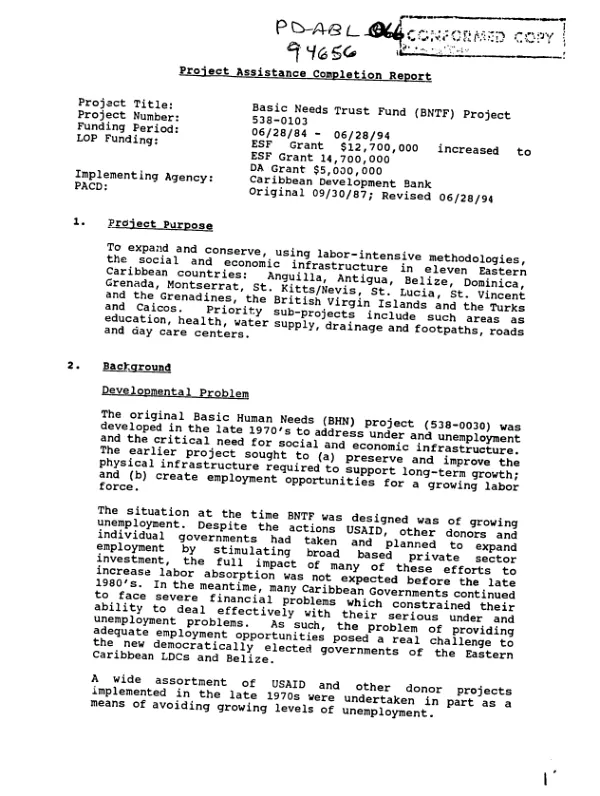
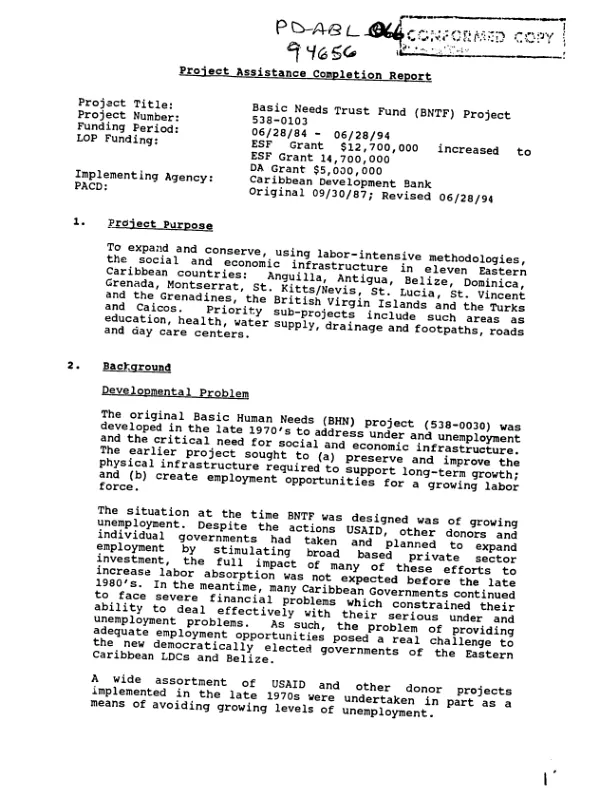
Project assistance completion report : basic needs trust fund (BNTF) project
PACR of a project (6/84-6/94) to expand and conserve the social and economic infrastructure in 11 Eastern Caribbean countries using labor-intensive methodologies.
Sign in to readA free account is required to download.
Abstract
The project was successful in achieving its targets. Specifically, it financed 266 new or rehabilitated subprojects; generated 110,000 person-weeks of employment; developed maintenance plans for 5 countries and implemented them in 3; and aired various maintenance video and TV spots and radio spots in come countries. The project, which was very popular with politicians and decision makers as well as with parents and others in the community, was effective in improving environmental conditions at schools and health clinics, and in increasing the level of services. The Caribbean Development Bank's (CDB's) enthusiasm for the project resulted in its funding a follow-up project which will provide $15 million to Guyana, Belize, and some Organization of Eastern Caribbean States (OECS) Group III countries. The following lessons were learned. (1) To ensure that the new or rehabilitated infrastructure will be maintained, maintenance financing, procedures, and fully trained personnel should be in place before implementation of infrastructure projects or at least very early in the program. An evaluation carried out in 1991 found this was not the case. The CDB tried to remedy the situation but had little success. (2) Take care not to be bulldozed by the implementing organization or by the attitude that the implementing managers know it all. In the present case, efforts by engineers from the Caribbean Regional Development Office (RDO/C) to verify the quality of construction were often countered by CDB's assurances that no serious problems existed, which was not the case. Only at a final "lessons learned" session did the CDB address the issues involved.