USAID DEC
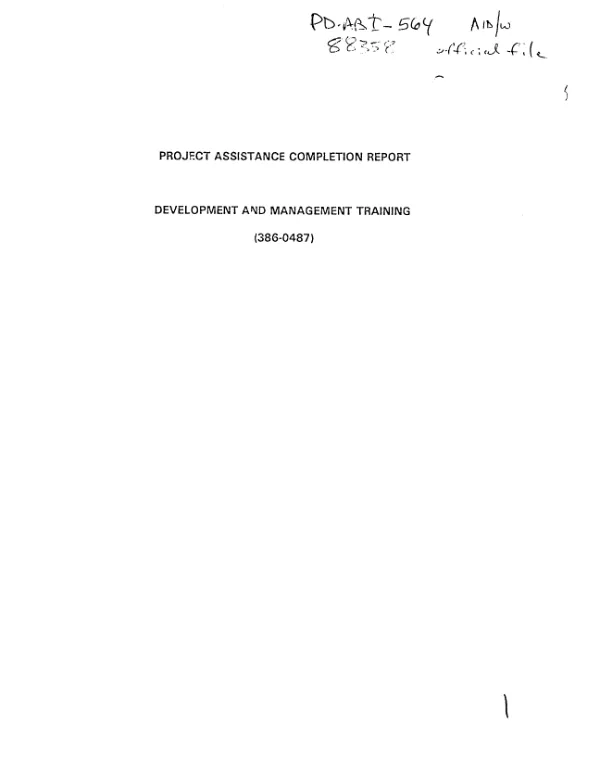
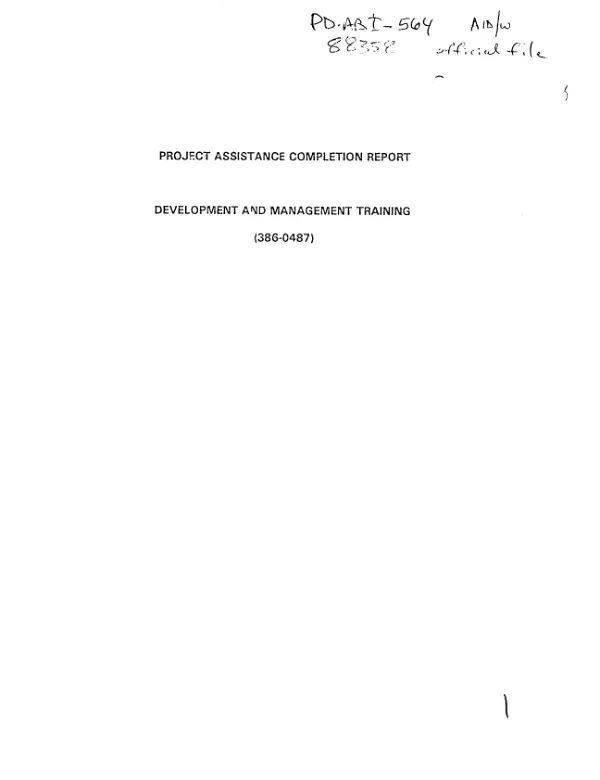
Project assistance completion report : development and management training (386-0487)
Sign inUSAID. MISSION TO INDIA
Project assistance completion report : development and management training (386-0487)
PACR of a project (9/82-6/92) to provide managerial and technical training to public sector, and where appropriate private sector, personnel to strengthen India"s capabilities to plan and implement development projects.
1970
Sign in to readA free account is required to download.
Abstract
The project was a resounding success. As it evolved, it grew steadily grew in size and scope, particularly after a highly favorable mid-term evaluation when it was expanded beyond its original priority areas (agriculture, irrigation, health, women in development, child welfare, environment, energy, and social welfare) to include four major additional areas -- informatics for health, scientist exchanges, housing and urban development, and special projects. This last component, special projects, provided a vehicle for increased private sector involvement, through which the project funded activities to strengthen the capacity of selected training institutions. These special sub-projects included collaborative research under the Council of Scientific and Industrial Research of India and the National Science Foundation of the USA Exchange program; the Medical Literature Analysis and Retrieval (MEDLARS) project; and training and TA in the area of Housing and Urban Affairs. Ultimately, the project far exceeded its original training goals: about 9,150 people were trained through in-country programs, and about 500 middle- and senior-level personnel, most of whom were from the public sector, in the U.S, versus original goals of 1200 and 100, respectively. In addition, the project offered collaborative project development opportunities to 25 U.S. and 25 Indian scientists in both India and the U.S. through the scientist exchange program. The result is a base of trained personnel in both the public and private sectors in such diverse fields such as power generation, agriculture, water resources, health, environment, human welfare, telecommunications, women in development, and bioinformatics which will undoubtedly contribute significantly to India"s development. The key lesson learned concerns the mode and content of training. According to the report, training yielded substantive benefits to both participating institutions and individuals when it was focused, i.e., related to a specific technical area. However, the benefits of the short-term U.S. training for middle and senior government officials, which addressed diverse areas including taxation, accounting/budgeting, public enterprise management, project analysis and implementation, and export marketing strategies, were less clear; even though these programs clearly benefited the participants, their impact in terms of wider dissemination of ideas or the application of skills in the local context was not evident. USAID/India decided not to fund short-term U.S. training in the future unless it focused on a few specific areas. The Technical Assistance and Support Project (TASP) has been amended to include short-term U.S training in support of economic and financial reforms, but in specific areas such as the financial sector, privatization, and exports/trade.