USAID DEC
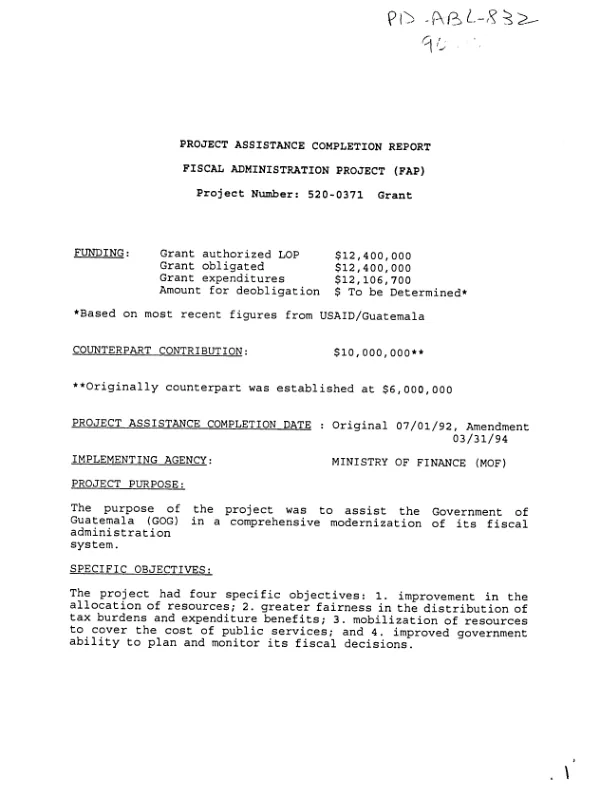
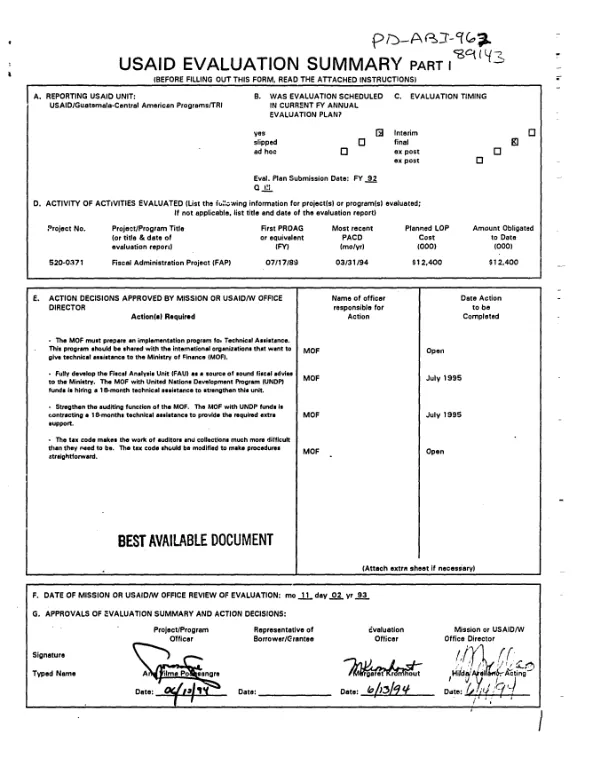
Project assistance completion report : fiscal administration project (FAP) -- project number 520-0371
Sign inUSAID. MISSION TO GUATEMALA
Project assistance completion report : fiscal administration project (FAP) -- project number 520-0371
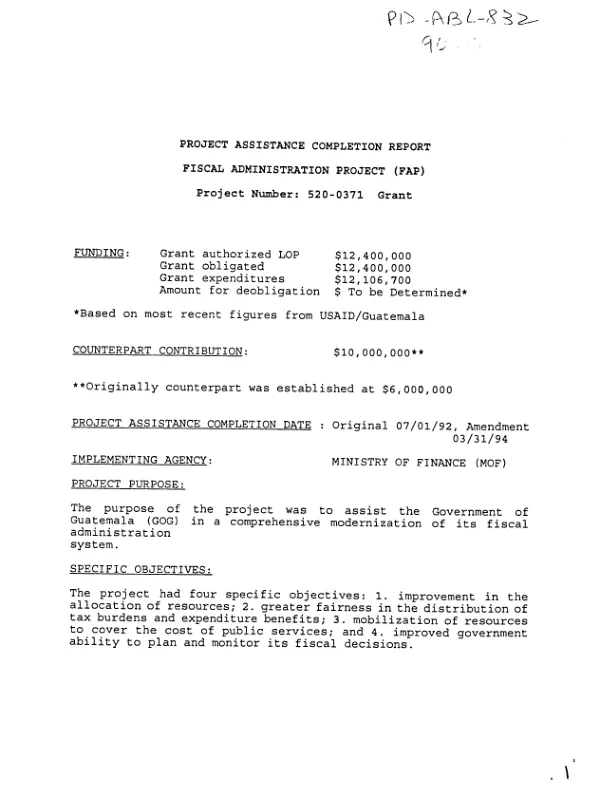
PACR of a project (ending in 3/94) to assist the Government of Guatemala (GOG) in modernizing its fiscal administration system.
1995
Sign in to readA free account is required to download.
Abstract
The project fulfilled almost all objectives and also completed numerous additional tasks. Significant input was provided to the GOG's tax modernization program. New laws for Guatemala's most important taxes (income tax and value added tax), along with implementing regulations, were designed and written by project staff. Computerized systems in the Ministry of Finance (MOF) have been modernized and data management is now much improved. Control systems have been put in place to assist the MOF in managing tax related matters. Training has occurred in almost all functions of the Internal Revenue and Customs Directorates. The Financial Analysis Unit has been established and its staff has been trained and equipped to assist the Minister in the formation and management of fiscal policy. The tax modernization program of 1992 significantly improved the Guatemalan tax structure, making it simpler, easier to administer and comply with, fairer, and more investor friendly. Tax reform was mostly directed to a structural reform, particularly to broadening the tax base and removing distortions in relative prices that affect economic choices. Significant improvements were introduced in five areas: (1) the removal of all tax incentives (except for export promotion), which should put more businesses on an equal footing; (2) the taxation of interest; (3) removal of "cascading", an important distortion in the value added tax, by the provision of refunds, of full and immediate credit for capital purchases, and of credit for all inputs; (4) equalization of export activities by extension of zero rating traditional exports; and (5) removal of a significant incentive to income tax evasion by elimination of the average-marginal rates. Despite these successes, the institutionalization of tax reforms was not achieved. Reasons for this include a lack of GOG political commitment to tax reform and failure to complement a change in the tax structure with administrative reforms to alter personnel policies which encourage rapid turnover of the most qualified personnel, constantly update tax information databases, and enforce the new tax laws. On monitoring results, the project suffered from a lack of clarity of end-of-project status and how to measure results. Lessons learned include the following. (1) The modernization effort should have had a broader coverage of MOF divisions, since some divisions still operate in antiquated and counterproductive ways. (2) Tools are not everything. While the project enjoyed tremendous success in installing computerized information systems, the will to use the tools has not increased simultaneously. (3) Day-to-day ministry work should not be the responsibility of project advisors.