USAID. MISSION TO COSTA RICA
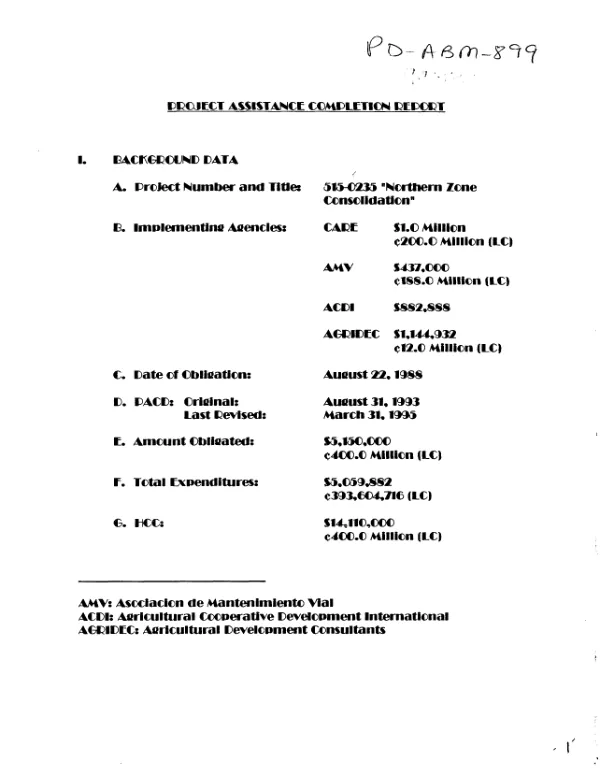
Project assistance completion report : northern zone consolidation
PACR of a project (8/88-3/95) to consolidate agricultural development efforts begun under predecessor project 5150191 in Costa Rica's northern zone.
Sign in to readA free account is required to download.
Abstract
While the project increased environmental awareness in the zone, environmental degradation continues unabated. People, industries, and government are more aware of the problems caused by deforestation, and more willing to act on this knowledge, yet this awareness arrives too late: more than 80% of the lowland rainforest in the zone has been eliminated, and little of what remains is under any kind of protection or management scheme. A key lesson is that development and conservation are complementary, inseparable issues. This knowledge, while part of the project's design, was not efficiently incorporated into its structure or implementation. Environmental education needs to be an ongoing, permanent process, not part of a series of disconnected projects. The road maintenance component was more successful. The Asociacion de Mantenimiento Vial (AMV) was created as a self-sustained private business for maintaining gravel feeder roads in the area. AMV provided periodic maintenance to 420 km of gravel secondary roads and rehabilitated 150 km. AMV is far more successful than anyone thought possible, and, despite some continuing problems (e.g., attempts at political interference), faces no serious imminent threats. Its principal challenge now is to create lasting linkages with key individuals in Costa Rica's road building, technical, and political communities. The third component, which included plant material production and agricultural diversification and was implemented by CARE from 10/91 on, has largely fulfilled its objectives. CARE responded to the great expectations that had been raised, and its efforts to extend perennial crops, establish credit committees, and train farm families in the use of pesticides and alternative biological control systems have left a sustainable impact. A local foundation (FUNDECA) was established to provide farming communities with markets for their products, access to reasonable and flexible credit, and representation at the regional and national levels. Several lessons can be learned from the CARE component. (1) To achieve success with a credit program within the period of project implementation requires adequate funds, not just "seed money". The 33 credit committees founded by CARE have sufficient funding to maintain interest and attract additional capital. (2) By establishing a farmer organization early in the project, CARE had time to provide the training and attention needed to bring the organization to maturity, thereby assuring sustainability. (3) The strategy of limiting credit to certain activities was effective in promoting agricultural diversification. Without this policy, large sums would have been invested in cattle, beans, and other traditional activities, leaving fewer funds available for heart-of-palm and pineapple. (4) Community organization must be done carefully and systematically. In this project, an initial community diagnostic was never done, and as as a result, some activities were not planned in accordance with community priorities. (5) Plant production targets proved overly optimistic when none of the local nurseries produced seedlings in the amounts for which they had contracted. Dependence on local nurseries can place the entire implementation of a project in jeopardy. (6) The implementing NGO must have good systems for credit management and supervision. CARE had such systems and transferred them to the credit committees. Its personnel had several years of experience and support staff were always available. (7) Projects should focus on a few, well-defined objectives. In this project, objectives at first were not very clearly defined, but the focus on three crops and the credit fund made it easy for project staff to establish priorities.
Related documents
Documents in this collection
 1970
1970USAID DEC
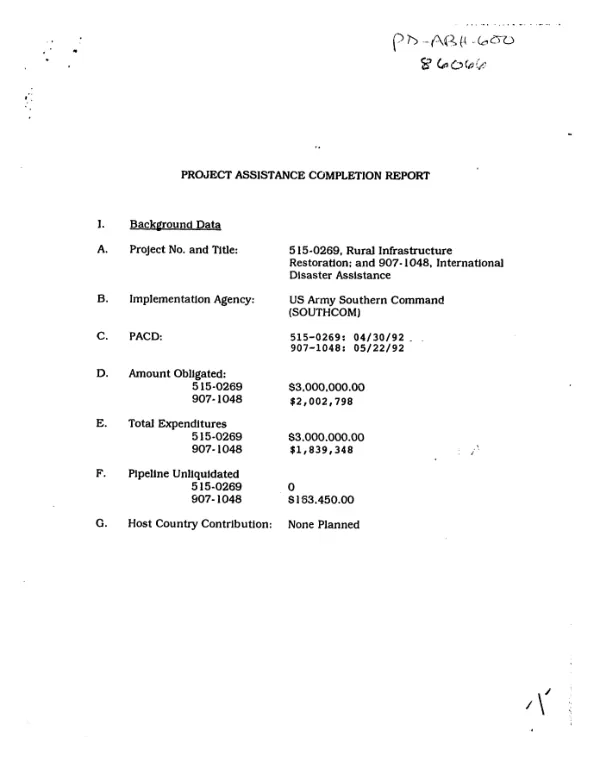
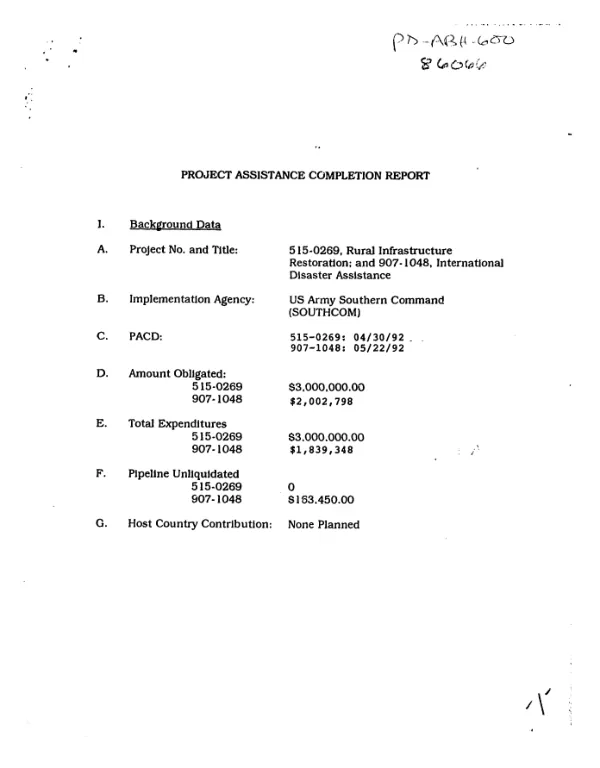
Project assistance completion report : 515-0269, rural infrastructure restoration and 907-1048, international disaster assistance
Open record 1970
1970USAID DEC