USAID DEC
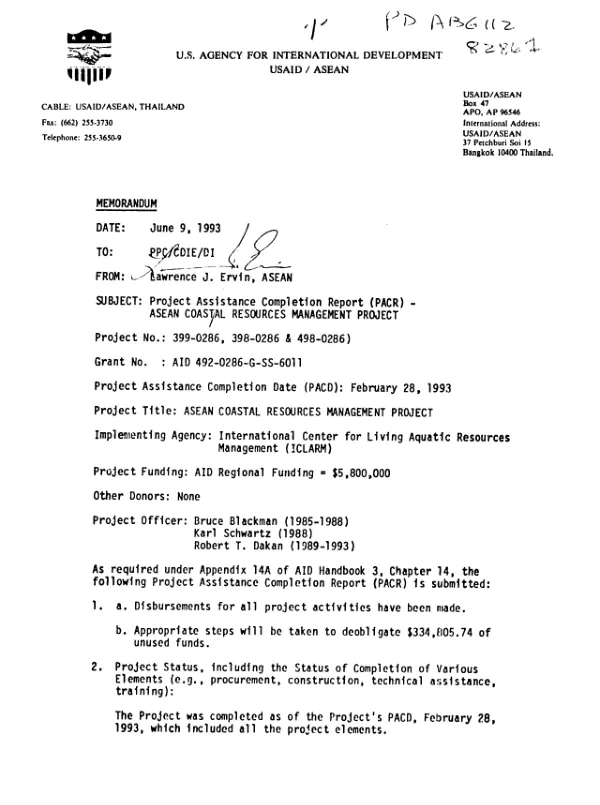
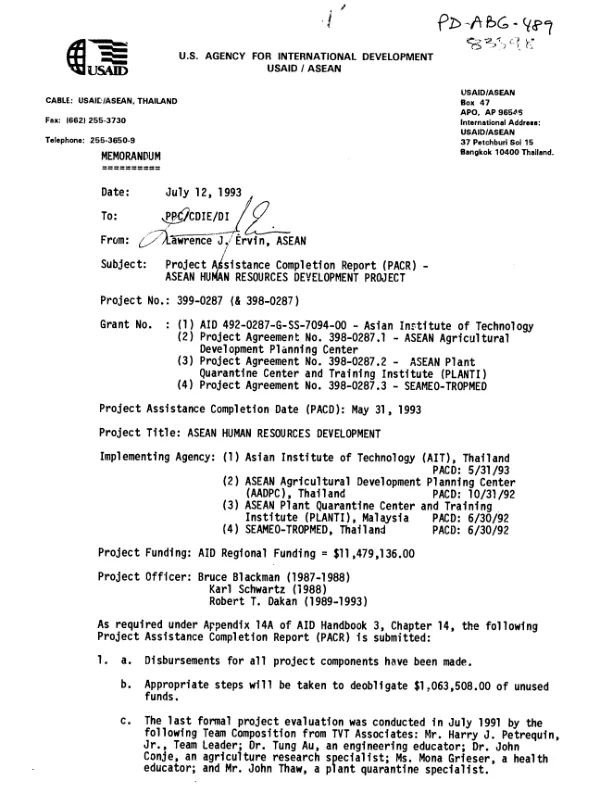
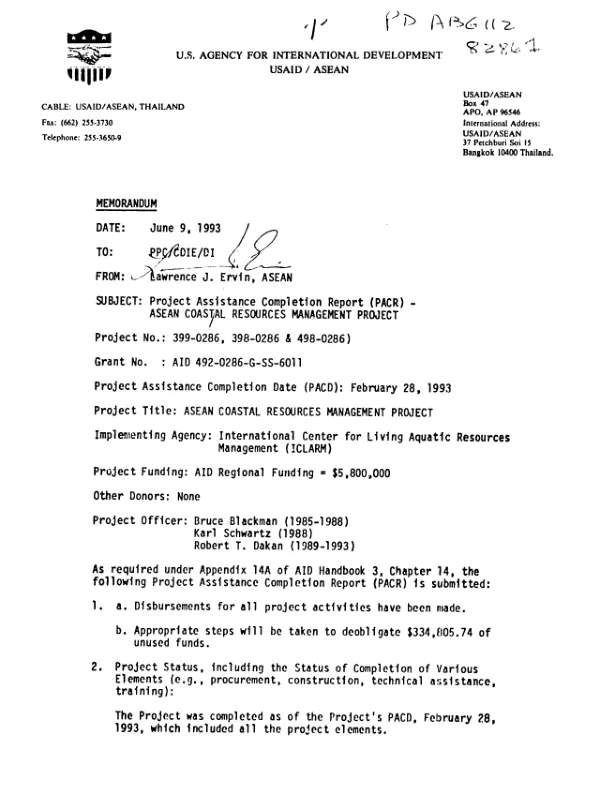
Project assistance completion report (PACR) : ASEAN coastal resources management project
Sign inUSAID. BUR. FOR ASIA. OFC. OF THE AID REPRESENTATIVE TO ASEAN (ASSOCIATION OF SOUTHEAST ASIAN NATIONS)
Project assistance completion report (PACR) : ASEAN coastal resources management project
PACR of a project (1985-2/93) to develop integrated coastal resources management (CRM) plans in the Association of Southeast Asian Nations (ASEAN) region.
1993
Sign in to readA free account is required to download.
Abstract
The project was a success. Site-specific CRM plans were developed for each of the six ASEAN countries, 118 ASEAN professionals were trained, and 34 publications, including 281 working papers, were produced. Increased institutional involvement in and political will toward sustainable coastal development were reflected by the inclusion of CRM plans in national economic development plans and a commitment to implement them. The ASEAN governments now recognize the severity of resource use conflicts in their coastal zones and are prepared to help find solutions to them. Each participating national government has implemented some of the project"s recommendations. More than 200 national scientists, resource managers, and planners from over 47 institutions actively participated in various project activities, resulting in the development of a core group of professionals in each country equipped with technical knowhow in CRM. Public awareness of the importance of proper management of coastal areas also increased as project activities received both newspaper and television coverage. The project also served to identify economic opportunities that complement CRM, including the development of artificial reefs, tourism enhancement, aquaculture development, and improved waste management. Other successes of the project include: fostering regional collaboration, development of a CRM curriculum, and promotion of linkages among donor agencies, lending institutions, and the public and private sectors with respect to CRM. The project teaches three lessons. (1) Because CRM is a many-faceted, multidisciplinary activity, it must include two mechanisms: integration and coordination. However, political and administrative realities make integrated implementation difficult, and in some cases unfeasible. Realistically, CRM will have to be implemented by various sectoral agencies. Coordination of these agencies is therefore essential. (2) The choice of a top-down or a bottom-up approach to planning depends on the political structure of a country. The bottom-up approach is more effective at the micro-level, because of the potential for greater community involvement, but should be done carefully in order to minimize negative effects such as unrealistic expectations by the communities. (3) Hiring of consultants provided fresh insights in project design and implementation.