USAID. BUR. FOR LATIN AMERICA AND THE CARIBBEAN. REGIONAL DEVELOPMENT OFC.
Project assistance completion report : population and development
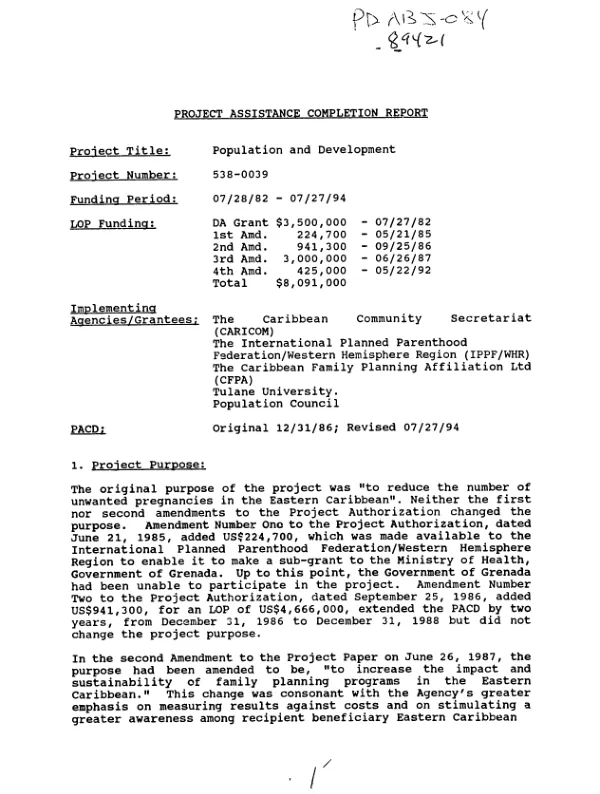
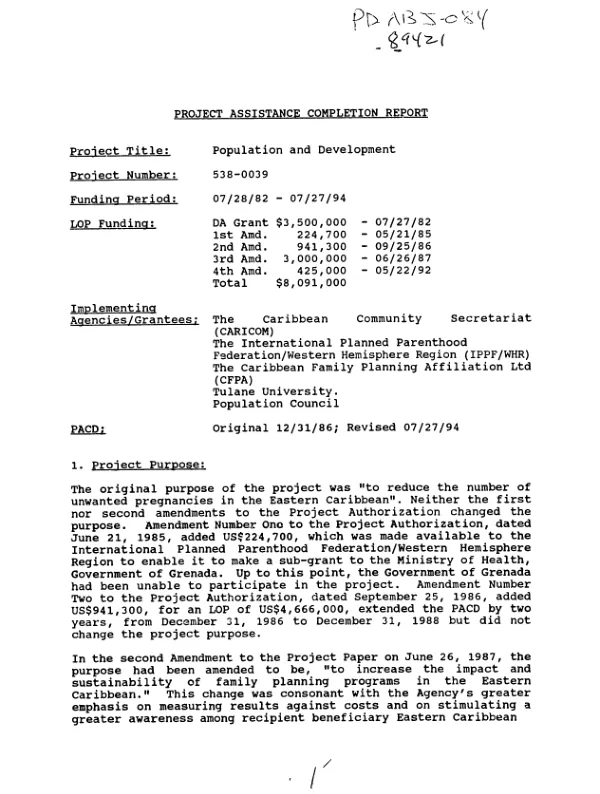
PACR of a project (7/82-7/94) to increase the impact and sustainability of family planning (FP) programs in the Eastern Caribbean.
1994
Sign in to readA free account is required to download.
Abstract
The project made progress towards meeting most targets, though generally to a lesser extent than planned. The following lessons were learned. (1) A shortage of highly qualified personnel at all levels due to "brain drain" has put a disproportionate management burden on those in political and civil service leadership positions. Project designers should, where possible, designate lower level staff to serve on task forces in order to reduce the pressure on those at the Permanent Secretary level. (2) Consultation prior to project design with those who will actually implement a project is crucial. The Management Information System failed because the public health nurses resented the additional data-gathering responsibility required of them. (3) The community-based delivery systems that have worked so well in Africa and Asia may not be sustainable in the Caribbean, which is already fairly well served by polyclinics, private doctors, and pharmacists. Project attempts at employer-based delivery programs in industrial parks also met with disappointing results, though possibly because of economic problems in the parks themselves. In any event, it is important to continue to push for a change in public policy and promote the concept that the general public must help bear the cost of some social and medical services. The private sector must also be encouraged to carry its share of responsibility. (4) Since nurses continue to be the front-line FP workers in the Caribbean, continuing attention to their training is necessary. Doctors, on the other hand, have shown themselves unwilling to attend local training programs if this conflicts with surgery times or income opportunities, though they are willing to attend training courses abroad if expenses are paid and the training leads to certification. (5) Sex and youth will continue to be a recurring theme. This project was partially successful in establishing youth clinics and providing youth counseling. Much persistence is necessary to incorporate sex education into school curricula. (6) Both this project and the Basic Needs Trust Fund project (5380103) allocated funds for specific public works necessary for the project, e.g., refurbishing FP clinics. Unfortunately, this was done, as usual, through Public Works Departments, thereby ensuring that not all of the works approved would be finished. Some other way of accomplishing this work must be found. (7) By project end, the Caribbean Family Planning Affiliation (CFPA) had evolved into a strong regional institution capable, with continued support, of carrying on the work of the project, thereby showing the wisdom of sticking with a grantee through thick and thin. (8) It is wise to build on the successes of other projects.