USAID DEC
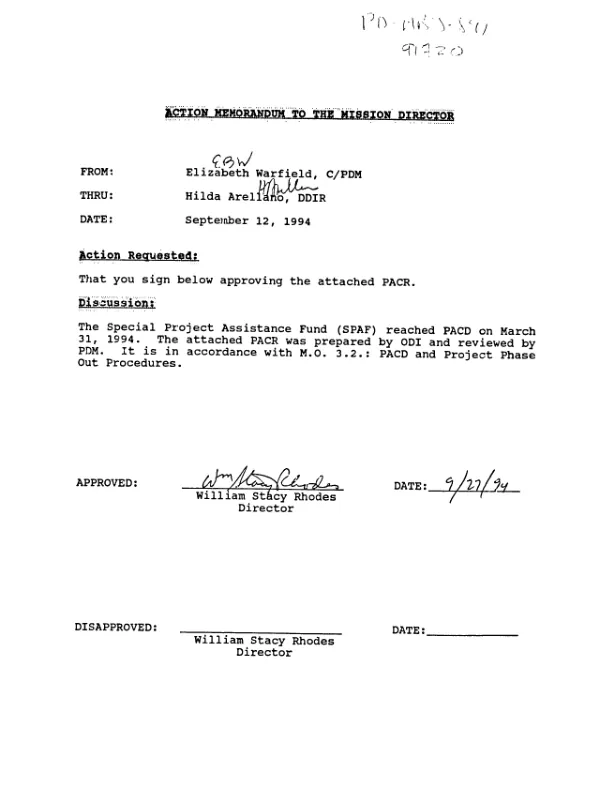
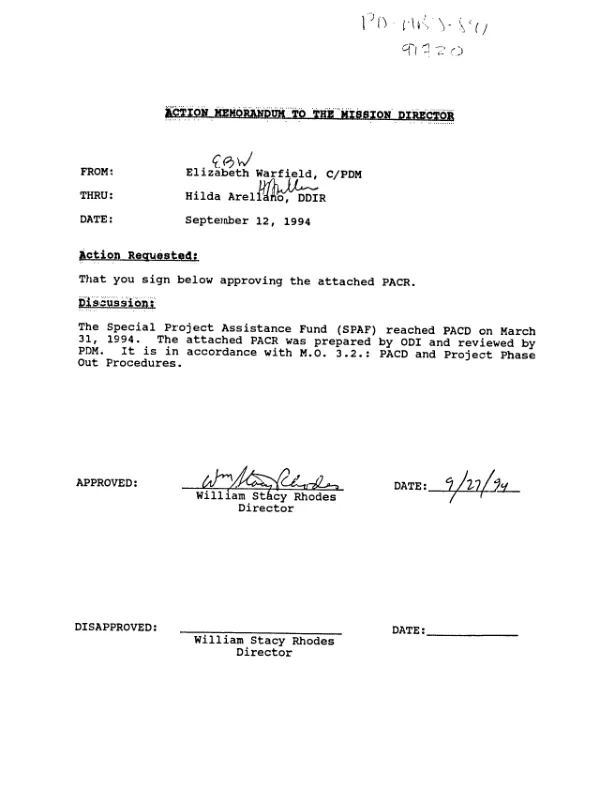
Project assistance completion report : special project assistance fund (SPAF) no. 520-0383
Sign inUSAID. BUR. FOR LATIN AMERICA AND THE CARIBBEAN
Project assistance completion report : special project assistance fund (SPAF) no. 520-0383
PACR of the Small Projects Assistance Fund (SPAF), a project (3/88-9/94) to finance small self-help development projects in rural communities assisted by Peace Corps volunteers in Guatemala.
1994
Sign in to readA free account is required to download.
Abstract
Because the Peace Corps did not have the administrative support resources needed to manage project funds efficiently, it requested that management responsibility be transferred to CARE in 10/91. The project served to maintain the presence of Peace Corps volunteers, CARE, and USAID in rural communities where other-donor assistance was usually nonexistent. After taking over, CARE administered the SPAF well and expeditiously. During its tenure, a total of 53 projects costing $46,585 were completed. Most frequently, these projects involved building latrines and training health promoters and midwives, particularly in remote or inaccessible villages. Smaller latrine projects (i.e., those with 30 or fewer latrines) were more successful than larger ones. Up to 40% of Peace Corps volunteers in health and nutrition projects made use of SPAF funds at some point during their 2 years of service. Although onsite supervision of the individual projects lagged from about mid-way through the life of the project, all projects received some level of supervision, as well as an evaluation of final results by Peace Corps volunteers. Lessons learned: (1) Through volunteers" relationship with local groups, the project can continue to build community capacity to manage project resources -- a major task in strengthening local democratic initiatives. (2) For training programs to be successful, it is important to involve the health center or post directly, specifically, to involve the rural health technician in the training of health promoters and the professional nurse in the training of midwives. (3) During training, payment of per diem was vital for the continued attendance of health promoters and midwives. To avoid conflicts in the future, it is very important to make sure that the amount of per diem agrees with the amount paid by the Ministry of Health. (4) Involving the community in implementation of the projects was critical to success.
Related documents
Documents in this collection
 1994
1994USAID DEC
Project assistance completion report : special project assistance fund (SPAF) no. 520-0383
Open record 1992
1992USAID DEC