USAID DEC
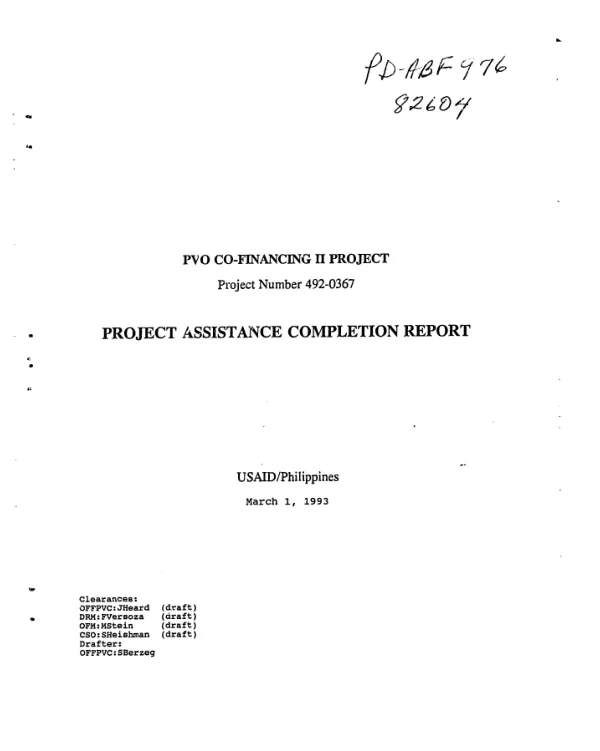
PVO co-financing II project, project number 492-0367 : project assistance completion report
Sign inUSAID. MISSION TO PHILIPPINES
PVO co-financing II project, project number 492-0367 : project assistance completion report
PACR of a project (2/84-9/92) to strengthen the capacity of U.S.
1993
Sign in to readA free account is required to download.
Abstract
and indigenous PVO's working in the Philippines to plan and implement development activities benefiting the rural poor. The project demonstrated such significant early success that USAID/P initiated a follow-on midway through the current project. In the end, the present project awarded 64 grants for a wide variety of activities ranging from credit programs to agricultural development, human resources development, health care delivery, prison inmate rehabilitation, and many others. During the project, the number of Philippine PVOs meeting USAID registration requirements and of those actually registered with USAID grew significantly, and the ratio of grants to Philippine PVOs increased substantially as compared to the predecessor project, ultimately numbering 47 of the 64 grants awarded. A household and enterprise survey provided evidence that grant activities were having positive impacts on the economic welfare of beneficiaries. The above indicates that the project met its objectives of stimulating PVOs to attempt diverse development activities, strengthening indigenous PVOs' capacities to design, manage, and evaluate subprojects (SPs), and providing constructive development programs to benefit the rural poor. On the negative side, most of the income-generating activities involved retail trade, which often does not yield benefits beyond the immediate community. The retail activities, while popular among beneficiaries, may also hamper community development efforts of the PVOs, as these trade activities compete with each other in relatively tight local economies. The possibility of challenging PVOs to promote activities with wider linkages should be explored. Also, the country's poorest regions received a disproportionately small share of program assistance, having been reached only through the SPs of intermediary institutions. USAID should consider encouraging more SP proposals for these regions. The project used three categories of grant arrangements: direct grants to PVOs to carry out an SP (the majority of grants); grants to an experienced PVO to make subgrants and oversee the activities of one or more smaller, less experienced PVOs; and grants to experienced PVOs to make and manage multiple subgrants, though without getting involved in the actual execution of a SP. Although the usefulness of these arrangements, particularly of the second category of grant, were questioned in a midterm evaluation, it is felt that all three categories had positive aspects. No single formula for determining SP sustainability exists. However, given that sustainability was a major focus in the latter part of the project, there are reasons to be hopeful that the community-level organizations established will survive. The most difficult SPs to sustain involve basic needs services such as health care, making the institution of fees for services a key aspect. Also, SPs that focus on credit have good potential for sustainability if the implementing organization sets interest rates high enough to cover costs and provide for future operations.