USAID DEC
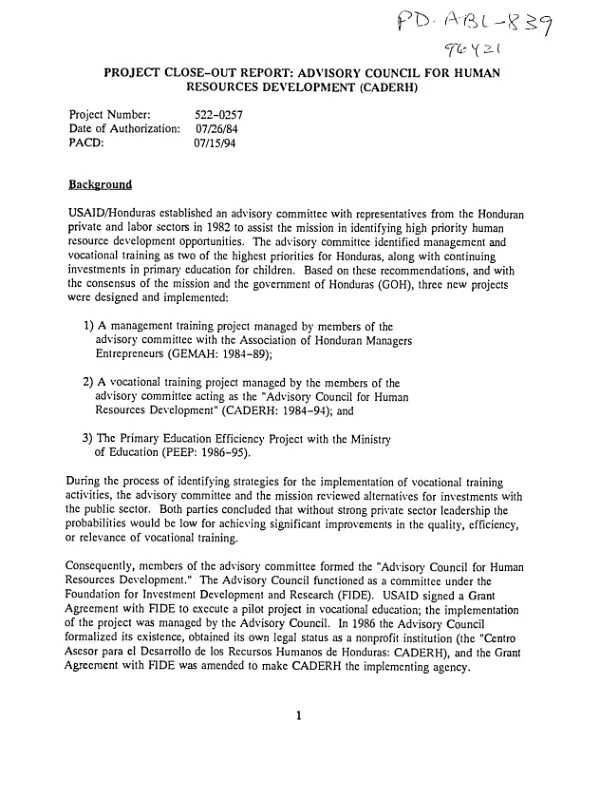
Project close-out report : Advisory Council for Human Resources Development (CADERH)
Sign inUSAID. MISSION TO HONDURAS
Project close-out report : Advisory Council for Human Resources Development (CADERH)
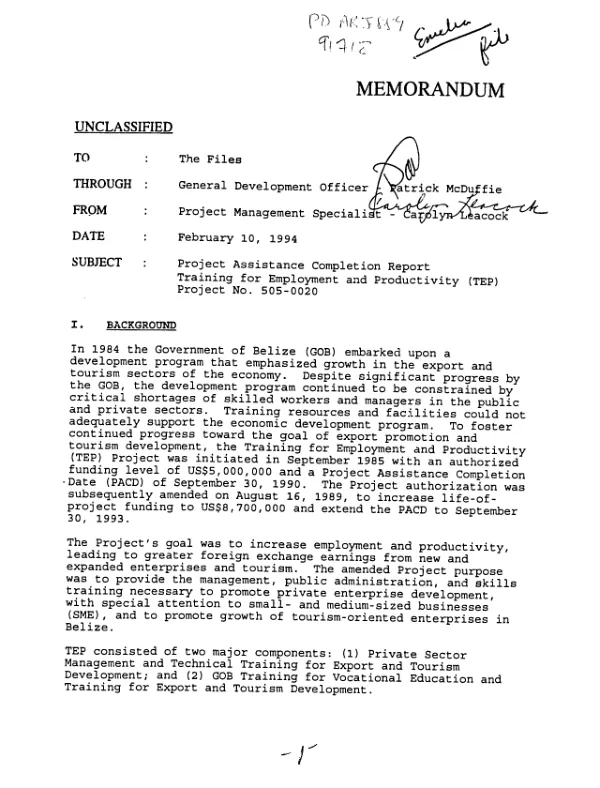
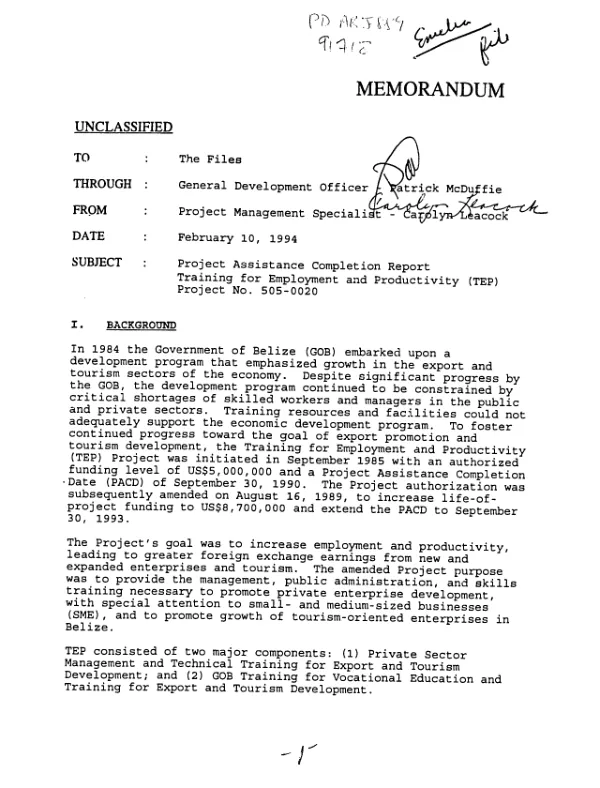
Close-out report on a project (7/84-7/94) to create technically and financially viable institutions for meeting vocational training needs in Honduras.
Sign in to readA free account is required to download.
Abstract
The Advisory Council for Human Resources Development (CADERH) was the implementing agency. The project was a success. Under the first component, designed to provide entry-level and skills-upgrading training programs for low-income, unemployed and underemployed youth and adults, the project remodeled and equipped 16 vocational training centers sponsored by PVOs and municipalities, trained and provided ongoing TA to the centers' staff, and developed competency-based instruction (CBI) materials and trade certification exams for 31 trades. The centers, which provide training to over 3,000 unemployed and underemployed youth and adults each year, are meeting the needs of some of the least privileged sectors of Honduran society and improving employment opportunities for lower income sectors (with a 90% job placement rate). The CBI and trade certification systems serve as effective quality-control mechanisms for the centers. The second component provided industry-specific training, usually in-plant training for export-oriented firms. Approximately 5,500 of a targeted 6,500 people received training under this component. An additional 2,000 were trained by CADERH after USAID participation in this component was terminated, for an overall total in excess of target. Approximately 80% of the trainees were female, many of them single mothers who would otherwise have had difficulty obtaining employment. The third component also achieved its objectives, as more than 200,000 training modules and audiovisual units were produced and distributed by CADERH to training centers and sold to firms and individuals. The component is now financially self-sustainable through the sale of services and products; it also markets CBI and audiovisual training materials to vocational training programs. A major concern, however, is the degree to which CADERH will be able, over the long-term, to continue financing nonprofit development activities for the benefit of lower income sectors of society. Lessons learned are as follows. (1) Long-term commitment, management consensus, and continuity on the part of both CADERH and USAID were key factors in the project's success. (2) Achieving financial sustainability and meeting the needs of low-income sectors may not be compatible goals. (3) The original intention of using CADERH as a "training broker" did not work because local training institutions were not accustomed to accepting either external controls over their curricula or the external evaluations of participants to ensure quality control.