USAID. MISSION TO INDONESIA
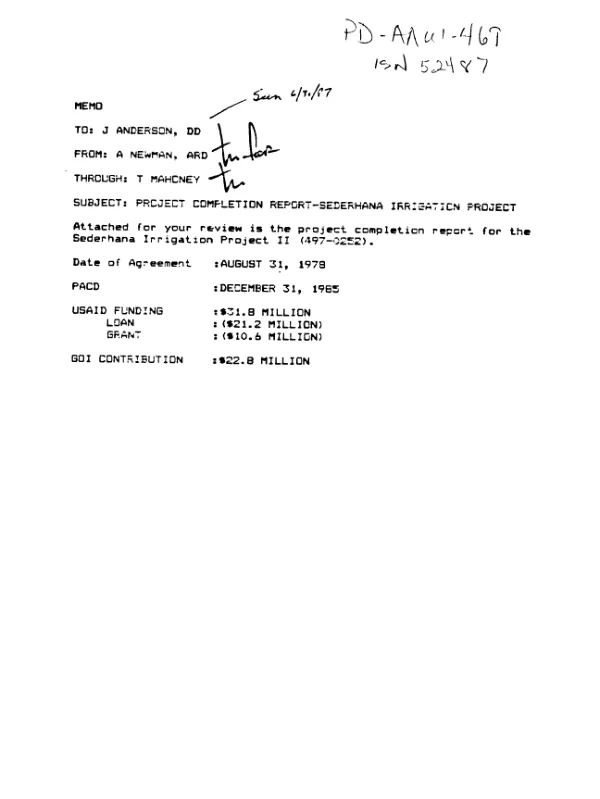
Project completion report : Sederhana irrigation project II, project no. 497-0252
Final Mission report on a project (8/78-12/85) to build small, relatively simple, irrigation systems (e.g., gravity systems) in Indonesia.
Newman, A.
Sign in to readA free account is required to download.
Abstract
Approximately 500 small irrigation systems were constructed and a water users' organization was formed at virtually every site. A manual of standard design details was also prepared and some 400 provincial engineers and over 3,000 non-technical staff were given short-term or long-term training. In connection with the High Performance Sederhana Irrigation System (HPSIS) component (which was added in 1982 to test a farmer-participatory approach to system design and construction), more than 500 farmers were trained in systems operation and the purpose of water users' associations. The project showed that there are still excellent returns to be gained from investments in irrigation infrastructure, particularly in new systems (as opposed to rehabilitating existing ones). Most project systems performed extremely well. Those that performed poorly generally suffered from poor site selection (in terms of either water supply, soil conditions, crop systems, or farmer preferences), and not from poor construction or management. In some cases sites chosen for systems were already well-irrigated. The HPSIS component demonstrated that farmers can be successfully incorporated into the system design process; for example, farmers were able to negotiate several important design changes with the Ministry of Public Works (PU), and constructed or rebuilt parts of the irrigation systems themselves. The result was substantially better systems (for example, the number of main system canals in good condition rose from 38% to 85% over the course of the project). Farmers gained confidence in their ability to communicate with the PU, and PU personnel became more receptive to farmer suggestions. The project also improved coordination among the Ministries of Agriculture and Home Affairs and PU at the provincial and kabupaten levels. The project also showed how community organizers, with basic knowledge of the technical issues involved in the project, can be an effective liaison between water users' associations and public works officials. The Sederhana project provided considerable guidance in planning the follow-on Small Scale Irrigation Management Project.