USAID. BUR. FOR POLICY AND PROGRAM COORDINATION. CENTER FOR DEVELOPMENT INFORMATION AND EVALUATION (CDIE)
Protecting biological diversity : Nepal case study
USAID support for Royal Chitwan National Park in Nepal has focused on promoting a partnership between government and local communities in the protection and management of precious biodiversity resources.
Sowers, Fred|Walters, Mark|Upreti, Biswa Nath · 1994
Sign in to readA free account is required to download.
Abstract
This case study assesses the various interventions supported by USAID and identifies lessons learned and unresolved issues. Major USAID interventions have included TA and training to strengthen public and local institutions, use of NGOs to test options for protected area management and to develop alternative livelihood activities, support for management-related scientific research, promotion of environmental education, and support for policy reform. According to the report, these interventions have paid off. The strategy of making local communities part of the conservation solution rather than part of the problem has resulted in spontaneous rehabilitation of degraded buffer areas (especially for thatch grasses), enthusiastic local participation in controlling poaching, villager willingness to relocate from areas of wildlife protection, and an increase in the populations of the park's endangered species. Support for Chitwan has also increased tourism (now the major source of park revenue as well as a benefit to the local economy) and established the value of scientific research to park planning and management. Several lessons emerge from this experience. (1) An authoritarian approach does not help to conserve biologically rich areas on which local people depend. (2) Understanding the status and management requirements of endangered species both inside and outside the park is critical to the sustainable protection of biological resources. (3) Umbrella grants to NGOs can be a highly effective means of promoting biodiversity conservation. Much more needs to be done, however. The environmental and economic impact of increased tourism remains decidedly unclear, and the continuance of illegal hunting, livestock grazing, and fuelwood collection indicates that the search for alternative sources of livelihood must continue. Several appendices and a bibliography expand material presented in the body of the report. Of particular importance is an exploration of recent policy changes promoting greater involvement of local populations in managing protected areas and surrounding buffer zones.
Related documents
Documents in this collection
 1997
1997USAID DEC
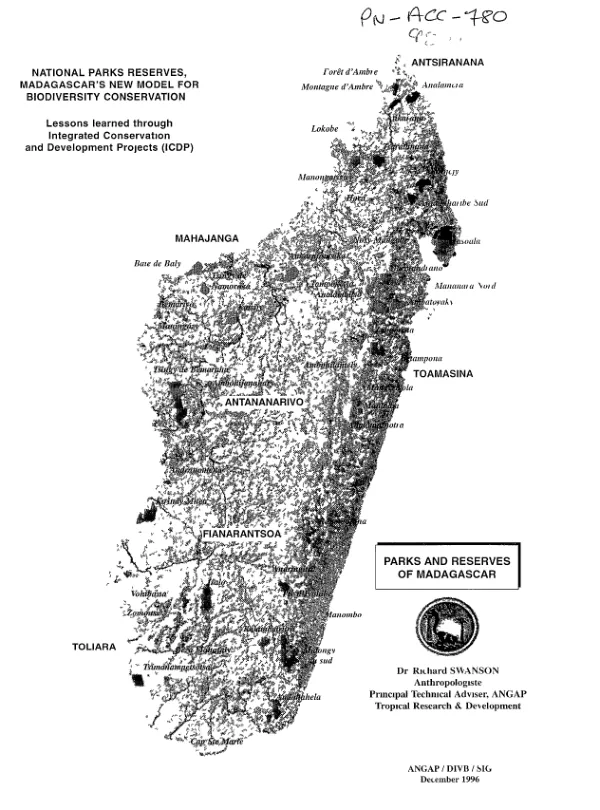
National parks and reserves -- Madagascar"s new model for biodiversity conservation : lessons learned through integrated conservation and development projects (ICDPs)
Open record 1996
1996USAID DEC