UNICEF
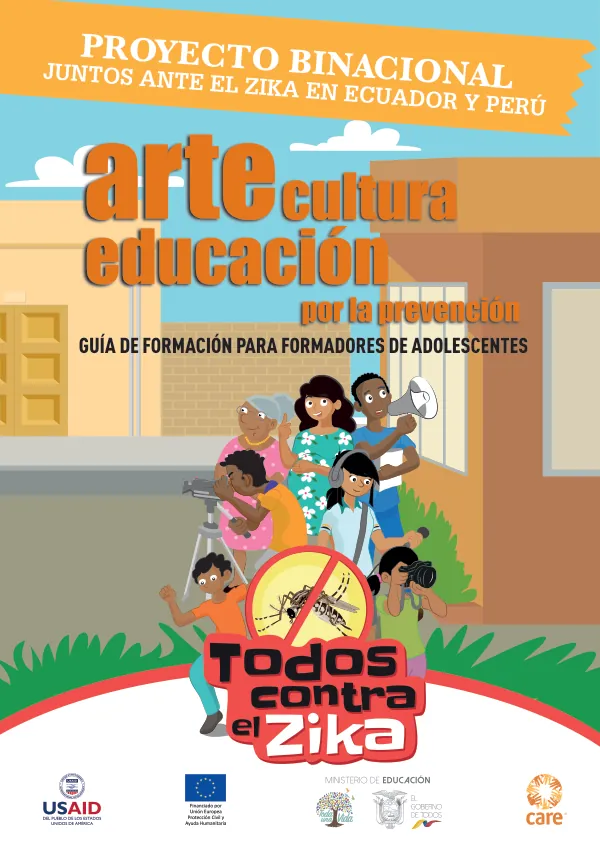
PROYECTO BINACIONAL RESPUESTA ANTE EL ZIKA EN ECUADOR Y PERU
The binational project "Juntos ante el Zika" was implemented in Ecuador and Peru, with funding from the United States Agency for International Development (USAID).
2018 · 17 pages
Sign in to readA free account is required to download.
Abstract
The project aimed to prevent the spread of the Zika virus and its complications, particularly in pregnant women and children. The project was implemented in 10 cantons in Ecuador and 10 provinces in Peru, with a focus on promoting the active participation of the community, academia, and local governments. The project's approach included communication for development, which involved changing behaviors, mobilizing social action, and providing timely and accurate information. The project also conducted studies on the Zika virus and its complications, as well as on the vector mosquito Aedes aegypti. The project's lines of action included activities aimed at promoting knowledge and action among individuals, families, and communities to prevent the Zika virus and eliminate its vector. The project's communication strategy included approaches such as communication and education, communication for behavior change, and the ecological approach. The language and activities of the strategies and campaigns were adapted to the cultural context of each country. The project also promoted community-based surveillance, which involved promoting awareness about the Zika virus, its complications, and the importance of taking action to prevent and control the virus. The project's objective was to reflect on the importance of incorporating communication for behavior change in actions aimed at promoting knowledge, changing attitudes and behaviors, and ensuring personal, family, and community action to prevent the Zika virus, reduce the risk of congenital syndrome, and decrease the number of Aedes aegypti mosquito breeding sites. The project's methodology was experiential and participatory, with a focus on reflection, theory, and concrete actions. The project's agenda included sessions on communication for behavior change, the role of journalists in preventing the Zika virus, and concrete actions that journalists and media can take to contribute to the prevention and elimination of the Zika virus in Ecuador and Peru. The project's director, Cecilia Tamayo, highlighted six concrete actions that journalists and media can take to contribute to the prevention and elimination of the Zika virus: a) diffusing the risks of the Zika virus and how it can affect the development of communities and children; b) motivating men and women to get involved in prevention actions; c) diffusing basic actions that should be implemented in homes to eliminate the mosquito; d) diffusing messages that contribute to preventing violence against women and girls; e) calling on men and women to plan their pregnancies and protect them, and to combat intrafamilial violence; and f) motivating debate, generating commitments, and involving local authorities. The project's communication and mobilization strategy was also highlighted by Martha Rodríguez, Official of Communication and Knowledge Management of the OPS/OMS Ecuador, who emphasized the importance of communication and mobilization in preventing the Zika virus and controlling its vector. Rodríguez also highlighted the role of journalists and media in this effort, as well as the need to involve multiple social actors, including community members, organizations, and institutions, in the communication and mobilization process.