USAID DEC
PY 2016 Annual Implementation Plan for Agricultural Development and Value Chain Enhancement Feed the Future Activity (ADVANCE)
Sign inACDI/VOCA
PY 2016 Annual Implementation Plan for Agricultural Development and Value Chain Enhancement Feed the Future Activity (ADVANCE)
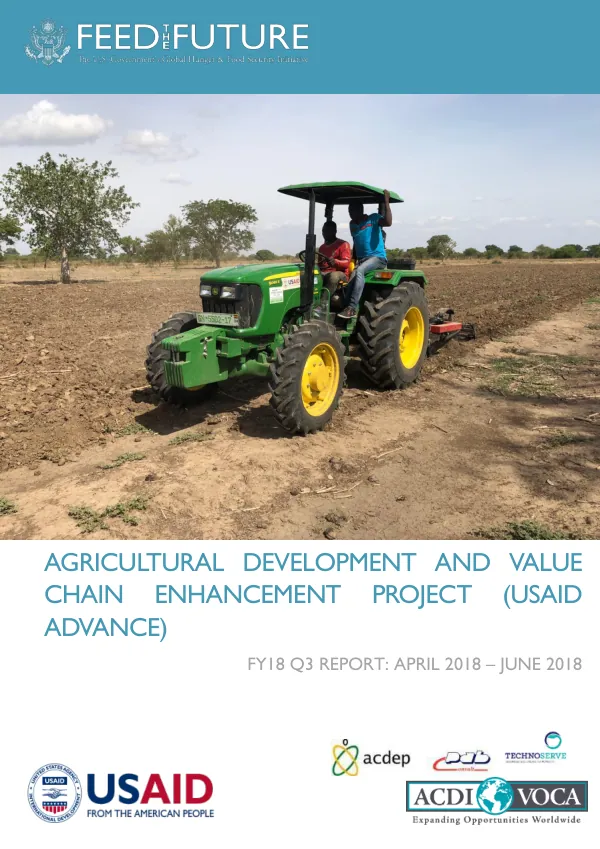
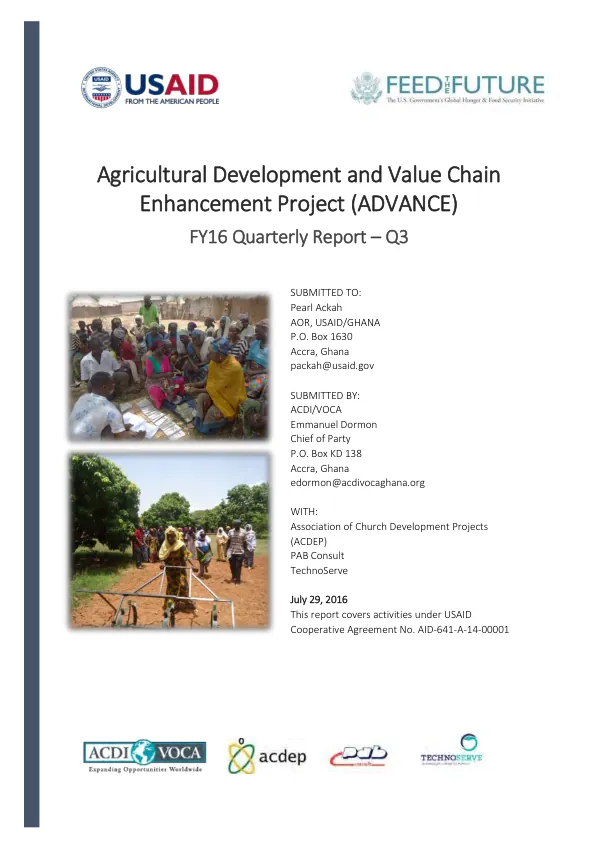
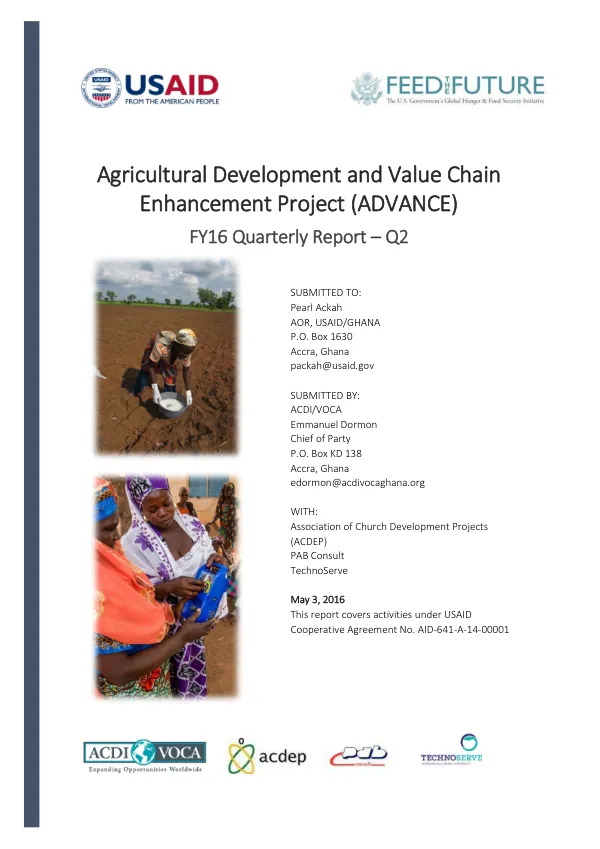
The ADVANCE Project, a USAID Feed the Future initiative, aims to enhance agricultural development and value chain enhancement in Ghana.
2016 · 50 pages
Sign in to readA free account is required to download.
Abstract
The project is managed by ACDI/VOCA as the prime contractor, in collaboration with implementing partners ACDEP, PAB Consult, and TechnoServe. The project team has a combined total of 108 staff working in various locations in the intervention zone. The project's three main components are presented in the implementation plan for FY2016. The plan includes strategies for collaborating with other Feed the Future implementing partners to ensure synergies and avoid duplication. The project approach is described, and a monitoring plan is outlined to track progress and document processes, outputs, and immediate outcomes. The three sub-purposes of the project are: 1. Increased agricultural productivity in targeted commodities, including hybrid maize seed, through the promotion of improved agricultural practices and technologies. 2. Increased market access and trade of targeted commodities, including hybrid maize seed, through the development of business services and capacity development programs. 3. Strengthened capacity for advocacy and activity implementation, including the promotion of policy and advocacy programs and the development of public relations and communications strategies. Cross-cutting areas, including gender, environment, and grants, are also presented in the plan. The monitoring, evaluation, and learning plan outlines the approach for tracking progress and documenting processes, outputs, and immediate outcomes. The project has five office locations, with the ACDI/VOCA Country Office in Accra housing the ADVANCE Project office. The Tamale office is the main hub for project implementation in the North, with a team of technical leaders and program specialists working on agricultural production, business services, capacity development, and other areas. The project's management structure includes a Management Steering Committee, comprising the leadership of the partner organizations, which meets quarterly to review project progress and resolve contractual issues. The committee also updates staff requirements and assesses project approaches and activities. The project's implementation plan for FY2016 is designed based on previous experience and will be followed as much as possible. However, there may be a need to modify some strategies as new learning occurs, which will not affect the targets but rather enhance their attainment in the most efficient manner. The ADVANCE Project aims to increase agricultural productivity, market access, and trade of targeted commodities, including hybrid maize seed, through the promotion of improved agricultural practices and technologies, business services, and capacity development programs. The project's implementation plan for FY2016 outlines the strategies and approaches for achieving these objectives, including the development of public relations and communications strategies and the promotion of policy and advocacy programs. The project's monitoring, evaluation, and learning plan outlines the approach for tracking progress and documenting processes, outputs, and immediate outcomes. The plan includes indicators and objectives for each of the project's three sub-purposes, as well as cross-cutting areas such as gender, environment, and grants. The project's implementation plan for FY2016 is designed to ensure effective learning and adaptive management, with a conscious effort to document processes, outputs, and immediate outcomes. The plan will be followed as much as possible, with modifications made as necessary to enhance the attainment of the project's objectives in the most efficient manner. The ADVANCE Project's implementation plan for FY2016 outlines the strategies and approaches for achieving the project's objectives, including the promotion of improved agricultural practices and technologies, business services, and capacity development programs. The plan includes indicators and objectives for each of the project's three sub-purposes, as well as cross-cutting areas such as gender, environment, and grants.
Related documents