JHPIEGO
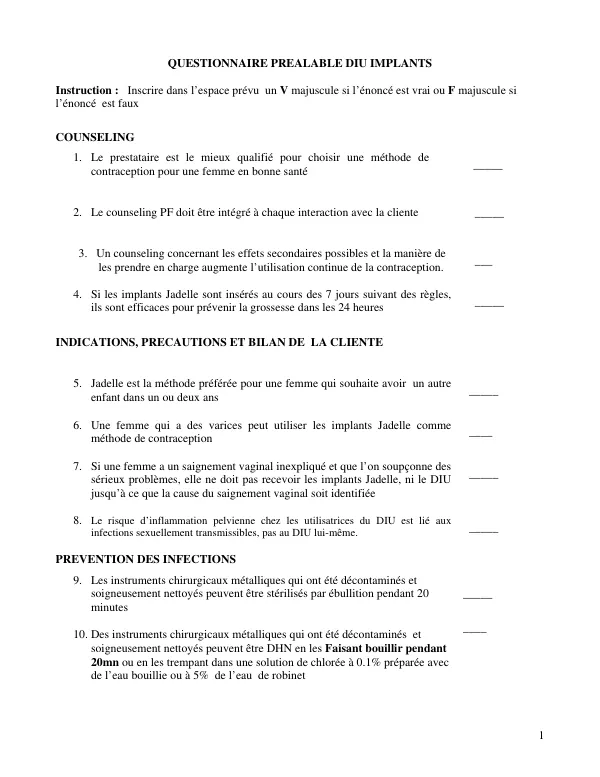
Questionnaire Préalable DIU Implants
The Jadelle contraceptive implant is a long-acting reversible contraceptive method that consists of two flexible rods made of levonorgestrel, a synthetic form of the hormone progesterone.
2 pages
Sign in to readA free account is required to download.
Abstract
Counseling is a crucial aspect of the Jadelle implant insertion process, and it is essential to ensure that the client is well-informed about the method's benefits, risks, and potential side effects. According to the guidelines, counseling should be integrated into every interaction with the client, and the provider should be the best qualified to choose a contraceptive method for a woman in good health. The counseling should cover the possible side effects and how to manage them, as this can increase the client's continued use of the contraceptive method. The Jadelle implant is indicated for women who wish to prevent pregnancy for an extended period, typically up to 7 years. However, it is not recommended for women who have a history of pelvic inflammatory disease, as this can increase the risk of complications. The implant is also not suitable for women who have a history of breast cancer or are taking certain medications, such as phenytoine. The insertion of the Jadelle implant can be performed at any time during the menstrual cycle, as long as the client is not pregnant. The procedure typically takes a few minutes and is performed under local anesthesia. The client may experience some discomfort or pain during the procedure, but this is usually mild and temporary. After the insertion of the Jadelle implant, the client may experience some side effects, such as irregular menstrual bleeding, headaches, or mood changes. These side effects are usually mild and temporary, but in some cases, they can be more severe. The client should be advised to return to the clinic if they experience any severe side effects or if their symptoms persist. The Jadelle implant is a highly effective contraceptive method, with a failure rate of less than 1%. However, like any other contraceptive method, it is not 100% effective, and there is a small risk of pregnancy. The client should be advised to use condoms or other forms of contraception if they have a history of sexually transmitted infections or if they are at risk of contracting an STI. In terms of prevention of infections, the guidelines recommend that instruments used during the insertion procedure should be properly cleaned and disinfected to minimize the risk of infection. The instruments should be sterilized using a solution of chlorée or by boiling them for 20 minutes. The Jadelle implant can be removed at any time, and the procedure is usually performed under local anesthesia. The client may experience some discomfort or pain during the procedure, but this is usually mild and temporary. After the removal of the implant, the client's menstrual cycle may return to normal, and they may experience some irregular bleeding or spotting. In conclusion, the Jadelle contraceptive implant is a highly effective and convenient method of contraception that can be used for up to 7 years. However, it is essential to ensure that the client is well-informed about the method's benefits, risks, and potential side effects, and that they are properly counseled and monitored during the insertion and removal procedures.
Related documents