USAID. BUR. FOR SCIENCE AND TECHNOLOGY. OFC. OF EDUCATION
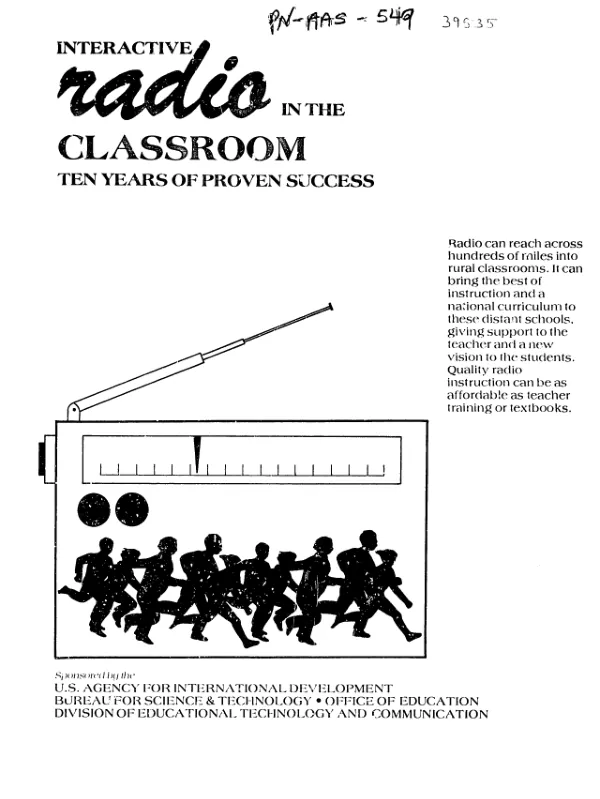
Radio in the classroom : ten years of proven success
Results of 10 years of applied research sponsored by AID/W"s Office of Education (S&T/ED) on the use of radio to increase access to primary education in rural areas are reviewed.
1970
Sign in to readA free account is required to download.
Abstract
After a general introduction to the value of radio as an educational medium, the report summarily describes four S&T/ED projects - Radio Mathematics (Nicaragua), Radio Language Arts (Kenya), Radio Basic Education (Dominican Republic), and the forthcoming Radio Science project (country not specified). A final section discusses lessons S&T/ED has learned from these projects regarding: the potential of educational radio; the successful use of radio in teaching children (the importance of rigorous instructional design and of using radio as a primary means of instruction, the need to involve students actively in the learning process, the value of gathering immediate feedback from the children and of distributing instruction over time, and the importance of engaging children"s interest); the educational role of teachers and parents; how radio can eliminate the need for expensive instructional aids; and radio"s physical reliability. Since interactive radio can meet developing countries" educational needs in a cost-effective and equitable manner, the challenge, it is concluded, is to incorporate radio lessons into the regular educational systems.
Connected topics