BOOZ, ALLEN AND HAMILTON, INC.
Regulation Impact Assessment (RIA) Process Model Worksheet
The regulation in question aims to address environmental concerns and promote sustainable development.
2 pages
Sign in to readA free account is required to download.
Abstract
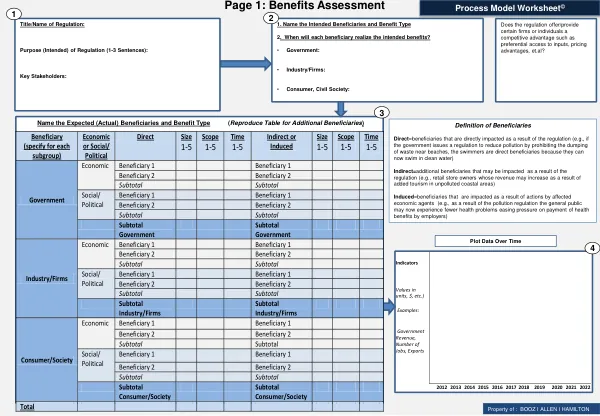
The intended beneficiaries include the government, industry/firms, and consumer/society. The government is expected to benefit economically through increased revenue, job creation, and exports. Industry/firms are expected to benefit economically through increased market share and competitiveness. Consumer/society is expected to benefit economically through improved access to clean products and services. The regulation is expected to have a positive impact on the environment, with reduced pollution and improved public health. The government is expected to bear the costs of implementing the regulation, including revenue losses and increased regulatory compliance costs. Industry/firms are expected to bear the costs of complying with the regulation, including increased production costs and equipment upgrades. Consumer/society is expected to bear the costs of increased prices for clean products and services. The benefit-to-cost ratio of the regulation is expected to be greater than 1, indicating net benefits. The government is expected to benefit economically through increased revenue, job creation, and exports. Industry/firms are expected to benefit economically through increased market share and competitiveness. Consumer/society is expected to benefit economically through improved access to clean products and services.
Connected topics