URBAN INSTITUTE (UI)
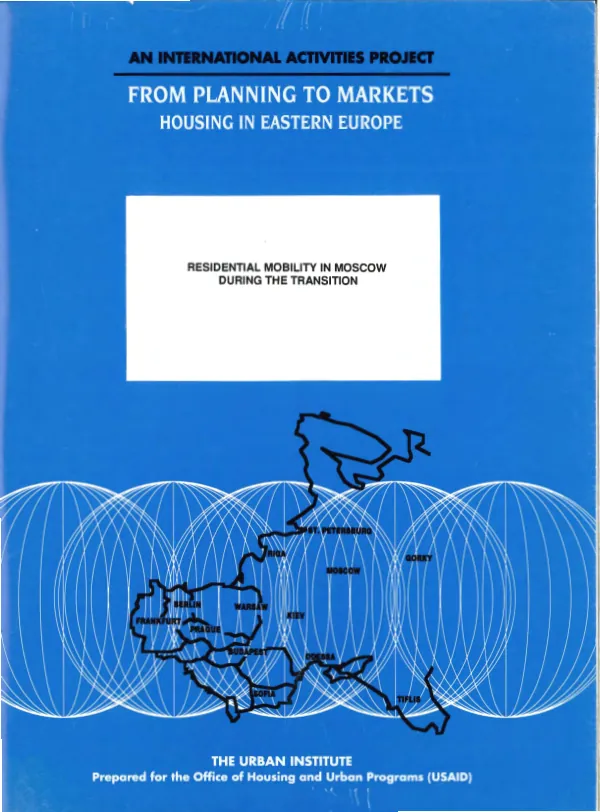
Residential mobility in Moscow during the transition
Earlier work under the USAID Housing Sector Reform Project documented an increase in residential mobility in Russian cities in the early years of the economic transition -- 1992 and 1993.
Lee, Lisa; Struyk, Raymond J. · 1995
Sign in to readA free account is required to download.
Abstract
This paper extends this work for Moscow by confirming the higher mobility rates in 1994, indicating that the early surge in mobility was not a brief phenomenon produced by pent up demand. This paper also documents that a large share of the movers are one-family nuclei from multi-nuclei households. By 1994, the majority of movers were acquiring their new housing through market methods; waiting list procedures for state housing accounted for only about one-fifth of new occupant households. The determinants of mobility among market movers are consistent with economic theory, being a blend of dissatisfaction with the current unit (overcrowding) and ability to pay, as indicated by current income and assets. Overall, the results show a clear movement of the Moscow housing sector toward operating along market principles. (Author abstract)
Connected topics
Related documents