FHI 360
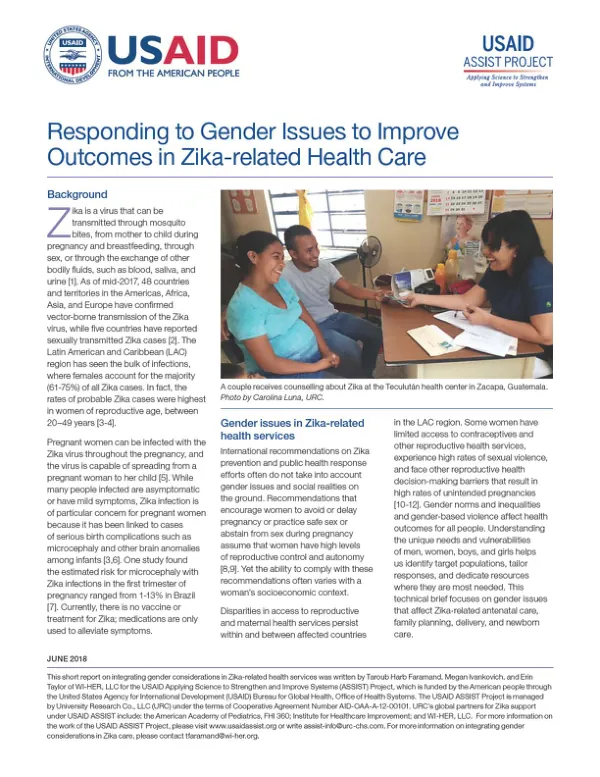
Responding to Gender Issues to Improve Outcomes in Zika-related Health Care
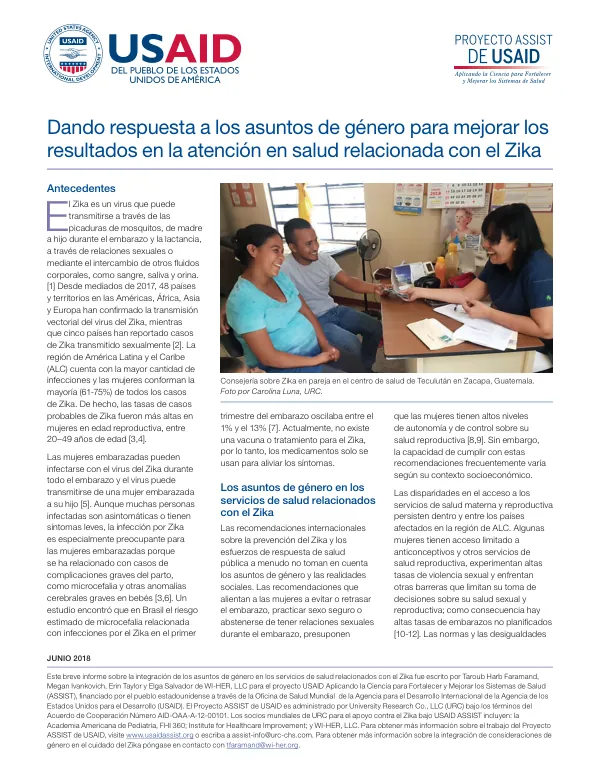
The Zika virus is a significant public health concern, particularly for pregnant women, as it has been linked to serious birth complications such as microcephaly and other brain abnormalities among infants.
2018 · 4 pages
Sign in to readA free account is required to download.
Abstract
The virus can be transmitted through mosquito bites, from mother to child during pregnancy and breastfeeding, through sex, or through the exchange of other bodily fluids. As of mid-2017, 48 countries and territories in the Americas, Africa, Asia, and Europe have confirmed vector-borne transmission of the Zika virus, while five countries have reported sexually transmitted Zika cases. The Latin American and Caribbean (LAC) region has seen the bulk of infections, with females accounting for the majority (61-75%) of all Zika cases. Pregnant women can be infected with the Zika virus throughout the pregnancy, and the virus is capable of spreading from a pregnant woman to her child. While many people infected are asymptomatic or have mild symptoms, Zika infection is of particular concern for pregnant women due to its potential to cause serious birth complications. International recommendations on Zika prevention and public health response efforts often do not take into account gender issues and social realities on the ground. These recommendations assume that women have high levels of reproductive control and autonomy, which is not always the case. Disparities in access to reproductive and maternal health services persist within and between affected countries in the LAC region, with some women having limited access to contraceptives and other reproductive health services, experiencing high rates of sexual violence, and facing other reproductive health decision-making barriers that result in high rates of unintended pregnancies. Women and girls, especially in female-headed households, bear the main burden of productive and reproductive work, which makes them more likely to be exposed to Aedes mosquitoes that carry the Zika virus. Lack of adequate water and sanitation infrastructure, a particular concern for poor families and indigenous groups, leads to breeding grounds for mosquitoes. Traditional gender roles and values also influence patterns of sexual behavior and thus the spread of Zika, with men facing fewer social sanctions for having sexual partners outside of marriage and women expected to be submissive to their male partner. Limited access to and/or control over sexuality education, contraceptives, and other reproductive health services is a significant challenge in Zika-affected countries. Many people have limited access to comprehensive sexual education and lack accurate information related to sexual health and Zika transmission, particularly that Zika can be transmitted through sexual contact. Women's lack of power to negotiate contraceptive use, including condoms, is also a significant obstacle, with men often expecting to be dominant and sexually experienced, while women are expected to be submissive and faithful. Stigma leading to mother and child abandonment is another significant concern, with increased stigma against pregnant women and new mothers who have been infected with the Zika virus. This stigma can lead to women and their families feeling ashamed and isolated, making it more difficult for them to access healthcare services and support.