ENCOMPASS, LLC
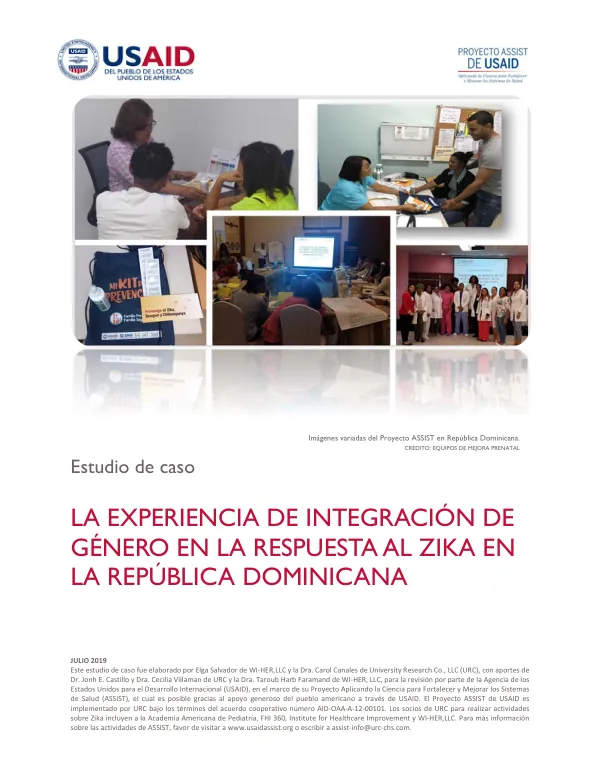
Gender Issues Influencing Zika Response in the Dominican Republic
The USAID Applying Science to Strengthen and Improve Systems (ASSIST) Project has been working globally since 2012 to improve the quality and outcomes of health care and other services by enabling host country providers and managers to apply the science of improvement.
2019 · 40 pages
Sign in to readA free account is required to download.
Abstract
ASSIST seeks to build the capacity of host country service delivery organizations in USAID-assisted countries to improve the effectiveness, efficiency, client-centeredness, safety, accessibility, and equity of the health and family services they provide. As part of USAID's emergency response to Zika, ASSIST has been implementing health systems strengthening efforts in Latin America and the Caribbean since 2016. In the Dominican Republic, ASSIST has been working to improve the capacity of Zika-related health services. The project has been conducting a rapid gender analysis to identify the gender issues influencing Zika response in the country. The rapid gender analysis was conducted through a desk review of existing literature and data, as well as focus group discussions (FGDs) with community members and health care providers. The analysis aimed to identify the knowledge, attitudes, and practices related to Zika prevention and care, as well as the gender-based barriers and facilitators to accessing Zika-related health services. The analysis found that there is a lack of knowledge about Zika among community members, particularly among women. Many women reported not knowing the symptoms of Zika or how to prevent its transmission. The analysis also found that gender-based violence (GBV) is a significant barrier to accessing Zika-related health services, particularly for women who have experienced GBV. The analysis identified several key areas where gender issues are influencing Zika response in the Dominican Republic. These include the lack of knowledge about Zika among community members, the gender-based barriers to accessing health services, and the need for more effective communication and education strategies to reach women and other vulnerable populations. The rapid gender analysis has several implications for Zika response in the Dominican Republic. First, it highlights the need for more effective communication and education strategies to reach women and other vulnerable populations. Second, it emphasizes the importance of addressing GBV as a critical barrier to accessing health services. Finally, it underscores the need for more inclusive and equitable health systems that address the unique needs and experiences of women and other vulnerable populations. The USAID ASSIST Project is working to address these issues through a range of interventions, including training health care providers on gender-sensitive care, developing community-based education and outreach programs, and supporting the development of policies and guidelines that address GBV and other gender-based barriers to health services. The project is also working to strengthen the capacity of health care providers to address the unique needs and experiences of women and other vulnerable populations. This includes providing training on gender-sensitive care, developing guidelines for providing care to women and girls, and supporting the development of policies and guidelines that address GBV and other gender-based barriers to health services. Overall, the rapid gender analysis has provided critical insights into the gender issues influencing Zika response in the Dominican Republic. The analysis has highlighted the need for more effective communication and education strategies, the importance of addressing GBV as a critical barrier to accessing health services, and the need for more inclusive and equitable health systems that address the unique needs and experiences of women and other vulnerable populations.