DELOITTE INC.
Revenue Brief: Strengthening PFM in LAC Project
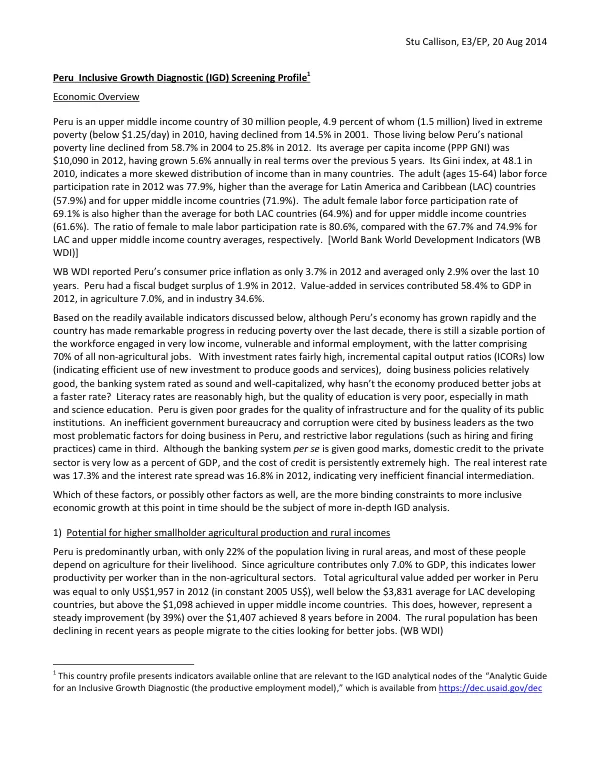
Peru's tax system has undergone significant changes over the past decade, with a focus on increasing transparency, enhancing transparency, and simplifying procedures.
2014 · 11 pages
Sign in to readA free account is required to download.
Abstract
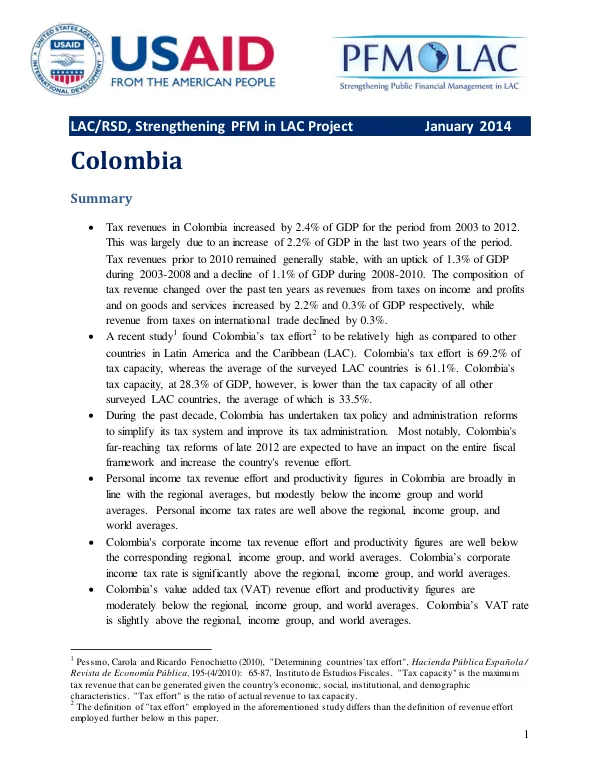
The country's tax revenue has increased by 2.8% of GDP between 2003 and 2012, with a shift towards taxes on income and profits, and a decrease in reliance on revenue from international trade. The tax system has been influenced by strong economic growth and the rise of the banking, manufacturing, and manufacturing sectors. The tax reform efforts have focused on increasing transparency, enhancing transparency, and simplifying procedures. In 2002, Peru underwent a major decentralization reform, dividing the country into macro regions with limited taxing authority. In 2004, the Mining Royalties Law introduced a monthly tax assessed on the value of mining extract. The law was later amended to allow revenue from royalties to be distributed to provinces and municipalities. The tax system has also undergone changes in the composition of revenue. Revenue from taxes on income and profits increased by 3.5% of GDP over the period, while revenue from taxes on goods and services decreased by 0.2% of GDP. Revenue from taxes on international trade decreased by 0.9% of GDP, and revenue from other taxes increased by 0.3% of GDP. Peru's tax effort is moderately below that of other countries in Latin America and the Caribbean. The country's tax capacity is slightly below the average of surveyed LAC countries. Personal income tax effort and productivity figures in Peru are significantly below regional, income group, and world averages. The corporate income tax rate is above regional, income group, and world averages. The tax system profile for 2011 shows that Peru's tax revenue effort is below the world average and well below the LAC regional and income group averages. The revenue effort from personal income tax is significantly below the LAC regional, income group, and world averages. The revenue effort from corporate income tax is well above all comparator averages. The revenue effort from VAT is in line with the LAC regional and income group averages and slightly above the world average. Peru's tax structure is characterized by a maximum personal income tax rate of 30%, which is above the LAC regional, income group, and world averages. The corporate income tax rate is above the LAC regional average and significantly above the income group and world averages. The VAT rate is above the regional, income group, and world averages. The tax system has undergone significant changes over the past decade, with a focus on increasing transparency, enhancing transparency, and simplifying procedures. The country's tax revenue has increased by
Related documents