UNIVERSITY OF SUSSEX. INSTITUTE OF DEVELOPMENT STUDIES
Role of case studies in farming systems research
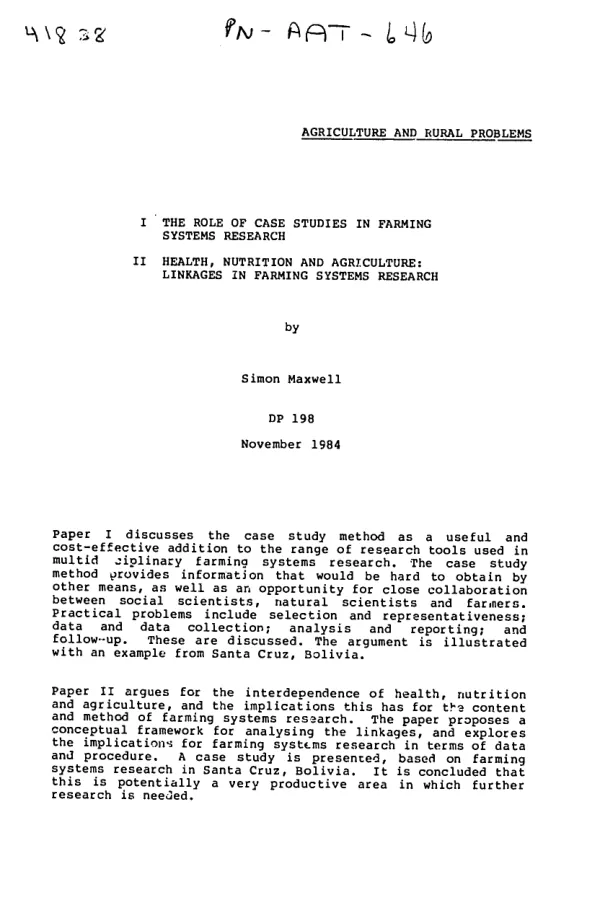
The case study method is examined as a useful and cost-effective addition to the range of research tools used in multidisciplinary farming systems research (FSR).
Maxwell, Simon · 1984
Sign in to readA free account is required to download.
Abstract
The author argues that on-farm case studies: (1) allow indepth, detailed analysis of information that would be hard to obtain by other means; (2) present an opportunity for close collaboration among social scientists, natural scientists, and farmers; (3) often provide the optimal combination of time, cost, accuracy, and coverage characteristics; and (4) fit properly into a sequence of investigations designed to improve classification, diagnosis, and the design of recommendations. Discussed are practical problems of the case study method, including the importance of farm selection and representativeness; decisions regarding data requirements and methods of data collection; three issues associated with the analysis and reporting of data (data will be both formal and informal, a case study program generates useful ideas quickly, and research findings must be integrated to make analysis truly interdisciplinary); and the inevitable generation of issues for further research and the need for follow-up. These practical problems are then addressed in an account of a case study program involving six farms in Santa Cruz, Bolivia. A 36-item bibliography (1965-84) is included.
Connected topics