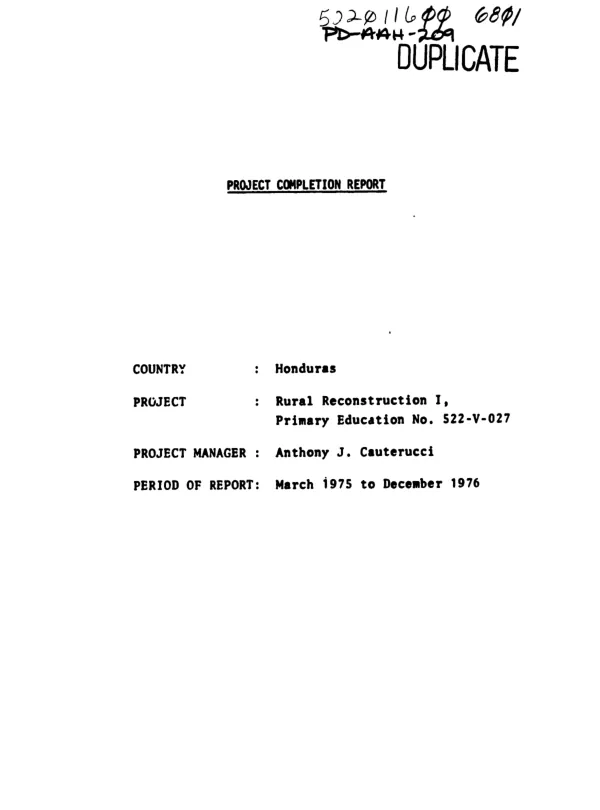
 1975
1975USAID DEC
USAID. MISSION TO HONDURAS
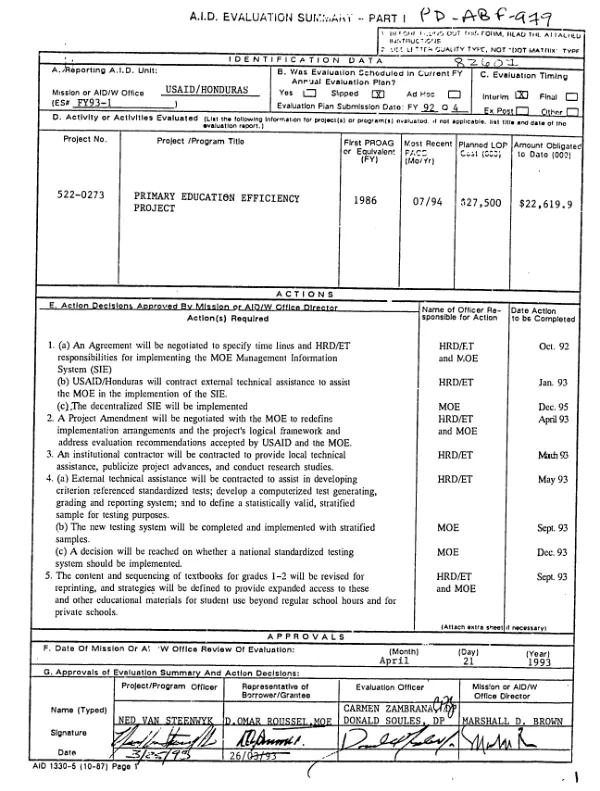
Evaluates pilot project to reduce malnutrition in Honduran primary school children and initiate self-sufficient agricultural subprojects at the primary school level.
Ortega, Ambrosio J.; Centeno, Albertina · 1982
Abstract
Interim PES covers the period 4/80-11/81 and is based on responses to questionnaires administered in project schools and on interviews with school principals and teachers. School acceptance of horticultural, small animal, and manual arts subprojects has been encouraging, with benefits reaching 14,512 school children and 380 teachers in the affected schools. All 18 targeted pilot schools initiated a total of 33 projects against a target of 25, and organized 126 of 160 targeted agricultural classes. A total of 160 of 265 targeted school gardens were planted, 35 in pilot schools and 125 in affiliated schools; the shortfall was due to provision by the Peace Corps of only 68% and 43% of promised volunteer participation in 1980 and 1981 respectively. Students in 72% of the schools are increasing their nutritional intake by consuming vegetables from these gardens. Both planned management seminars for teachers were held. Educational materials were procured for over 60% of the schools. Nine of the 10 pig projects and all seven chicken projects need no further assistance to maintain self-sufficiency. No problems were encountered in procuring commodities for subproject implementation. Signs of the project"s impact are emerging - children in 70% of the pilot schools are transferring knowledge to their homes, 67% of the schools have increased community contact in the form of labor and commodity project contributions, and 85% have received requests for community extension. Although 67% of schools report improved attendance and lower dropout rates, a causal connection with project interventions cannot be determined. Recommendations are to: enforce Ministry of Education participation in supervisory activities; help CARE with its administrative costs; have external consultants conduct a final evaluation; and extend the project for up to 2 years.
Connected topics
Classification