BANYAN GLOBAL
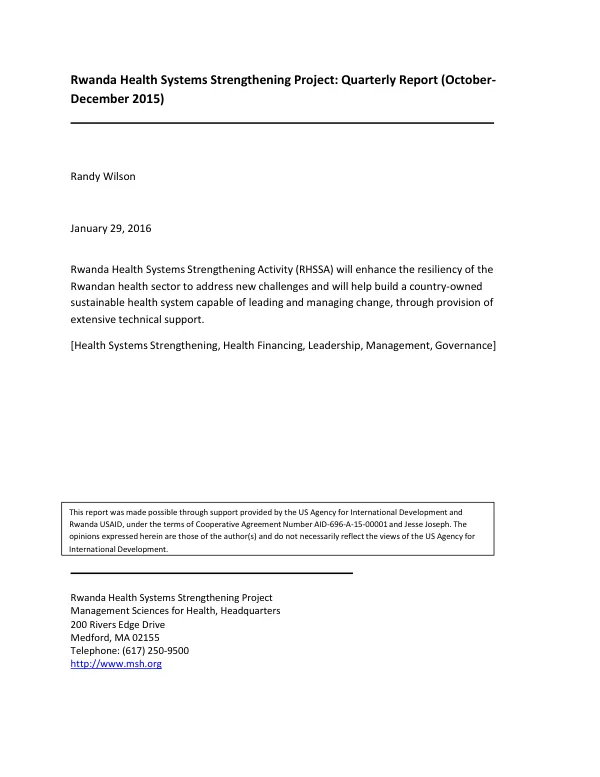
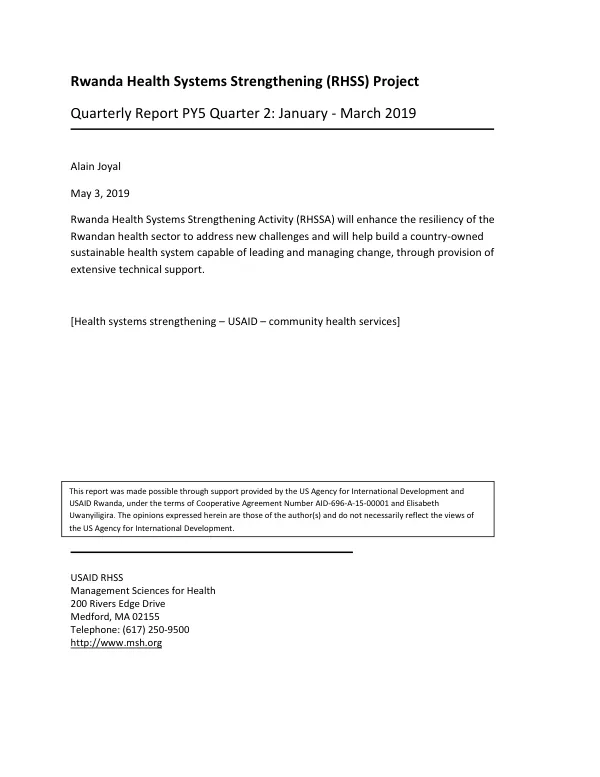
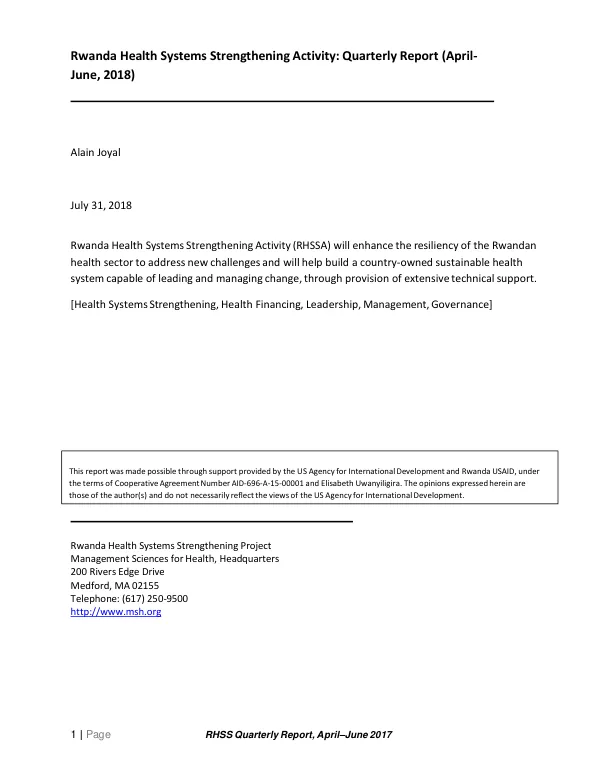
Rwanda Health Systems Strengthening Activity: Quarterly Report (April-June, 2018)
The Rwanda Health Systems Strengthening (RHSS) Project is a five-year initiative aimed at enhancing the resiliency of the Rwandan health sector.
2018 · 62 pages
Sign in to readA free account is required to download.
Abstract
The project, supported by the US Agency for International Development (USAID), seeks to build a country-owned sustainable health system capable of leading and managing change. The project's primary objective is to strengthen the health systems in Rwanda through the provision of extensive technical support. The RHSS Project focuses on several key areas, including health systems thinking, health financing, leadership, management, and governance. The project's approach is centered on institutionalizing health systems thinking approaches and practices, improving multi-level government policy, planning, and implementation capacity, and increasing revenue mobilized by the health sector through domestic and private sector sources. Additionally, the project aims to improve and expand quality health services through more effective and efficient use of existing resources in the health system. The project's progress report for the quarter of April to June 2018 highlights several key achievements. In terms of institutionalized health systems thinking approaches and practices, the project has made significant progress in developing and implementing health systems thinking approaches and practices at the national and district levels. The project has also made notable progress in improving multi-level government policy, planning, and implementation capacity, with the development and implementation of a new health sector strategic plan. In terms of health financing, the project has made significant progress in increasing revenue mobilized by the health sector through domestic and private sector sources. The project has also made notable progress in improving and expanding quality health services through more effective and efficient use of existing resources in the health system. The project's efforts in private sector engagement and public-private partnerships have also yielded positive results, with several partnerships established and implemented. The project's progress report also highlights several key challenges and areas for improvement. These include the need for continued support and capacity building for health sector stakeholders, as well as the need for increased investment in health systems strengthening. The project's management and administration team has also identified several areas for improvement, including the need for more effective monitoring and evaluation systems and the need for increased collaboration and coordination with other stakeholders. In terms of geographic focus and context, the RHSS Project is implemented in Rwanda, with a focus on strengthening the health systems at the national and district levels. The project's timeframes and recommendations are aligned with the Government of Rwanda's health sector strategic plan, with a focus on achieving universal health coverage by 2024. The RHSS Project's implementation details are outlined in the project's quarterly report, which provides a detailed overview of the project's progress, achievements, and challenges. The report highlights the project's key achievements, including the development and implementation of health systems thinking approaches and practices, the improvement of multi-level government policy, planning, and implementation capacity, and the increase in revenue mobilized by the health sector through domestic and private sector sources. The project's management and administration team has also identified several key recommendations for future implementation, including the need for continued support and capacity building for health sector stakeholders, the need for increased investment in health systems strengthening, and the need for more effective monitoring and evaluation systems. The project's quarterly report provides a comprehensive overview of the project's progress and achievements, and serves as a key resource for stakeholders and decision-makers.