TETRA TECH
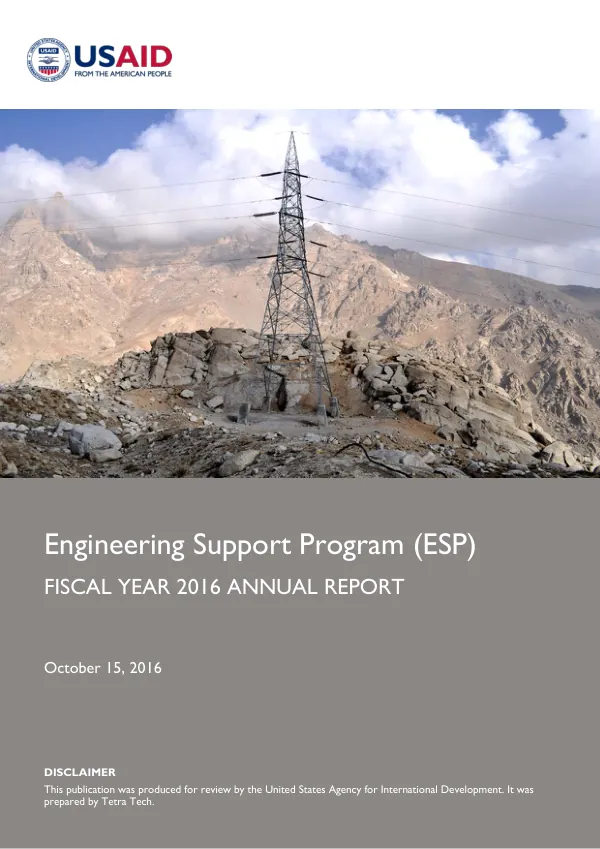
Scour Analysis and Foundation Study for Gardez to Khost Road Bridge No. 10
The Gardez to Khost Road Bridge No.
2014 · 125 pages
Sign in to readA free account is required to download.
Abstract
10 is a critical infrastructure project in Afghanistan, spanning a tributary immediately west of a main river. The bridge was initially designed by The Louis Berger Group in 2010 as a two-span cast-in-place concrete slab bridge. However, the existing bridge was destroyed by floods, and a temporary pipe culvert was installed. Tetra Tech was contracted by USAID to perform a comprehensive analysis of the 2010 Design, including topographical survey, geotechnical investigation, geotechnical analysis, hydraulic modeling, and structural analysis. The analysis aimed to determine if the 2010 Design conformed to the latest AASHTO LRFD Bridge Design Specifications, 6th Edition, 2012, and was adequate based on complete hydraulic, geotechnical, and structural analyses. The hydraulic model developed by Tetra Tech confirmed that the 2010 Design provided an adequate hydraulic opening and had a bottom of superstructure elevation that allowed adequate freeboard over the 50-year design flood elevation. However, the scour analysis revealed large scour cavities at the abutments and pier, approximately 10 meters deep at maximum. The 2010 Design was found to be inadequate to withstand scour. Geotechnical analyses performed by Tetra Tech based on the three borings and two test pits showed calculated settlements less than 10 mm and an ultimate bearing resistance less than required for the abutments under seismic loading. Structural stability calculations performed by Tetra Tech revealed that the 2010 Design for the abutments and piers failed to meet the AASHTO LRFD stability requirements for bearing resistance, overturning, or sliding. Furthermore, the 2010 Design did not include cheekwalls on either the abutments or pier, which are normally used for restraint of the superstructure in a seismic event. Instead, it used dowel bars to tie the superstructure and substructure together at the bearing locations. This design did not allow relative movement between the superstructure and substructure, compromising the bridge's stability and safety. Based on the comprehensive analysis, Tetra Tech recommends that the Bridge No. 10 crossing be redesigned to meet the latest AASHTO LRFD standards and ensure adequate hydraulic, geotechnical, and structural performance. The recommended design parameters include a 3-span alternate, scour protection alternate, raised roadway alternate, and modified structure alternate, each with associated costs.
Related documents