USAID DEC
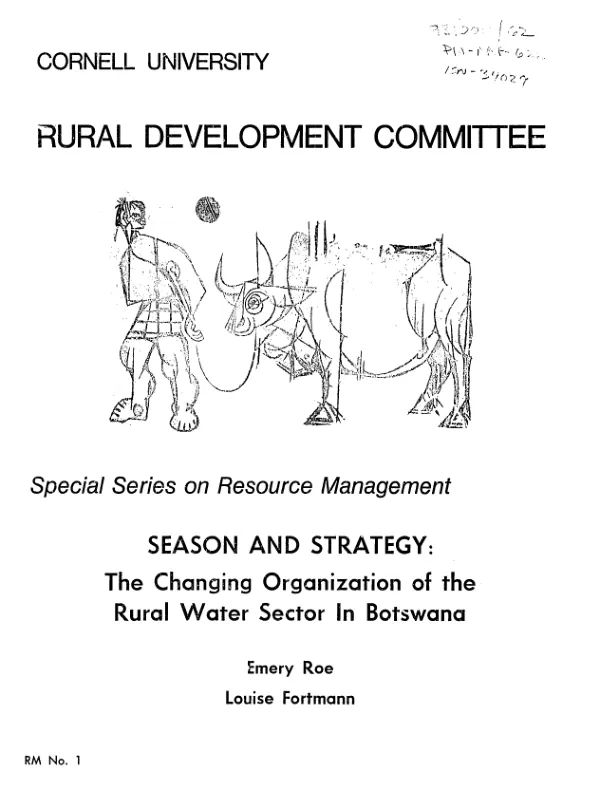
Season and strategy : the changing organization of the rural water sector in Botswana
Sign inCORNELL UNIVERSITY. CENTER FOR INTERNATIONAL STUDIES. RURAL DEVELOPMENT COMMITTEE
Season and strategy : the changing organization of the rural water sector in Botswana
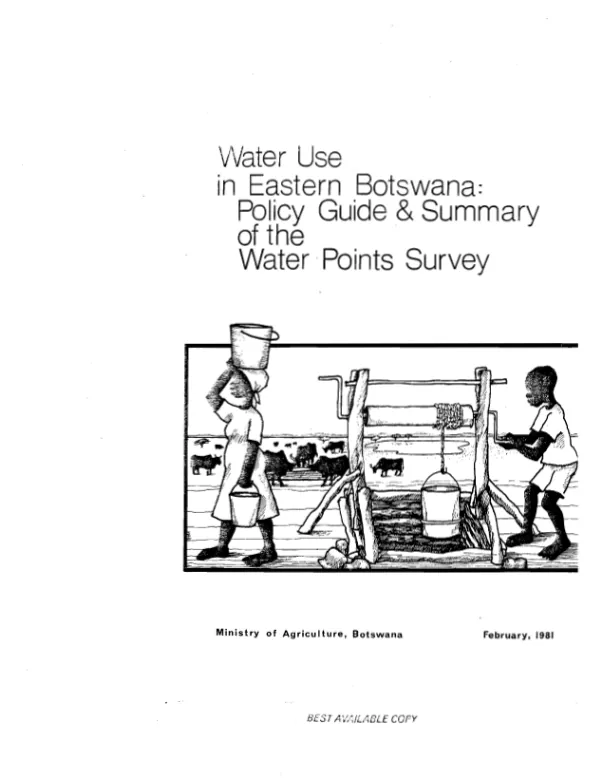
This monograph shows how seasonal variations and traditional land and water use practices have continued to shape rural water sector strategies in Botswana, even after the advent of active government interference in the sector.
Roe, Emery; Fortmann, Louise P. · 1970
Sign in to readA free account is required to download.
Abstract
It also describes how several major government interventions have been premised on unrealisticabout the "desert-like" countryside. The overall importance of seasonality in the rural water sector, the structure of communal economic and social life, and the institutional aspects of Botswanan water management are examined first. The role of the government is outlined in succeeding chapters. A description of household strategies for water use over time and place is followed by a case study of the Ministry of Agriculture"s policy for group management of dams; the study illustrates the bureaucratic and political concerns that dominate government perception of resource management in communal areas. A case study of land boards follows, illustrating district level range and water management. These analyses of major water strategies relating to season, place, and organization at different localities are brought together in a final chapter to provide an overall picture of the rural water sector in Botswana. A 167-item bibliography (1937-82) is appended.
Connected topics