FLORIDA INTERNATIONAL UNIVERSITY
Seed and Oil Pumpkin: A Potential Specialty Crop for the Southeast
The Southeast region of the United States has a growing market for healthy foods and vegetable oil, with pumpkin seeds being a popular snack and ingredient in various products.
2018 · 4 pages
Sign in to readA free account is required to download.
Abstract
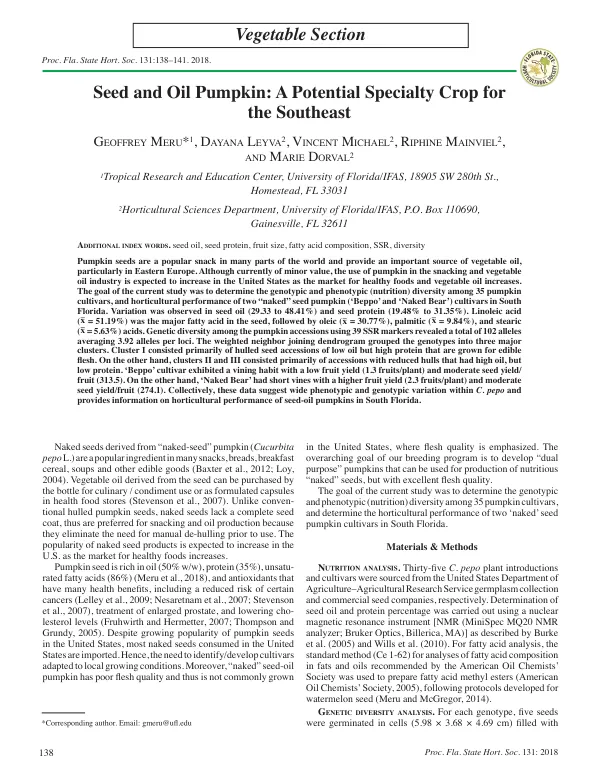
Pumpkin seeds are a rich source of oil, protein, and unsaturated fatty acids, which have numerous health benefits, including reducing the risk of certain cancers and lowering cholesterol levels. However, most naked seeds consumed in the United States are imported, highlighting the need to identify and develop cultivars adapted to local growing conditions. A study was conducted to determine the genotypic and phenotypic diversity among 35 pumpkin cultivars and to evaluate the horticultural performance of two 'naked' seed pumpkin cultivars in South Florida. The study found significant variation in seed oil and protein percentage among the cultivars, ranging from 29.33% to 48.41% and 19.48% to 31.35%, respectively. The primary fatty acids in the oil were palmitic, stearic, oleic, and linoleic acids, with linoleic acid being the most predominant. Genetic diversity analysis using 39 SSR primer pairs revealed a total of 102 alleles, with an average of 3.92 alleles per locus. The weighted neighbor joining dendrogram grouped the genotypes into three major clusters, with cluster I consisting primarily of hulled seed accessions with low oil but high protein, and clusters II and III consisting primarily of accessions with reduced hulls and high oil but low protein. The study also evaluated the horticultural performance of two 'naked' seed pumpkin cultivars, 'Beppo' and 'Naked Bear', in a field trial in South Florida. The results showed that 'Beppo' exhibited a vining habit with a low fruit yield and moderate seed yield per fruit, while 'Naked Bear' had a short vine habit with a higher fruit yield and moderate seed yield per fruit. The study provides information on the horticultural performance of seed-oil pumpkins in South Florida and highlights the need for further research to develop 'dual-purpose' pumpkins that can be used for production of nutritious 'naked' seeds with excellent flesh quality. The nutrition profile of the pumpkin accessions showed that the seed oil percentage was similar to that reported in other cucurbit species, while the seed protein percentage was within the range reported for other Cucurbita species. The fatty acid composition observed in the current study was comparable to that previously reported in C. pepo, with a high degree of unsaturation, which may contribute towards a reduced risk of certain diseases. The study's findings provide valuable information for breeders and researchers working to develop new pumpkin cultivars with improved nutritional and horticultural characteristics.