USAID. MISSION TO HONDURAS
Shelter for urban poor II : shelter sector program
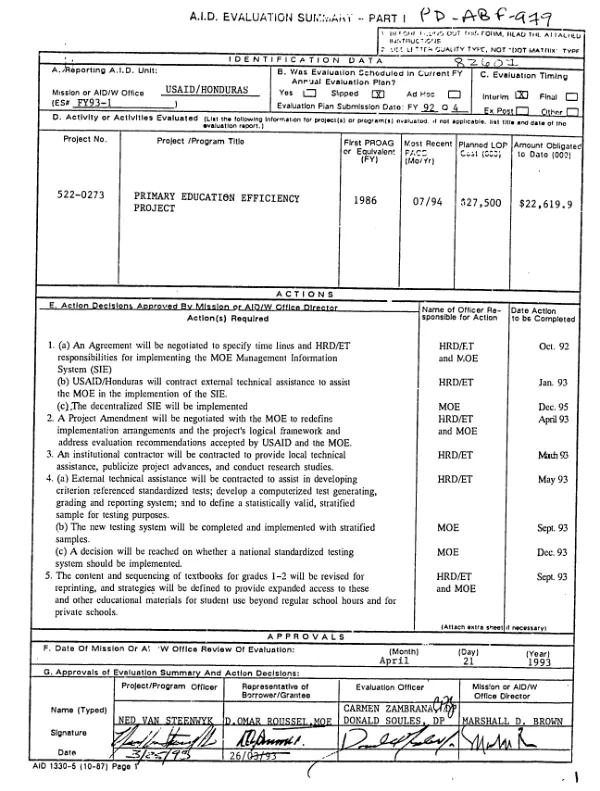
Summarizes the mid-term evaluation (PD-ABB-262) of a Housing Guaranty (HG) program in Honduras.
1990
Sign in to readA free account is required to download.
Abstract
Evaluation covers the period 9/87-2/90. The HG program has been successful, is on schedule to meet some of its physical output targets, and is supporting significant policy changes. Over 12,000 low-income families have received water and sewerage services or mortgages for new housing. Nearly 20,000 families will benefit from projects already underway, while another 3,000 families will benefit from projects not yet started. In addition, water, sewerage, and street paving projects have contributed to home improvements, increased earnings, increased land and home values, created jobs, improved sanitary conditions, and stimulated the formation of neighborhood groups. Policy changes to promote the participation of the private sector in urban development process have taken place in one major city, and are beginning in another. However, the macroeconomic climate has constrained domestic resource mobilization and affected disbursements and project execution. The home improvement portion of the program has also not been effective. Other major findings are as follows. (1) Local government autonomy is vital for municipal progress. (2) NGO"s are the most viable intermediaries for reaching low-income households. (3) In spite of a series of management deficiencies, municipalities have demonstrated that they have the capacity to implement urban renewal projects. TA/training to municipal governments should be strengthened. (4) The successful strategies of motivating private sector participation, especially in the San Pedro Sula model, should be understood and promoted. (5) The informal sector"s involvement in the shelter delivery process needs to be encouraged. See also abstract under PD-ABB-262. (Author abstract)