PAN AMERICAN HEALTH ORGANIZATION (PAHO)
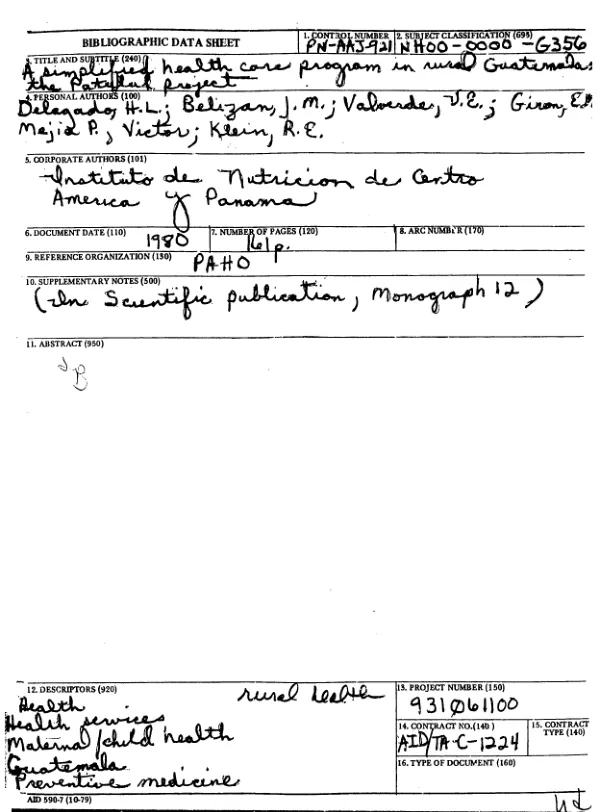
Simplified health care program in rural Guatemala : the Patulul Project
In 1976-77, the Institute of Nutrition of Central America and Panama (INCAP) adapted a previously developed simplified health care program for implementation in communities surrounding the town of Patulul, Guatemala.
Dalagado, H. L.; Belizan, J. M. · 1970
Sign in to readA free account is required to download.
Abstract
This report describes the Patulul experience -- with special reference to program implementation, personnel training, quality control, and the development of preventive and curative care -- and serves as a guide for groups interested in developing similar programs. The project is characterized by a short implementation period, low costs, use of simple techniques, and community involvement. A special feature of the program is the training of auxiliary personnel (i.e., auxiliary nurses, health promoters, and midwives) as primary providers of health care. Prior to program implementation, available resources and the demand for health services were assessed and baseline demographic data were collected on each family. The Patulul project contains the following four subprograms: (1) curative care provided at outpatient clinics, including clinical history, diagnosis, and treatment of common illnesses, with quality control ensured via direct physician observation of care provided by auxiliary personnel and referral of serious illnesses to physicians; (2) preventive care, consisting of vaccination and epidemic control programs to limit the incidence and spread of respiratory and gastrointestinal infections and including environmental sanitation activities; (3) maternal care, emphasizing early pregnancy detection, prenatal exams, assessment of delivery risk, vaccination of the mother against tetanus, childbirth attendance, and postpartum care, and promoting sex education to encourage responsible parenting, prevent abortions, and facilitate adequate child spacing; and (4) child care, including a nutritional recuperation program using milk or Incaparina supplements for children with protein-calorie malnutrition. The program was well accepted, notably reduced infant mortality, and encouraged private industry to help with health problems. Appended are a 66-item bibliography (1940-78) and five annexes.