USAID. MISSION TO ECUADOR
Small enterprise development
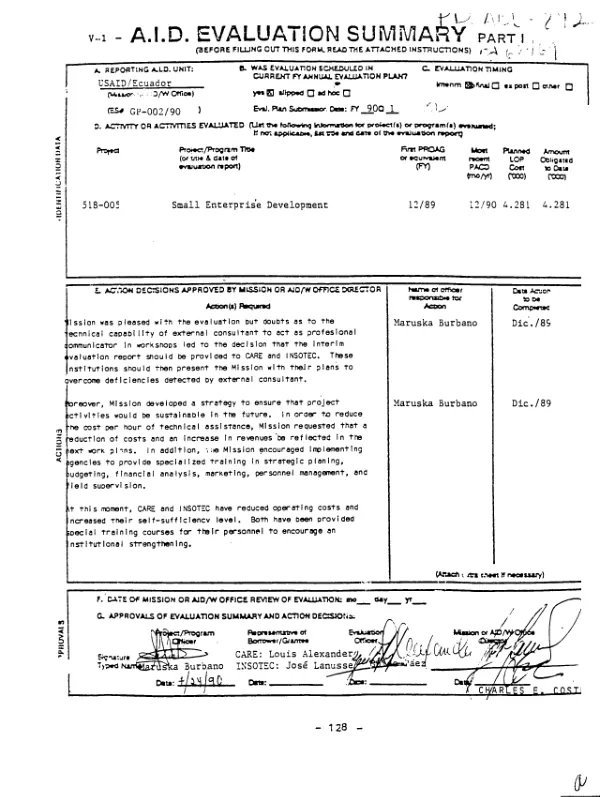
Summarizes interim evaluation (XD-ABB-842-A) of a project to provide TA, training, and credit to Ecuador"s small-scale enterprise sector.
1990
Sign in to readA free account is required to download.
Abstract
The evaluation covered the period 12/89-7/90. Implementing agencies (CARE, Fundacion Carvajal, ACCION/AITEC, and INSOTEC) have adopted sound technical procedures but still face management problems that threaten project sustainability. Strategic planning capacities are especially weak: the agencies have failed to analyze their competition, are unclear as to their missions, and do not prepare their own annual plans or budgets. Management TA has in some cases been directed at developing project activities, to the neglect of the implementing agency"s needs. For example, one organization has focused on computerizing the records of its credit program, while the organization itself lacks an adequate accounting system and a basic management information system. Personnel decisions reflect lax administrative procedures, with incomplete job descriptions for staff members and a lack of periodic employee performance evaluations. These problems have been reflected in the project"s subactivities. Credit activities have faced various problems. (1) Although interest rates have been raised to 51% -- the maximum legal level -- they remain below the inflation rate, resulting in a continued deterioration of the loan portfolio. However, given that beneficiaries will pay additional fees for postcredit TA, the effect of inflation will be minimized as much as possible. (2) Despite high demand for credit, the implementing agencies retain a social rather than a business or financial approach to credit. (3) Even for working capital, loans have been made for long periods of time, resulting in rapid utilization of available funds and a restricted beneficiary population, (4) The convenience of the credit service has been a disincentive for small-scale entrepreneurs to graduate to the commercial sector. TA activities have either been inefficient or organizations are not charging for all hours of TA provided. For example, in one organization, TA accounts for only 30% of their time. This problem could be due to poor supervision and support of field staff in addition to a lack of demand for TA services. Demand for training is also low, as indicated by the large amount of time spent by project staff (25%) in promoting the program door to door. The implementing agencies have not evaluated the causes for the lack of demand or investigated alternative, less expensive, channels of promotion.