USAID DEC
Strategy for Improvement of Energy Efficiency in Kyiv
The Kyiv City State Administration (KCSA) initiated a comprehensive modernization of the municipal infrastructure in 2011, with a focus on systemic modernization and implementation of the "Strategy of Kyiv Development through 2025".
2013 · 4 pages
Sign in to readA free account is required to download.
Abstract
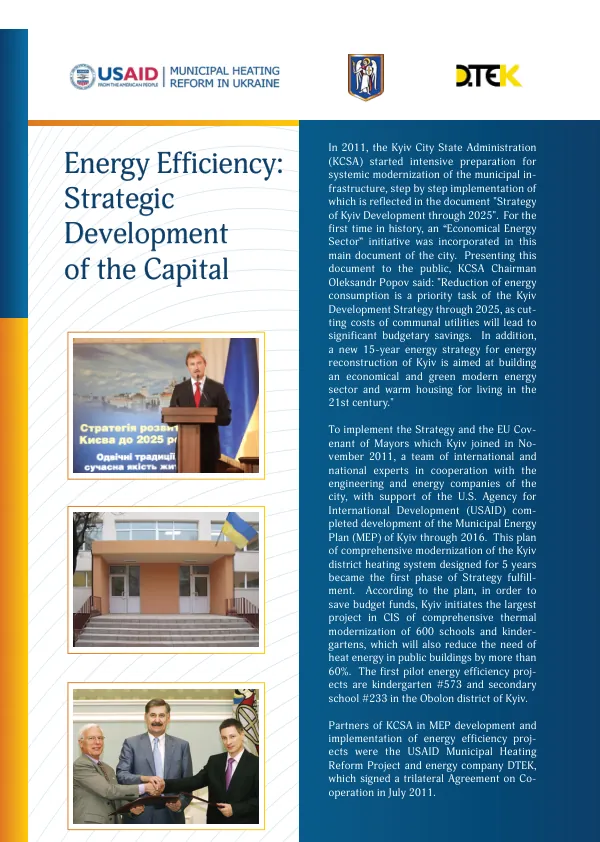
This document outlines the city's plan to reduce energy consumption and costs of communal utilities, with a priority task of cutting energy consumption by 2025. The KCSA Chairman, Oleksandr Popov, emphasized the importance of reducing energy consumption, citing significant budgetary savings and the need for a new 15-year energy strategy for energy reconstruction of Kyiv. To implement the Strategy and the EU Covenant of Mayors, which Kyiv joined in November 2011, a team of international and national experts, along with engineering and energy companies, and the U.S. Agency for International Development (USAID), developed the Municipal Energy Plan (MEP) of Kyiv through 2016. The MEP is a comprehensive modernization of the Kyiv district heating system, designed for 5 years, and serves as the first phase of Strategy fulfillment. The plan aims to save budget funds by initiating the largest project in CIS of comprehensive thermal modernization of 600 schools and kindergartens, which will reduce the need for heat energy in public buildings by more than 60%. The first pilot energy efficiency projects are kindergarten #573 and secondary school #233 in the Obolon district of Kyiv. The Municipal Energy Plan was developed in cooperation with the USAID Municipal Heating Reform Project and energy company DTEK, which signed a trilateral Agreement on Cooperation in July 2011. The partners provided financial assistance and technical support for the implementation of energy efficiency projects in kindergarten #573 and secondary school #233. The results of energy audits showed that the buildings exceeded EU norms by many times, with kindergarten #573 consuming 415 kW•h/m2 a year, which is 6 times higher than the EU norm. As a result of trilateral cooperation, the building of kindergarten #573 became the first building in Kyiv where all possible pay-back-through-savings energy saving measures were implemented. The energy saving measures included heat insulation, energy efficient windows and doors, internal heating system and radiators replacement, ventilation system operation reinstatement, exhaust-air heat exchanger installation, heat distribution system adjustment, and individual heat sub-station installation. The implementation of these measures will reduce total energy consumption by more than 60% and allow annual savings of up to UAH 950,000 from the municipal budget. The Municipal Energy Plan provides for a comprehensive thermal modernization of 600 schools and kindergartens, which will reduce the need for heat energy in public buildings by more than 60%. The plan also aims to reduce heat losses in the heat distribution system and reduce electricity consumption during transportation. The implementation of measures from the Kyiv Municipal Energy Plan will improve the energy and environmental security of the city, increase the share of renewable sources in the balance of heat generation, and help in reducing budget expenditures to pay for communal services by reducing consumption of energy resources in public buildings. The USAID Municipal Heating Reform Project and energy company DTEK have become partners for the Kyiv City State Administration, and the first step towards energy efficiency in the framework of this cooperation was the development of the Municipal Energy Plan (MEP) of the capital. The MEP provides for significant improvement of heating system energy efficiency by 2016, and the first step towards energy efficiency in the framework of this cooperation was the development of the Municipal Energy Plan (MEP) of the capital. The plan aims to reduce the need for heat by 20%, reduce heat losses in the heat distribution system, and reduce electricity consumption during transportation. The implementation of measures from the Kyiv Municipal Energy Plan will improve the energy and environmental security of the city, increase the share of renewable sources in the balance of heat generation, and help in reducing budget expenditures to pay for communal services by reducing consumption of energy resources in public buildings. The European initiative to reduce energy consumption, replace fossil fuels with renewable energy sources, and reduce discharge of greenhouse gases into the atmosphere by 2020 was initiated by the voluntary initiative of local authorities in accordance with the Covenant of Mayors pact. As of the beginning of 2012, the Covenant of Mayors pact had been signed by the mayors of 3,775 European cities, including Kyiv, which joined the initiative in November 2011. The necessity of implementation of energy efficient projects in the capital is caused by the fact that in the last five years energy bills have increased by five times and in 2012 reached UAH 1 billion.