ACCION INTERNATIONAL
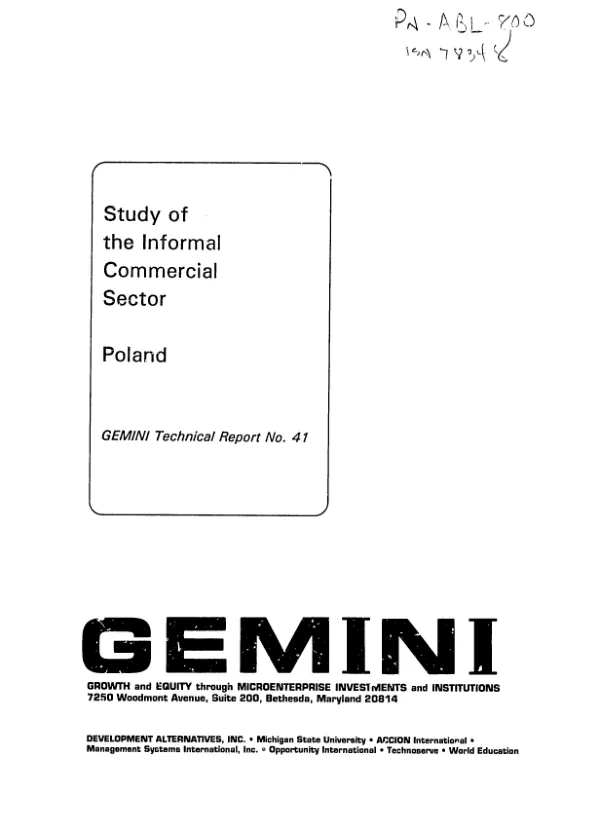
Study of the informal commercial sector -- Poland
This study describes the role of informal sector commerce in Poland and evaluates its impact on small business formation and employment generation.
1992
Sign in to readA free account is required to download.
Abstract
The need and opportunity for specific policy reform and promotional support are examined. The report is based on 80 interviews with street and market traders in 8 cities and 10 interviews with government authorities in 3 cities and 2 Warsaw area communities. The following specific topics are covered: (1) street trade and unemployment (estimating the scale of street trade, opportunities to make money in street trade, where street vendors come from, difficulties of street trade); (2) street trade as a way to a substantial business; (3) street trade as a market for Polish food and nonfood products; (4) street and bazaar trade (the perspectives of tradespeople and of consumers, main complaints, most willingly purchased products, street trade versus markets); (5) street trade in the eyes of local authorities; and (6) implications for government policy. Legal and regulatory problems abound in the informal commercial sector in such areas as tax administration, consumer protection, and traders" rights. The problems identified are due primarily to inadequate and inequitable rules, regulations, and administrative procedures governing informal businesses and market center operations throughout Poland. Distributors are subject to arbitrary rules, regulations, and fee collection practices by government officials and these problems are compounded by the equally serious absence or nonenforcement of consumer protection health and safety standards.
Related documents