USAID. MISSION TO MONGOLIA
Support for economic transition
Project to help Mongolian decisionmakers to plan and implement policy and regulatory reforms required for transition to a market-based economy.
1991
Sign in to readA free account is required to download.
Abstract
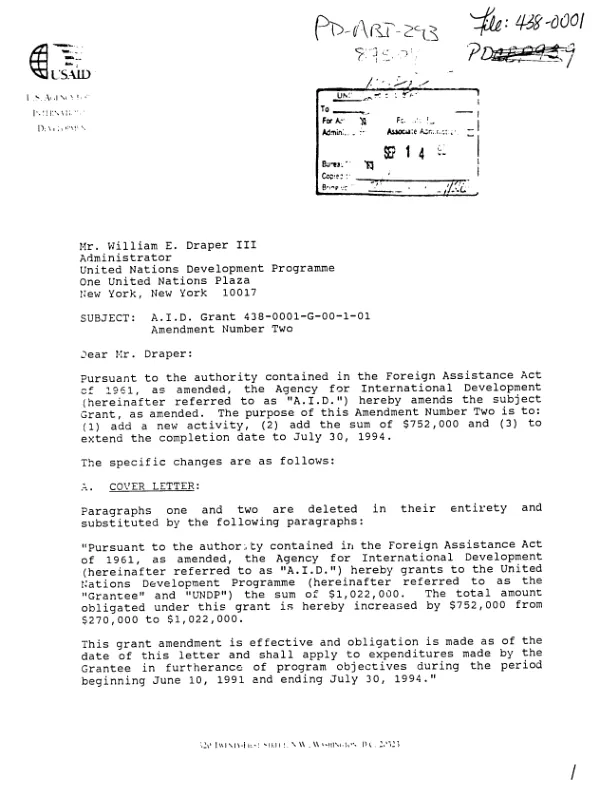
The project will provide TA and short- and long-term training in both the public and private sectors. The project will provide 3 types of advisory services. (1) An expert in economic restructuring (preferably with experience in Eastern Europe) will provide long-term (up to 9 months) TA to the Office of the Prime Minister. (2) Short-term advisors will work with Mongolian counterparts in the public and private sectors in areas such as monetary policy, management, and private enterprise development. Other short-term advisors will conduct seminars and workshops on market economics and management, international trade, property law, and cooperative management, etc. Up to 36 Mongolians will travel to the United States and/or third countries on short-term training programs and study tours to learn about U.S. economic practices and about private sector management and marketing skills. Training areas will include small and micro enterprise development, market economics, civil codes, and property law and finance. Study tours will focus on the U.S. cooperative movement, energy supply and pollution control, and other areas of interest. Attendance at conferences related to economic transition policies will also be funded. Long-term academic training will consist of Master"s training for 4 senior- and mid-level decisionmakers from the public and private sectors, in market economics, management, agricultural economics, and public administration, and, possibly, business and finance. Amendment of 5/92 increases the level of project assistance. Specifically funded are: short-term TA to public and private sector institutions; short-term technical training in the United States and third countries; and U.S. academic training. (PD-ABE-465) Grant amendment of 9/14/92 authorizes the UN Development Programme to provide 4-5 long-term advisors to help 6-7 Mongolian government units to pursue economic reforms. Advisors will work with the Committee for Economic Coordination, State Commission for Privatization, Mongolian Stock Exchange, Market Research Institute, Ministry of Trade and Industry, Central Bank, and possibly the Ulaanbaatar Privatization Commission. (PD-ABI-293)
Related documents