USAID
Survey Number_____________
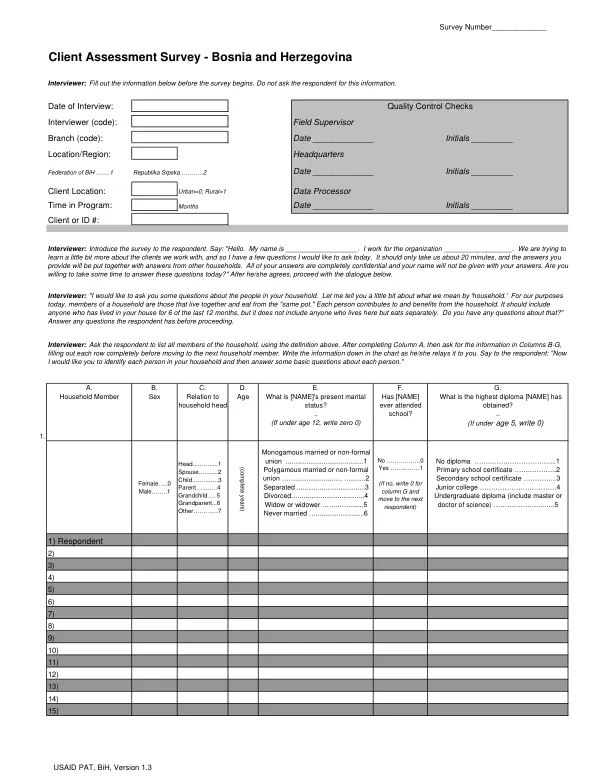
The agricultural development initiative in Bosnia and Herzegovina began in 2018 with funding from USAID's PAT program.
2011 · 2 pages
Sign in to readA free account is required to download.
Abstract
The initiative aimed to improve agricultural productivity and improve the livelihoods of rural households. The program focused on three key areas: agricultural productivity, market access, and market access facilitation. The survey was conducted to gather information on household characteristics, including household size, composition, and assets. The survey collected data on the number of people living in the household, the sex of the household head, the age of the household head, and the marital status of the household head. The survey also collected data on the highest diploma obtained by the household head. The survey found that the majority of households in Bosnia and Herzegovina have a small number of members, with an average of 3-4 people per household. The survey also found that the majority of households have a primary school certificate as the highest diploma obtained by the household head. The survey also found that the majority of households have access to a TV, a stereo or a player, and a vacuum cleaner. The survey also collected data on the ownership of livestock, poultry, bees, or fish during the last 12 months. The survey found that the majority of households do not own livestock, poultry, bees, or fish. However, the survey found that some households do own calves during the last 12 months. The survey also collected data on the source of heating for the household. The survey found that the majority of households use district heating by utility or boiler house as the primary source of heating. The survey also found that some households use own central heating systems or separate heating devices. The survey also collected data on the ownership of a balcony or terrace in the household. The survey found that the majority of households do not have a balcony or terrace. The survey also found that some households have a balcony or terrace. The survey also collected data on the access to a phone, excluding mobile phones. The survey found that the majority of households have access to a phone, with some households owning their own phone and others sharing a phone with others. The survey also collected data on the ownership of a car. The survey found that the majority of households do not own a car. However, the survey found that some households do own a car. The survey also found that the majority of households do not own livestock, poultry, bees, or fish. However, the survey found that some households do own calves during the last 12 months. The survey also found that the majority of households use district heating by utility or boiler house as the primary source of heating. The survey also found that the majority of households do not have a balcony or terrace. The survey also found that some households have a balcony or terrace. The survey also found that the majority of households have access to a phone, excluding mobile phones. The survey also found that the majority of households do not own a car. However, the survey found that some households do own a car. The survey also found that the majority of households have a small number of members, with an average of 3-4 people per household. The survey found that the majority of households in Bosnia and Herzegovina have a primary school certificate as the highest diploma obtained by the household head. The survey also found that the majority of households have access to a TV, a stereo or a player, and a vacuum cleaner. The survey also found that the majority of households do not own livestock, poultry, bees, or fish. The survey also found that the majority of households have access to a phone, excluding mobile phones. The survey also found that the majority of households do not own a car. However, the survey found that some households do own a car.
Related documents