ABT ASSOCIATES
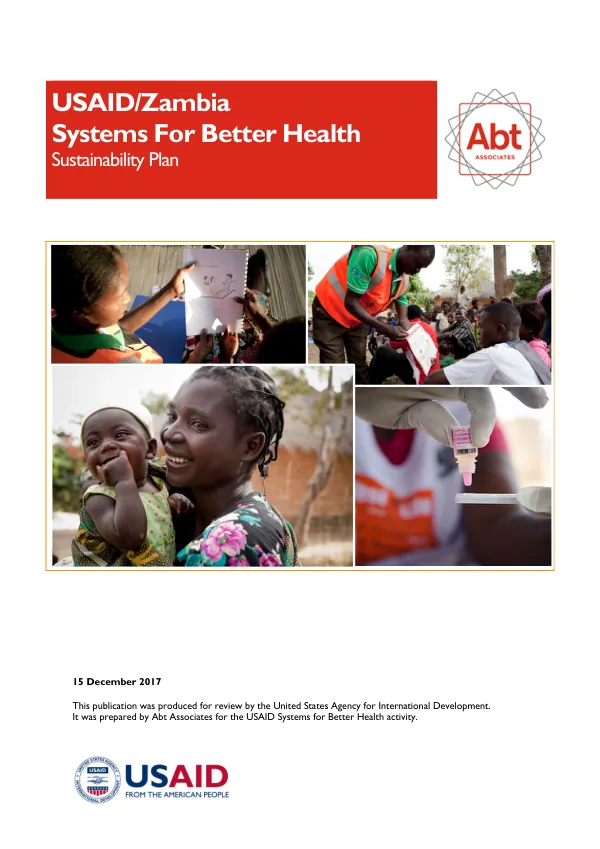
Sustainability Plan for Systems for Better Health (SBH) in Zambia
Systems for Better Health (SBH) is a five-year United States Agency for International Development (USAID) activity in Zambia that aims to improve health outcomes for Zambians.
2017 · 25 pages
Sign in to readA free account is required to download.
Abstract
SBH works to strengthen systems that underpin the delivery of high quality health services and increase the utilization of high impact health interventions at district and community levels. The project has the following specific objectives: retention of patients on antiretroviral therapy (ART) increased to at least 85 percent in targeted districts, couple years of protection increased by 10 percent in targeted districts, proportion of deliveries with assistance from a medically trained provider increased by 20 percent in targeted districts, and at least 80 percent of children aged 12 to 23 months fully immunized in targeted districts. To achieve these outcomes and objectives, SBH implements three tasks that cover all levels of the Zambian health system. Under Task 1, SBH designs, implements, and monitors national-level interventions to strengthen health stewardship by the Ministry of Health (MOH). Under Task 2, the project designs, implements, and monitors effective interventions to strengthen program management capacities of provincial and district health teams. Under Task 3, SBH supports the government and community-based organizations (CBOs) to increase the quality, availability, and use of health services. Central to SBH's implementation approach is building capacity of individuals and institutions and strengthening existing systems. At the sub-national level, SBH works in five provinces (Central, Copperbelt, Eastern, Lusaka, Southern), 20 target districts, and 300 target health facilities. SBH uses a phased approach to implement its support to target districts and health facilities. Under the phased approach, SBH initially began its work intensively in 10 districts and 150 health facilities in Years One and Two. This initial phase of assistance will last 18 to 24 months and will culminate in a gradual withdrawal of intensive support and "graduation," when district health offices (DHOs) and facilities meet agreed-on performance targets and demonstrate improved capacity to maintain a high level of performance or at the completion of the time period for intensive support. The objectives of the sustainability plan are to identify the criteria for graduating DHOs and health facilities from technical support and the level of support to be maintained thereafter, and to describe how gains achieved through this activity will be sustained. To identify the criteria for graduating DHOs and health facilities, SBH uses a phased approach, providing intensive support to 20 target districts in two phases. The core of SBH district-level support is a Health System Specialist (HSS) that is embedded within the DHO, providing 18 to 24 months of routine, needs-based technical assistance (TA) to DHOs on management and service delivery. The HSS work continuously with their DHO counterparts to determine the specific inputs that each district will receive under intensive support. In Years One and Two, the main source of information that SBH used to define the intensive support package for each district was the Provincial Health Office (PHO) and DHO Capacity Assessment. The assessment identified key areas that needed improvement in each district under five key management areas: health care financing, human resources for health, health information systems, quality improvement, and health systems strengthening. SBH's phased approach allows for cost-effective, targeted use of project resources to strengthen health system performance and health outcomes in all targeted districts during the life of the project. The project's sustainability strategy focuses on building capacity of individuals and institutions and strengthening existing systems, with the goal of achieving sustainable improvements in health outcomes for Zambians.
Related documents
Documents in this collection
 2016
2016USAID DEC
Activity Monitoring and Evaluation Plan (AMEP) for the United States Agency for International Development’s (USAID) five-year Systems for Better Health (SBH) in Zambia activity
Open record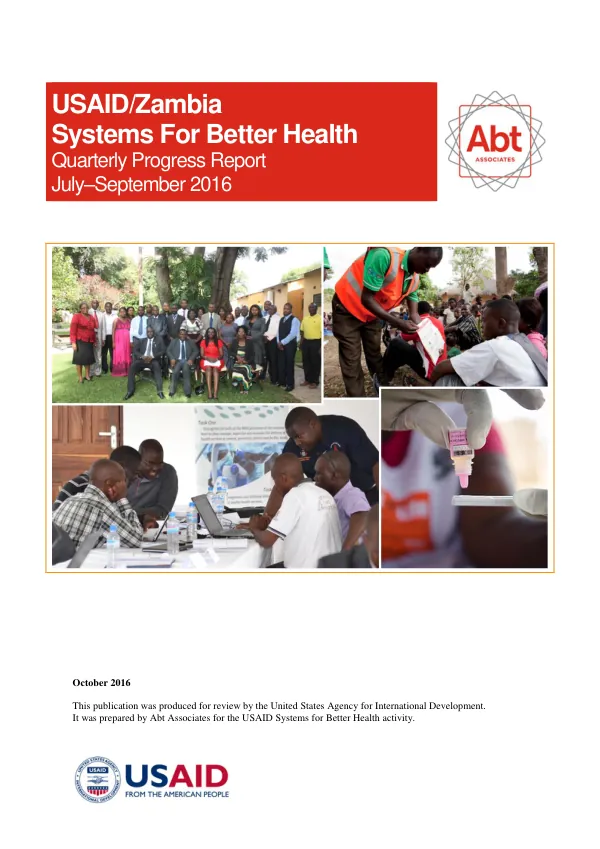 2016
2016USAID DEC
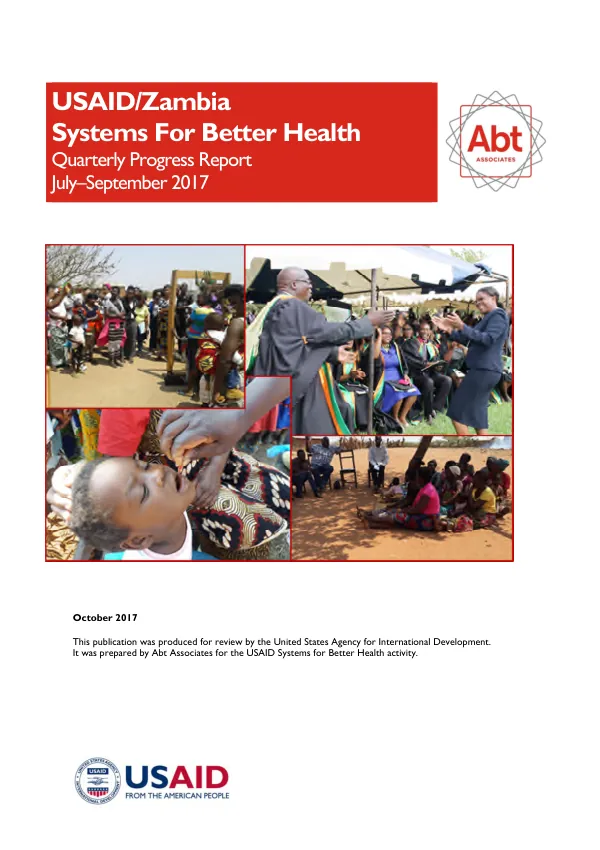
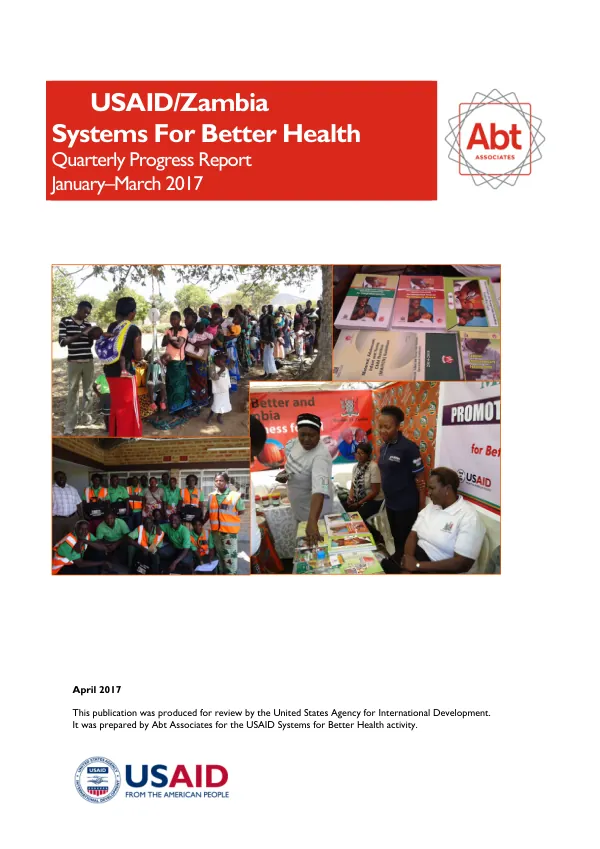
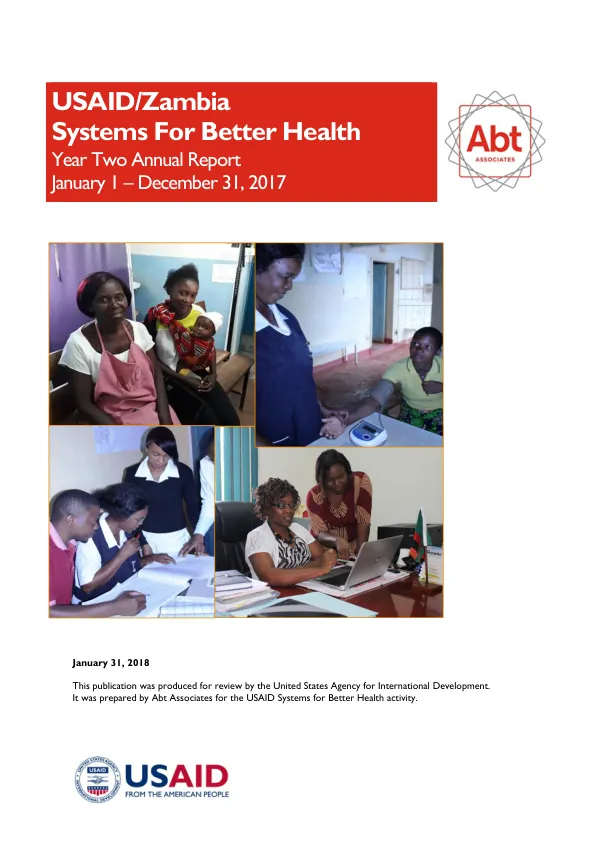
Quarterly Progress Report: USAID Systems for Better Health Activity in Zambia
Open record