USAID. MISSION TO CENTRAL AFRICAN REPUBLIC
Sustainable child survival
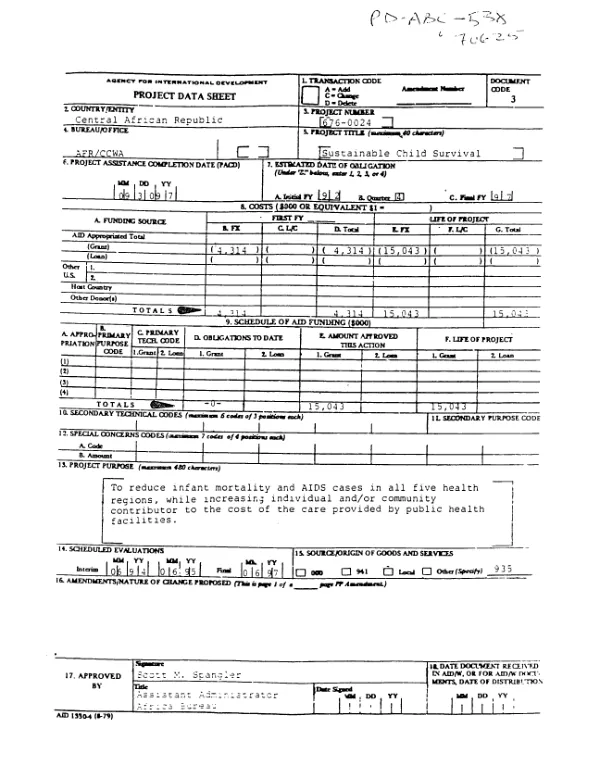
Project to promote the sustainable delivery of child survival and AIDS interventions in the Central African Republic.
1970
Sign in to readA free account is required to download.
Abstract
The project will comprise two main components, to be implemented by the U.S. Centers for Disease Control (CDC) and Abt Associates, respectively: (1) child survival and AIDS control; and (2) health finance. The Ministry of Public Health and Social Affairs (MSPAS) will be the main counterpart agency. MSPAS and CDC will continue the technical interventions begun under the Combatting Childhood Communicable Diseases Project (6980421) -- the Expanded Program of Immunization (EPI), diarrheal disease control, and malaria control -- while adding interventions to combat acute respiratory infections (ARIs) and HIV/AIDS and promote family planning (FP). Specific activities will include: EPI outreach from fixed centers; increased use of oral rehydration therapy in health facilities and in the home; increased availability of chloroquine; development of a national ARI program and provision of appropriate drugs in health facilities; a pilot sexually transmitted disease (STD) control project; a condom social marketing program (to be implemented by Population Services International); and increased prenatal, FP, and breastfeeding promotion services. Institution strengthening in support of the child survival and AIDS interventions will include: training of MSPAS staff in management, planning, and technical areas; TA to the IEC and training units to be established in MSPAS; assistance in establishing a health information system; and operations research, with particular emphasis on ARI, FP, and STDs/AIDS. The project will also support UNICEF"s Primary Health Care/Bamako Initiative by encouraging the Central African Republic Government (CARG) to reform its system for procuring and distributing essential drugs; two grants for pharmaceutical purchases will be available to the CARG, both conditional on progress in this area. In the second component, A.I.D. will continue support (long- and short-term TA, commodity support, and training) to help the Ministry of Health"s Health Economics Unit to develop and implement (beginning in Bangui and other urban areas within the first 2 years of the project) a national cost-recovery program in close collaboration with child survival programs. The project will support studies of: health costs and cost-effectiveness; potential fees to be charged at health centers and hospitals; hospital accounting systems; and hospital efficiency. Funding is also provided for workshops to review the studies" results and build consensus on health financing issues.