U.S. DEPT. OF HEALTH AND HUMAN SERVICES. PUBLIC HEALTH SERVICE. OFC. OF INTERNATIONAL HEALTH
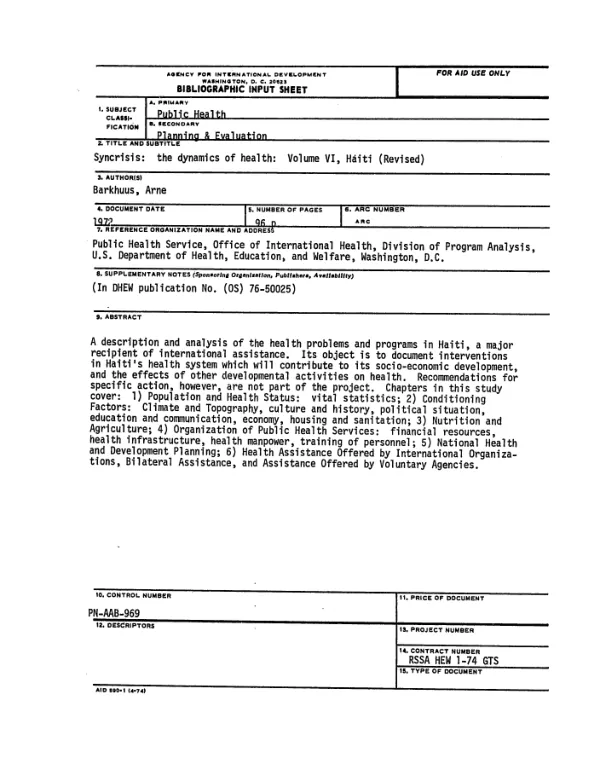
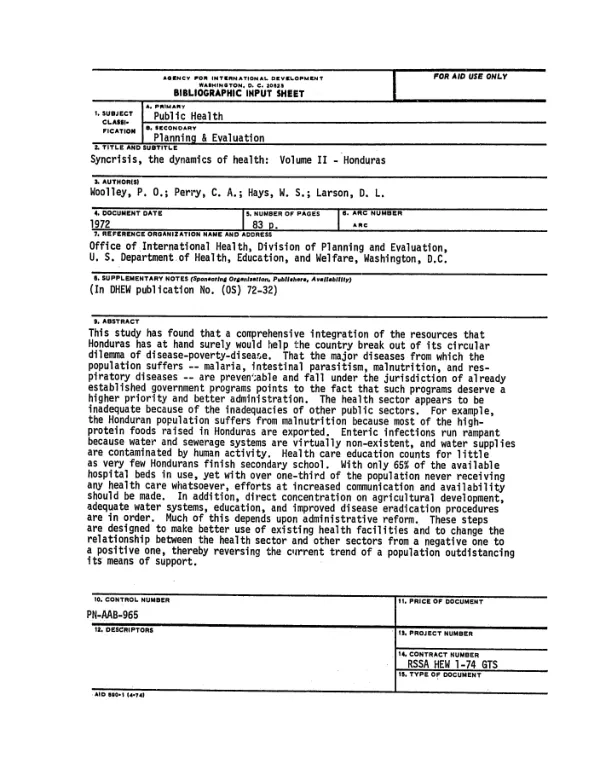
Syncrisis, the dynamics of health : 2. Honduras
This study has found that a comprehensive integration of the resources that Honduras has at hand surely would help the country break out of its circular dilemma of disease-poverty-disease.
Woolley, P. O.; Perry, C. A. · 1970
Sign in to readA free account is required to download.
Abstract
That the major diseases from which the population suffers-malaria, intestinal parasitism, malnutrition, and respiratory diseases-are preventable and fall under the jurisdiction of already established government programs points to the fact that such programs deserve a higher priority and better administration. The health sector appears to be inadequate because of the inadequacies of other public sectors. For example, the Honduran population suffers from malnutrition because most of the high-protein foods raised in Honduras are exported. Enteric infections run rampant because water and sewerage systems are virtually non-existent, and water supplies are contaminated by human activity. Health care education counts for little as very few Hondurans finish secondary school. With only 65% of the available hospital beds in use, yet with over one-third of the population never receiving any health care whatsoever, efforts at increased communication and availability should be made. In addition, direct communication on agricultural development, adequate water systems, education, and improved disease administrative reform. These steps are designed to make better use of existing health facilities and to change the relationship between the health sector and other sectors from negative one to a positive one, thereby reversing the current trend of a population outdistancing its means of support.
Related documents