USAID DEC
Technical Area (Sectoral) Profile: Culture
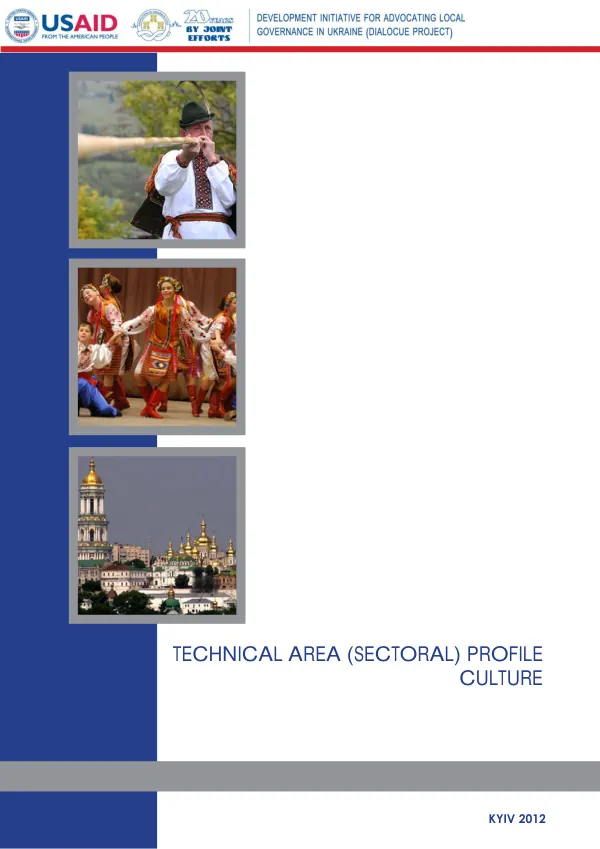
Culture in Ukraine is a multifaceted sector encompassing cultural heritage, arts, publishing, museums, archives, and library business, as well as book publication and cinematography.
2012 · 16 pages
Sign in to readA free account is required to download.
Abstract
The sector is characterized by a dense network of cultural facilities owned by private entities, communities, and the government. The Ministry of Culture is the central executive agency responsible for outlining national policy directions, approving national programs, and monitoring their implementation. The Ministry of Culture ensures the comprehensive development and functioning of the national language and submits budget proposals to the Ministry of Finance for funding needs, particularly for national and state culture/arts establishments, as well as culture and arts events of a national caliber. On the oblast, rayon, and state executive levels, as well as at rayon council departments for culture, there are pertinent sections responsible for cultural issues. Local governments have the right to organize cultural establishments and hold cultural and arts events, which are funded with local budget funds. Village, town, and city councils appoint chiefs of communally-owned cultural establishments, ensure funding of aesthetic education schools, local creative, music collectives, and ensembles, municipal museums, theaters, libraries, zoos, philharmonic societies, concert organizers, and leisure centers. In rural areas, leisure centers and libraries may be funded through rayon budgets. Cultural establishments may also provide commercial services, with revenues used for the needs of such establishments. The government issues subventions for local governments to pay personnel, utility, and energy bills incurred by culture establishments, as well as provides financial support to locally held events that underpin national programs to preserve historical and cultural heritage landmarks. The sector is governed by a comprehensive legal framework, which includes laws and resolutions of the Cabinet of Ministers of Ukraine. The laws governing the sector include the Constitution of Ukraine, the Law of Ukraine "On Local Self-Governance in Ukraine," the Law of Ukraine "Fundamental Legislation of Ukraine on Culture," and numerous other laws and resolutions. These laws regulate various aspects of the sector, including cultural heritage protection, education, libraries, museums, and cultural events. The laws also provide for the rights and responsibilities of local governments, cultural establishments, and individuals involved in the sector. The Cabinet of Ministers of Ukraine has issued numerous resolutions and instructions governing the sector, including resolutions on standards of providing population with club institutions, approval of the state program of gender equality consolidation, and determination of additional payment amounts for certain forms of pedagogical activity. These resolutions and instructions provide guidance on various aspects of the sector, including cultural development, education, and cultural events. The sector is also governed by a range of international agreements and conventions, including the European Charter of Regional Languages or Minority Languages and the Charter of Preservation and Encouragement of Diversity of Cultural Self-Expression Forms. These agreements and conventions provide a framework for the protection and promotion of cultural heritage and diversity in Ukraine.