INTRAHEALTH
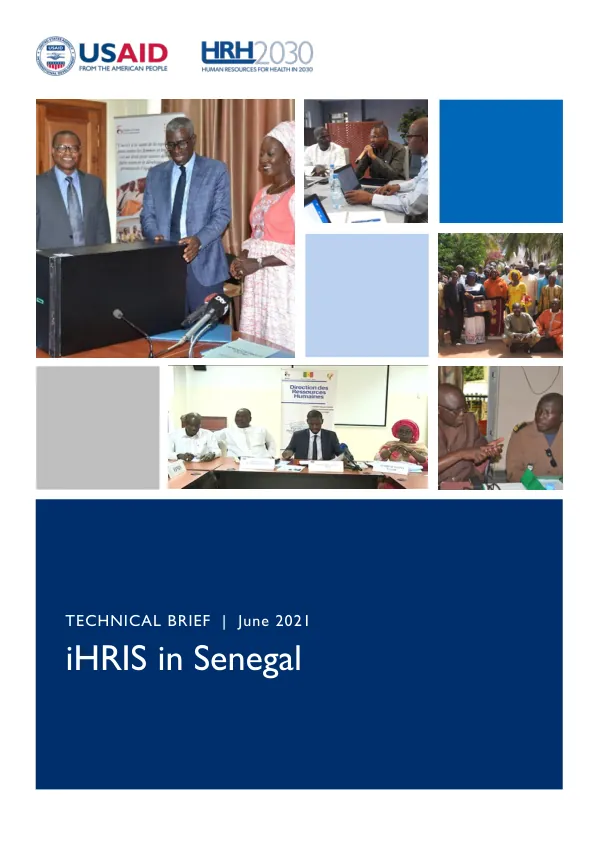
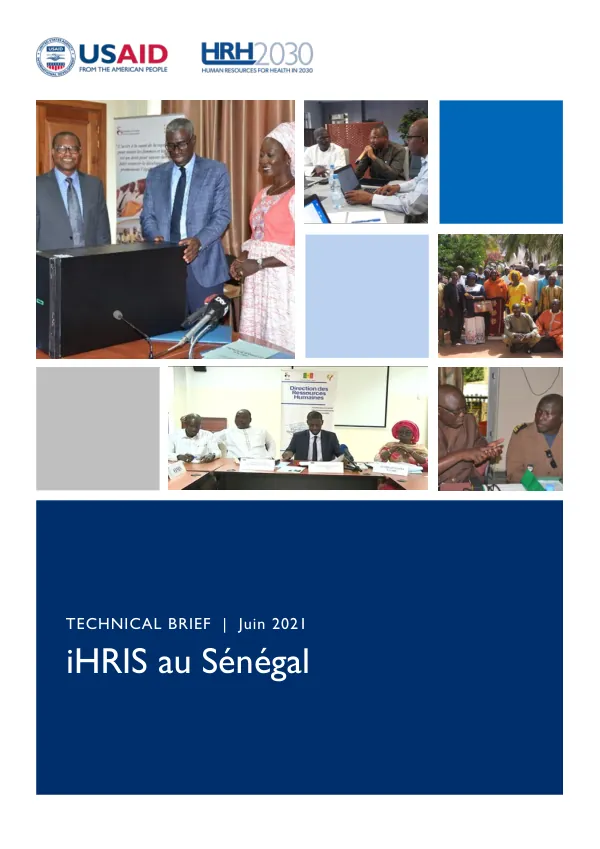
Technical Brief: Revitalisation du logiciel iHRIS au Sénégal
The Ministry of Health and Social Action of Senegal has made significant progress in achieving universal health coverage and reducing maternal and infant mortality rates.
2021 · 11 pages
Sign in to readA free account is required to download.
Abstract
However, the country's healthcare system faces numerous challenges that limit its ability to achieve the vision of the Health Sector Strategy, including the development of the health sector. To address these challenges, the Ministry of Health and Social Action recognized the need for complete, accurate, and up-to-date data on the number, production, and budget allocation of health resources. In 2014, the Ministry of Health and Social Action decided to implement iHRIS Manage to address the data needs of the health sector. With the support of CapacityPlus through the IntraHealth project, funded by the United States Agency for International Development (USAID), and the Human Resources Department (DRH), the implementation process was led by a task force composed of programmers and central-level officials responsible for following up on the technical aspects and training focal points, as well as collaboration with the State Agency for Information Technology (see Figure 1). The Ministry of Health conducted a pilot phase of using the iHRIS software in two regions (Kaolack and Kolda) and at the central level. The introduction of the platform was done in four phases: Phase 1, Phase 2, Phase 3, and Phase 4. Phase 1 involved the preparatory phase, including parameterization and the development of tools such as the identification form, the supervision guide for data entry agents, etc. Phase 2 involved the implementation of the pilot project in two regions with different profiles and at the central level. Phase 3 involved the evaluation of the pilot phase and the definition of strategies for extension. Phase 4 involved the extension of enrollment to the remaining 12 regions. To continue these efforts, the USAID/Senegal mission provided technical assistance to the Ministry of Health and Social Action through the Human Resources for Health in 2030 (HRH2030) program, funded by USAID. The program aimed to strengthen the management of human resources in the health sector to ensure that quality health services are provided in all regions of the country. Working directly with the Ministry of Health and Social Action through the DRH, HRH2030 helped to strengthen their capacity to support regions in operationalizing effective human resources policies for a reactive and equitably distributed health workforce; and to use HRIS data in planning and management; and to strengthen leadership for governing the health workforce equitably. A situation report on the iHRIS platform before the intervention of HRH2030 showed that the platform had been deployed in all regions, with enrollment of personnel by data entry agents, designation of focal points, and their training to continue enrollment and complete data. However, major problems were identified, including: non-use of the software by focal points due to lack of access codes or forgetting their access codes; poor quality of data entered into the initial database, including duplicates; existence of items not translated into French; low enrollment rate of health personnel in the software; focal points in charge of enrolling agents at the level of a structure did not receive support from their supervisors; absence of definition of roles and responsibilities of the iHRIS focal point; non-availability of personnel identification forms; absence of supervision on the functionality and use of iHRIS at all levels of human resources management; and lack of data on health resources entered into the iHRIS software that were not usable. In conclusion, the iHRIS software was not being used to inform decision-making in human resources management. In response to these major problems, the Ministry of Health and Social Action initiated the process of revitalizing the iHRIS software since 2017, with the reinforcement of equipment and collaboration with key partners. During the revitalization, the following interventions were carried out: improvement of the functionality of iHRIS in its technical dimension; harmonization of parameters (variables) and nomenclatures (terms) common to human resources in relation with the different health information systems; recycling and follow-up of human resources focal points; supervision of focal points at the regional and public health establishment levels; governance of the platform; elaboration of the job description of the iHRIS focal point; and collaboration with the State Agency for Information Technology. The revitalization of the iHRIS software led to significant improvements in the functionality of the platform, including the development of a new server, customization of the software, and development of a script for automatic generation of reports. The harmonization of parameters and nomenclatures common to human resources in relation with the different health information systems was also carried out, including iHRIS, the Health Map, DHIS2, and the main file list of socio-sanitary structures. The recycling and follow-up of human resources focal points were also carried out, with training of focal points and supervisors on the use and analysis of data. The supervision of focal points at the regional and public health establishment levels was also carried out, with identification of difficulties such as lack of nomination of focal points, non-appropriation by team leaders, under