FINTRAC
Technical Bulletin #57: Agrochemical General Information Sheet – Diazinon
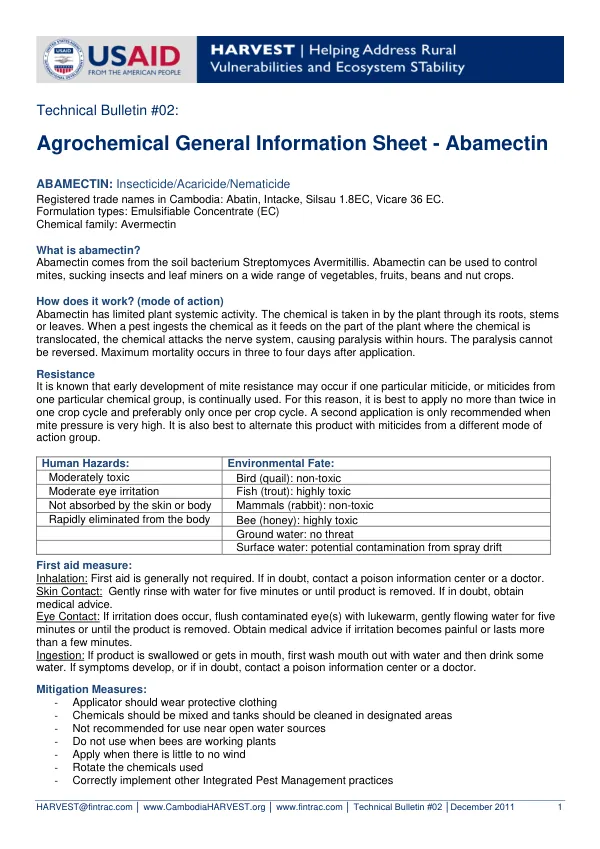
Diazinon is a non-systemic insecticide and acaricide that acts as a contact, stomach, and respiratory poison.
2013 · 3 pages
Sign in to readA free account is required to download.
Abstract
It is used to control pest insects in soil and on a wide range of crops, including citrus trees, olives, bananas, pineapples, vegetables, potatoes, sugar cane, coffee, tea, tobacco, maize, cotton, rice, ornamental plants, and forestry. Diazinon is also used as a veterinary ectoparasiticide and as a seed treatment. The chemical is a colorless and practically odorless oil, but commercial diazinon is a pale to dark brown liquid. It is used to kill insects by interfering with nervous system function, resulting in a loss of control over the nervous system that eventually leads to the death of the insect. Diazinon is highly toxic to birds, bees, and fish, but has low acute toxicity to mammals. Repeated use of the same insecticide or insecticides with the same mode of action and against a particular insect in a given area may result in the effectiveness of the insecticide being reduced. To delay or prevent resistance of insects to insecticides, it is recommended to integrate different control methods into insect control programs, use insecticides only when the economic threshold for a pest has been surpassed, rotate between insecticides with different modes of action, and keep accurate records of insecticides used for each field. The recommended rate of Diazinon varies depending on the crop and pest. For rice, the recommended rate is 15-20 kg/ha, applied as a scatter in the rice field when caterpillars are present. For vegetables, beans, corn, onion, tomato, and sugarcane, the recommended rate is 15-20 kg/ha, applied as a scatter in the soil before plowing and transplanting or applied at the base of the plant. For coffee, tea, pepper, and rubber, the recommended rate is 15-20 kg/ha, applied by burying at the base of the tree. To minimize human hazards, it is recommended to read and follow the label instructions carefully, particularly dosage, pre-harvest intervals, and safety measures. It is also recommended to wear protective clothing for applicators, avoid contact with mouth, eyes, and skin, and thoroughly wash clothes and body with soap after use. Additionally, it is recommended to store Diazinon in the original container in a cool, dry, ventilated place, keep away from foodstuffs, empty foodstuffs containers, and animal feed, and triple rinse empty containers prior to disposal.
Related documents