MASSACHUSETTS INSTITUTE OF TECHNOLOGY. CENTER FOR POLICY ALTERNATIVES
Technology, education, and institutional development
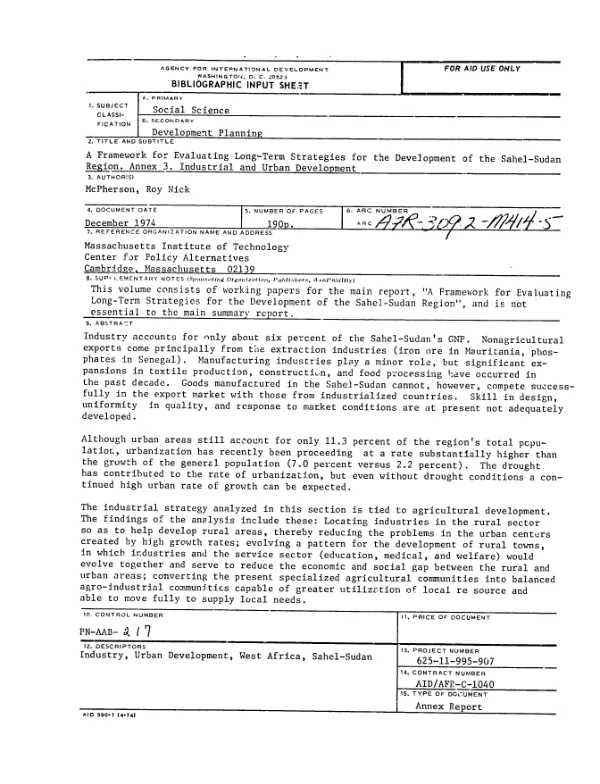
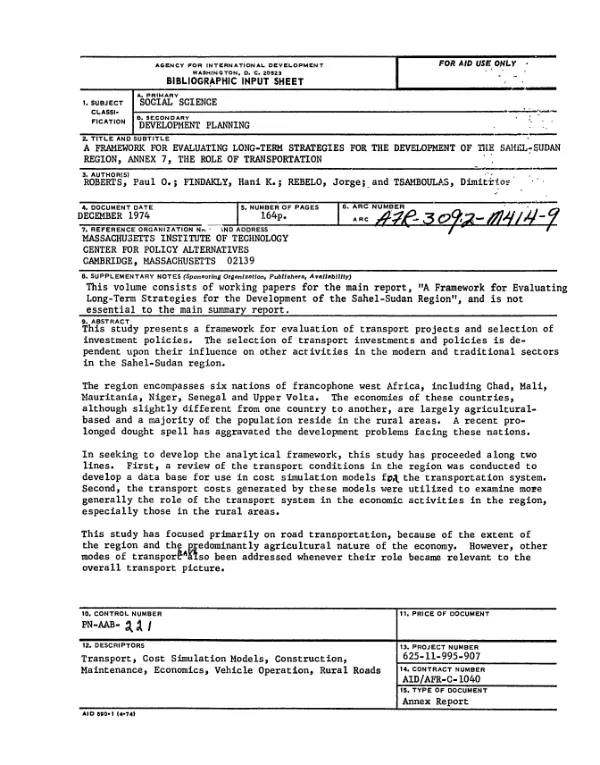
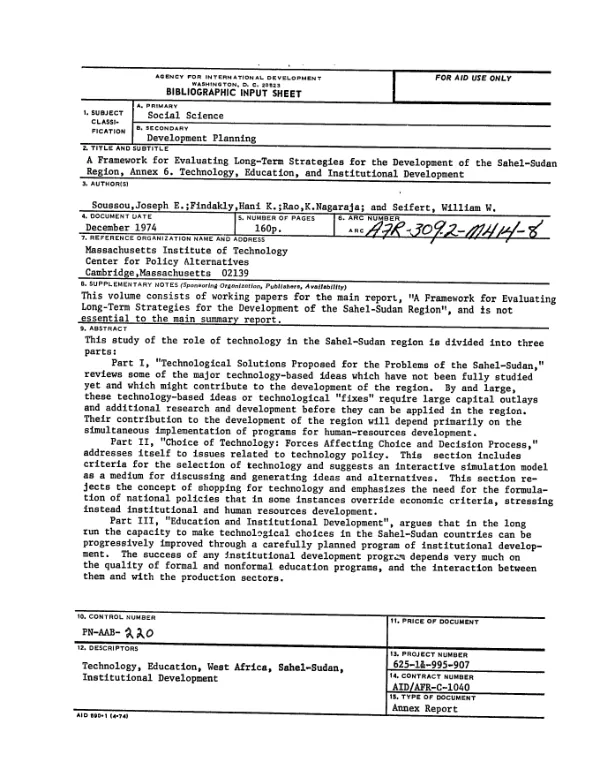
This study of the role of technology in the Sahel-Sudan region is divided into three parts: PartI, "Technological Solutions Proposed for the Problems of the Sahel-Sudan," reviews some of the major technology-based ideas which have not been fully studied yet and which might contribute to the development of the region.
Soussou, J. E.; Firdakly, H. K. · 1970
Sign in to readA free account is required to download.
Abstract
By and large, these technology-based ideas or technological "fixes" require large capital outlays and additional research and development before they can be applied in the region. Their contribution to the development of the region will depend primarily on the simultaneous implementation of programs for human-resources development. PartII, "Choice of Technology: Forces Affecting Choice and Decision Process," addresses itself to issues related to technology policy. This section includes criteria for the selection of technology and suggests an interactive simulation model as a medium for discussing and generating ideas and alternatives. This section rejects the concept of shopping for technology and emphasizes the need for the formulation of national policies that in some instances override economic criteria, stressing instead institutional and human resources development. PartIII, "Education and Institutional Development," argues that in the long run the capacity to make technological choices in the Sahel-Sudan countries can be progressively improved through a carefully planned program of institutional development. The success of any institutional development program depends very much on the quality of formal and nonformal education programs, and the interaction between them and with the production sectors.
Related documents